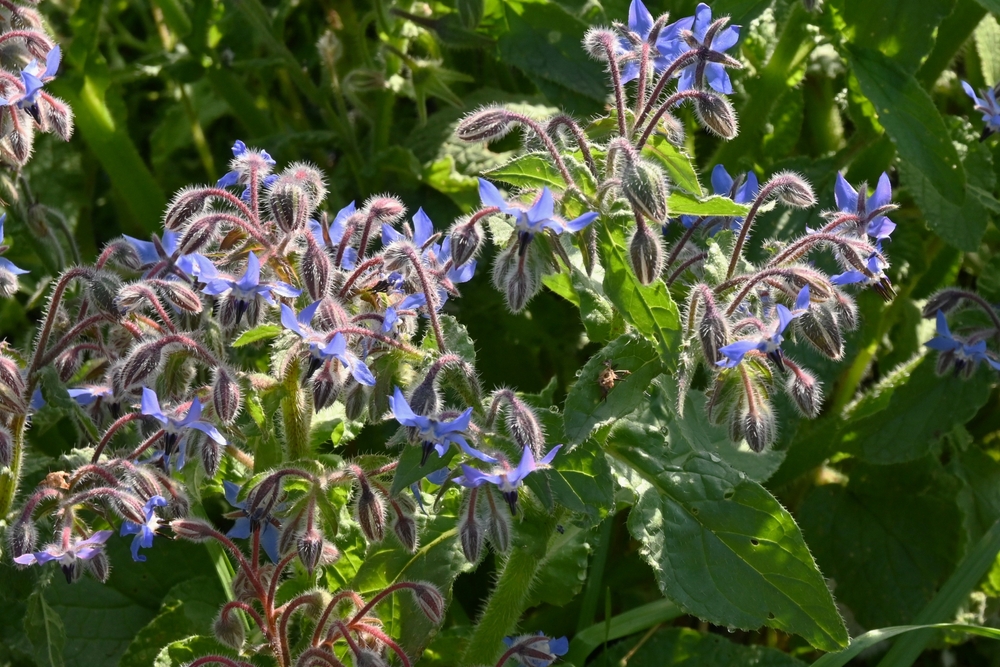
Borage earns plenty of attention for its star-shaped blue flowers, but gardeners have discovered that those pretty blossoms represent only part of the plant’s appeal. This old-fashioned herb can attract pollinating insects, add cucumber-like flavor to the kitchen, fill awkward garden spaces, and even reseed itself for another appearance next season.
That makes borage, or Borago officinalis, something of a garden overachiever in a fuzzy green coat. It does not demand elaborate treatment, yet it can contribute color, wildlife value, and a little culinary fun while asking for surprisingly little in return.
Borage Brings More Than a Pretty Face
Borage produces clusters of dangling, star-shaped flowers that typically appear in a vivid sky blue, although white-flowered forms also exist. Its coarse, hairy leaves and stems give the plant a slightly unruly personality, which actually fits beautifully into cottage gardens, herb beds, wildlife plantings, and vegetable patches.
The plant also gives gardeners a useful combination of height and informality, reaching roughly two feet in favorable conditions without demanding constant pruning. Give it sun and reasonably well-drained soil, and borage generally gets on with the business of growing rather than requesting a daily spa appointment.
Pollinators Have Excellent Taste
Borage flowers offer nectar and attract pollinating insects, which gives the plant a practical role beyond decorating the garden. The Royal Horticultural Society includes borage among its recommended annual plants for pollinators, while its plant guide notes that pollinating insects readily visit the flowers.
That makes borage particularly useful near vegetable gardens where flowering plants can add another food source for visiting insects. A patch near crops can also bring more visual activity to a garden that otherwise spends much of its summer looking like rows of leaves waiting for dinner. Borage does not replace good pollinator habitat, but it can become one helpful piece of a broader mix of flowering plants.
The Flowers Can Go Straight to the Kitchen
Borage flowers have a mild cucumber-like flavor, which makes them a fun garnish for salads, cold drinks, cakes, and other summer foods. Gardeners can also freeze the blossoms inside ice cubes, turning an ordinary glass of lemonade or sparkling water into something that looks considerably more ambitious than it actually was.
The leaves also have a cucumber-like character, but their hairy texture makes them less appealing raw than the flowers. Anyone harvesting borage for food should grow it without pesticides intended for ornamental plants, wash the harvested material carefully, and use edible plant parts only.
Borage Can Handle a Little Garden Neglect
Borage ranks among the easier herbs to grow, which makes it appealing when the gardening schedule starts looking suspiciously like a second job. Direct sowing works well, and the plant generally prefers a sunny location with reasonably drained soil.
The bigger issue involves enthusiasm rather than difficulty because borage readily drops seed and can return in subsequent seasons. Gardeners who enjoy its casual appearance can let some plants finish flowering and scatter seed, while those who prefer tighter borders should remove plants after flowering before the seeds mature. The plant can also flop as it gets larger, so a little strategic support may keep neighboring plants from getting flattened.
Give Borage Room to Be Borage
Borage does not need a perfectly manicured corner, and that quality makes it especially charming in informal plantings. Its broad, bristly foliage can occupy more space than a delicate herb such as thyme, while its flowers rise above the leaves and create a noticeable splash of blue.
That growth habit makes placement important, especially in a small vegetable bed where every square foot already has a job. Planting borage along an edge or in a spot where a slightly floppy plant will not smother shorter crops usually works better than wedging it between tightly spaced vegetables. Gardeners should also remember that borage dislikes permanently wet soil and does not particularly enjoy transplanting, so direct sowing often provides the simpler route.
The Real Trick Is Knowing When to Let It Roam
Borage works best when gardeners treat it as a useful volunteer rather than a perfectly behaved specimen. Let a few plants reseed in a suitable location, and next year’s garden may receive free seedlings without a trip to the garden center. Pull unwanted seedlings while they remain small, however, and the plant becomes much easier to manage before it turns a corner of the garden into its personal summer headquarters.
That combination explains why gardeners grow borage for more than its flowers: one plant can add edible blossoms, pollinator resources, cucumber-like flavor, color, and an easy source of future plants. It will not solve every garden problem, and its edible uses deserve sensible moderation because natural plant compounds can raise safety concerns. Still, for gardeners who want a plant with personality and several legitimate jobs, borage makes a surprisingly strong case for taking up a little space.
What role does borage play in your garden, or would you give this blue-flowered multitasker a spot next season?
You May Also Like…
8 Plants That Add Structure After Summer Flowers Begin Fading
8 Edible Flowers That Can Bridge the Gap Between Summer and Fall
Are Night-Blooming Flowers Worth Adding to a Small Yard?
6 Ways to Keep Cut Flowers Fresh Longer After Harvest
Are Self-Seeding Flowers a Smart Choice for Frugal Gardeners?

Brandon Marcus is a staff writer for FrugalGardening.com at District Media, Inc., where he delivers practical gardening advice with a relatable, no-nonsense style. An avid amateur gardener, he holds a BA degree and with over ten years of professional writing experience, he is also an award-winning published author whose first book, Questions For Deep Thinkers, was released by Adams Media. His work has appeared in major publications including Fandom.com, CHUD.com, TheColdWire.com, and Fansided.com.
Leave a Reply