You do not build a jaw-dropping garden with petunias and polite hydrangeas. You build it with plants that make people stop mid-sentence, tilt their heads, and ask, “What on earth is that?”
Rare plants do not just decorate a space; they electrify it. They challenge you, they reward patience, and they carry stories that stretch across continents. If you crave something beyond the predictable, these five botanical treasures will test your dedication and elevate your entire landscape—assuming you can track them down and keep them happy.
1. Corpse Flower: The Drama Queen of the Plant World
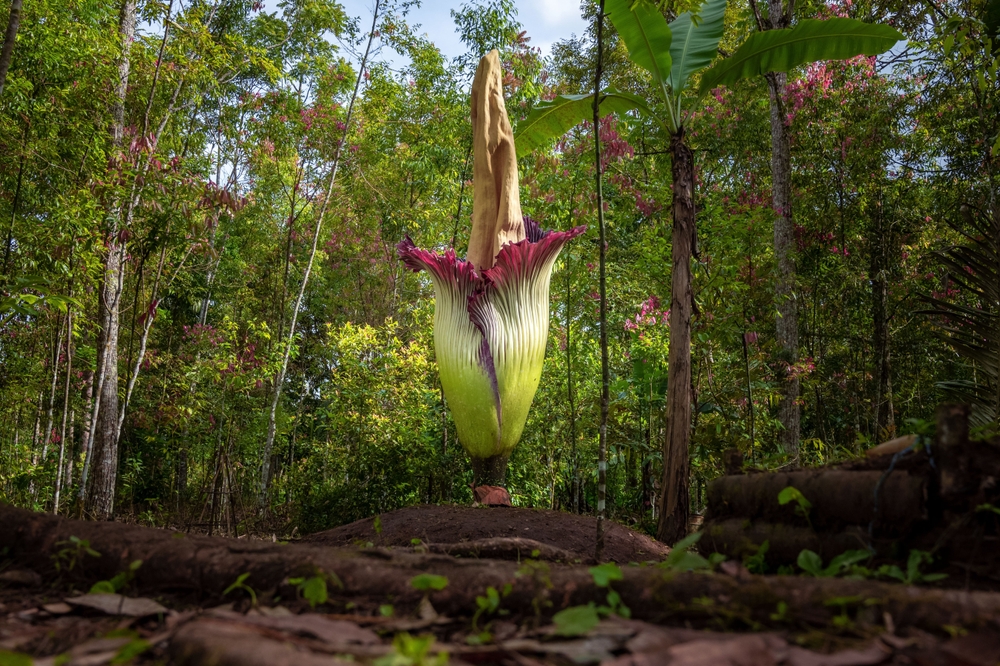
The legendary Amorphophallus titanum does not believe in subtlety. Native to the rainforests of Sumatra, this plant produces the largest unbranched inflorescence on Earth, sometimes soaring over eight feet tall. When it blooms, it unleashes a powerful odor that mimics rotting flesh, which attracts pollinating beetles and flies in its natural habitat. That scent might not sound charming, but the sheer spectacle of the bloom turns botanical gardens into packed events overnight.
You will not find this plant sitting on a clearance rack. Specialty growers occasionally offer tubers, and serious collectors sometimes trade offsets, but availability remains limited because the plant requires years of careful cultivation before it flowers. It demands bright, indirect light, consistently warm temperatures, high humidity, and a very well-draining soil mix that prevents the massive corm from rotting. During dormancy, the plant retreats completely underground, which can rattle inexperienced growers who assume they killed it.
2. Ghost Orchid: A Flower That Floats in Midair
Few plants carry the mystique of the Dendrophylax lindenii. This elusive orchid grows in swamps of Florida and parts of the Caribbean, where it clings to tree trunks and appears to hover in space. It produces striking white flowers with elongated petals that resemble a ghost in motion. Because the plant lacks traditional leaves and relies on photosynthetic roots, it looks like a delicate web pressed against bark.
You cannot simply pot this orchid in standard soil and hope for the best. It requires very high humidity, warm temperatures, excellent air circulation, and a mounting surface that mimics its natural environment. Many growers mount it on cork bark or hardwood slabs rather than planting it in a container. Even then, it demands precise watering that keeps roots hydrated without suffocating them.
3. Middlemist’s Red Camellia: The Flower You Almost Can’t Have
Scarcity creates obsession, and the Camellia japonica ‘Middlemist’s Red’ stands as one of the rarest cultivated camellias on Earth. A nurseryman named John Middlemist introduced it to England from China in the early 1800s, and today only a handful of known specimens exist in cultivation. The plant produces lush, rose-like red blooms with a layered, almost theatrical form.
You likely will not stumble across this exact cultivar at your local garden center, but it represents a broader category of rare camellias that collectors prize. Many heirloom camellia varieties offer similarly dramatic flowers and glossy evergreen foliage. These shrubs thrive in acidic, well-draining soil with consistent moisture and protection from harsh afternoon sun. They appreciate mulch, moderate feeding, and patience during establishment.
4. Jade Vine: A Turquoise Cascade That Defies Logic
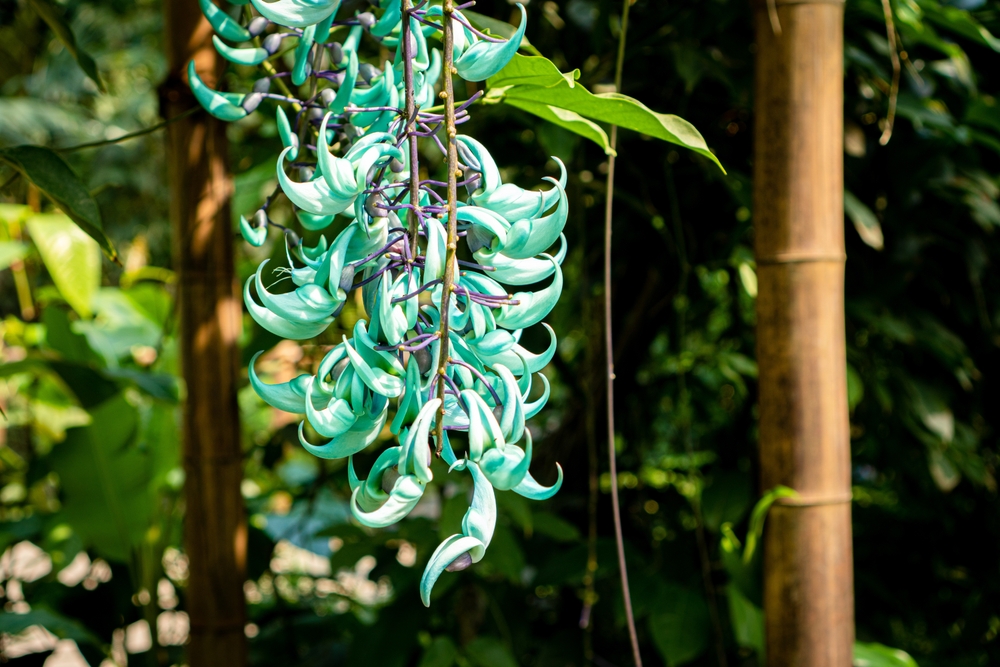
Nature rarely produces true turquoise flowers, which makes the Strongylodon macrobotrys so mesmerizing. Native to the Philippines, this tropical vine grows long, dangling clusters of claw-shaped blossoms in a shade that looks almost unreal. In ideal conditions, those hanging racemes can stretch several feet long, forming a curtain of cool blue-green light.
This plant does not tolerate neglect. It wants bright light, steady warmth, high humidity, and rich but well-drained soil. Gardeners in tropical climates can grow it outdoors on sturdy trellises or pergolas, where it quickly becomes a focal point. In cooler regions, serious hobbyists grow it in greenhouses or large conservatories, because frost will end the show immediately.
5. Welwitschia: The Ancient Rebel of the Desert
If you prefer something strange, rugged, and borderline prehistoric, the Welwitschia mirabilis deserves your attention. This plant grows naturally in the Namib Desert of southwestern Africa and can live for more than a thousand years. It produces only two leaves in its entire lifetime, and those leaves grow continuously, fray in the wind, and sprawl across the ground in dramatic ribbons.
Unlike the lush tropical specimens above, Welwitschia thrives in arid conditions with intense sunlight and excellent drainage. It tolerates heat that would scorch most ornamentals. However, it demands patience and space. Seeds and young plants occasionally appear through specialty succulent and desert plant nurseries, but growth progresses slowly. You will not achieve instant impact with this species.
Rarity Requires Commitment
Rare plants reward dedication, not shortcuts. Each species on this list demands specific conditions, ethical sourcing, and a willingness to adapt your environment to suit the plant rather than forcing the plant to adapt to you. Before you hunt for any of these botanical marvels, assess your climate, your available space, and the time you can devote to attentive care.
Above all, pursue rarity for love of the plant, not just for bragging rights. When you nurture something extraordinary and watch it thrive under your care, you experience a satisfaction that goes far beyond envy.
So which of these rare botanical showstoppers would you try to grow first? Tell us your opinions in our comments section.
You May Also Like…
10 Garden Purchases That Sound Useful but Rarely Pay Off
Why More Gardeners Are Growing Rare Plants Indoors
7 Rare Plants Collectors Say Will Soar in Popularity This Year
12 Zero‑Waste Gardening Ideas That Turn Scraps Into Something Useful
12 Plants That Love Shade and Flourish Where Sun Won’t

Brandon Marcus is a staff writer for FrugalGardening.com at District Media, Inc., where he delivers practical gardening advice with a relatable, no-nonsense style. An avid amateur gardener, he holds a BA degree and with over ten years of professional writing experience, he is also an award-winning published author whose first book, Questions For Deep Thinkers, was released by Adams Media. His work has appeared in major publications including Fandom.com, CHUD.com, TheColdWire.com, and Fansided.com.
Leave a Reply