
Sunlight does not ruin houseplants. Weak choices ruin houseplants. If your brightest window feels more like a danger zone than a place of honor, you simply have not matched it with the right green companion. Some plants crave intense light, stretch toward it, and reward you with bold growth instead of crispy leaves.
If you want greenery that can handle a blazing south- or west-facing window without wilting at high noon, you need species that evolved under relentless sun, not shy forest-floor dwellers.
1. Aloe Vera: The Sun-Soaking Healer That Demands the Spotlight
Aloe vera does not appreciate dim corners or filtered light. This succulent evolved in arid regions where sunshine dominates the sky for hours, so it performs best in bright, direct light indoors. Place it in a south- or west-facing window, and you will notice sturdy, upright leaves with that signature plump, juicy texture. When light levels drop too low, aloe stretches and flops, which tells you immediately that it wants more intensity.
You should plant aloe in a well-draining cactus or succulent mix and use a pot with a drainage hole. Let the soil dry out completely between waterings, because constant moisture encourages root rot faster than almost anything else. During active growth in spring and summer, water thoroughly and then step back until the soil dries again. In winter, cut back significantly and allow the plant to rest.
2. Jade Plant: The Sturdy Succulent That Ages Like a Bonsai
The jade plant, botanically known as Crassula ovata, looks like a miniature tree once it matures, complete with thick trunks and glossy oval leaves. This plant loves direct light and often develops a subtle red edge along its leaves when it receives enough sun. That hint of color signals satisfaction, not stress. If you place jade in a bright window with several hours of direct sunlight, you will see compact growth and strong stems.
Jade stores water in its leaves, so it needs a careful watering schedule. Allow the top few inches of soil to dry before you water deeply, and then let excess water drain away completely. Heavy, moisture-retentive soil will suffocate its roots, so always choose a gritty, fast-draining mix. During cooler months, reduce watering and skip fertilizer, since the plant slows down naturally.
3. Fiddle Leaf Fig: The Drama Queen That Actually Loves the Sun
The fiddle leaf fig, or Ficus lyrata, intimidates many plant owners, but it does not deserve its fragile reputation when you give it what it wants. In the wild, it grows in bright tropical environments with ample light. Indoors, it thrives near a bright window that offers several hours of direct morning or late afternoon sun. Without strong light, it drops leaves and stalls.
Place your fiddle leaf fig close to the window but avoid cold drafts or blasting heat from vents. Water when the top inch or two of soil dries out, and make sure the pot drains well. This plant appreciates consistency, so avoid wild swings between bone-dry soil and soggy conditions. Wipe dust from the large leaves regularly, because clean surfaces absorb light more efficiently and support healthy growth.
4. Snake Plant: The Indestructible Blade That Handles Sun With Ease
Snake plant, also known as Sansevieria or Dracaena trifasciata, built its reputation on toughness. Many people tuck it into low-light corners, and it survives, but it actually grows faster and stronger in bright, direct light. Thick, upright leaves store water and tolerate intense sun without scorching, especially when you introduce the plant gradually to higher light levels.
Use a well-draining potting mix and water sparingly. Allow the soil to dry almost completely before you water again, and never let the plant sit in standing water. Overwatering remains the most common mistake with snake plants, since their roots rot quickly in soggy soil. Bright light encourages more robust growth and sharper leaf coloration.
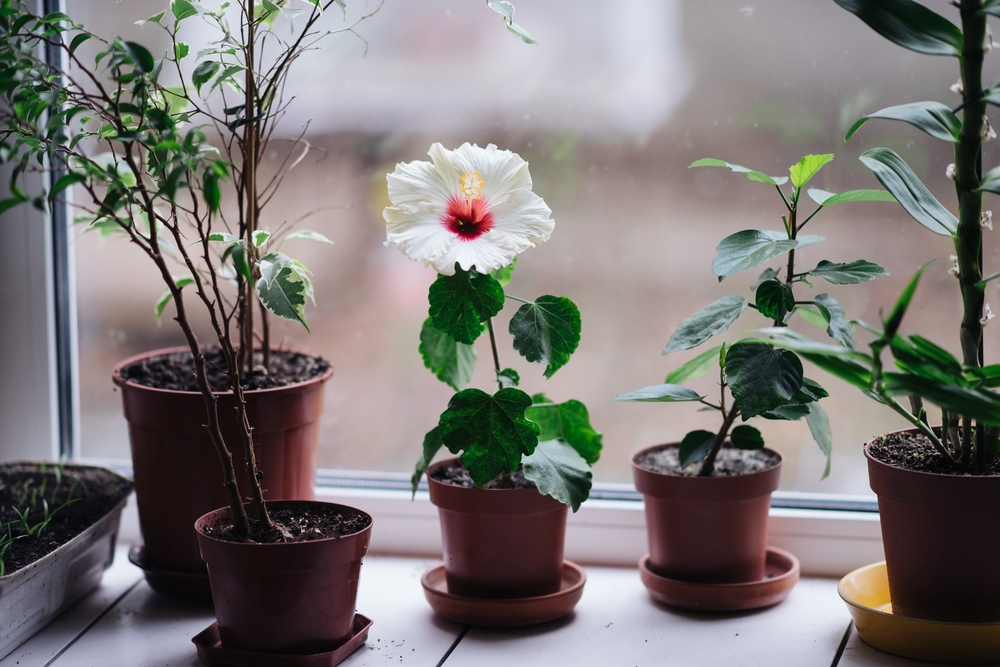
5. Hibiscus: The Flowering Showstopper That Thrives in Full Sun
If you crave bold color, hibiscus brings tropical flair indoors. Tropical hibiscus varieties need several hours of direct sunlight each day to produce large, vibrant blooms. Place one in a bright south-facing window, and you will see vigorous growth and frequent flowers during the growing season. Without sufficient light, hibiscus refuses to bloom and drops buds before they open.
Hibiscus prefers consistently moist but well-drained soil. Water thoroughly when the top inch dries, and feed regularly with a balanced fertilizer during spring and summer to support flowering. Prune lightly to shape the plant and encourage branching, which leads to more bloom sites. High light combined with steady nutrition fuels its performance.
6. Ponytail Palm: The Sculptural Survivor That Stores Its Own Supply
Ponytail palm, scientifically known as Beaucarnea recurvata, does not belong to the palm family at all, yet it brings undeniable desert charm. Its bulbous base stores water, which allows it to handle intense light and occasional drought with confidence. Place it in bright, direct sunlight, and you will see strong, steady growth with long, arching leaves cascading from the top.
Use a fast-draining soil mix and a pot with excellent drainage. Water thoroughly, then wait until the soil dries out before you water again. During winter, reduce watering significantly, since the plant slows its growth. Overwatering poses the biggest risk, so always err on the dry side.
7. Cacti: The Sun Worshippers That Laugh at Intensity
Cacti evolved under relentless desert sun, so direct light does not intimidate them. In fact, most common houseplant cacti demand several hours of bright, direct sunlight each day to maintain compact, healthy growth. Without enough light, they stretch, thin out, and lose their iconic shape. A south-facing window often provides the intensity they crave.
Plant cacti in a gritty, well-draining cactus mix and use containers with drainage holes. Water deeply but infrequently, allowing the soil to dry completely between waterings. During winter dormancy, water sparingly and keep the plant in bright light to support its natural cycle. Rotate the pot occasionally so all sides receive even exposure.
Bright Windows, Bold Choices, and No More Plant Casualties
Direct sunlight does not spell disaster for indoor plants. It simply demands that you choose species built for brightness and care for them with intention. Aloe, jade, fiddle leaf fig, snake plant, hibiscus, ponytail palm, and cacti each bring a distinct style, yet all share one trait: they flourish under strong light instead of shrinking from it.
Position them thoughtfully, use well-draining soil, water with discipline, and rotate pots to encourage balanced growth. When you match plant to environment instead of forcing a shade lover into a sunbeam, you transform that blazing window into prime real estate.
Which of these sun-loving plants already thrives in your brightest window, and which one are you ready to bring home next? We would love any tips you have in our comments below.
You May Also Like…
The Hidden Benefits of Bare Branches — How Sunlight Changes Your Garden Layout
10 Ornamental Plants That Glow in Fall Sunlight
10 Everyday Household Items Gardeners Are Using Instead of Expensive Tools
These Monthly Gardening Mistakes Are Killing Spring Yields — And February Is the Worst Offender
9 Ridiculously Easy Plants Every First‑Time Gardener Can Grow

Brandon Marcus is a staff writer for FrugalGardening.com at District Media, Inc., where he delivers practical gardening advice with a relatable, no-nonsense style. An avid amateur gardener, he holds a BA degree and with over ten years of professional writing experience, he is also an award-winning published author whose first book, Questions For Deep Thinkers, was released by Adams Media. His work has appeared in major publications including Fandom.com, CHUD.com, TheColdWire.com, and Fansided.com.
Leave a Reply