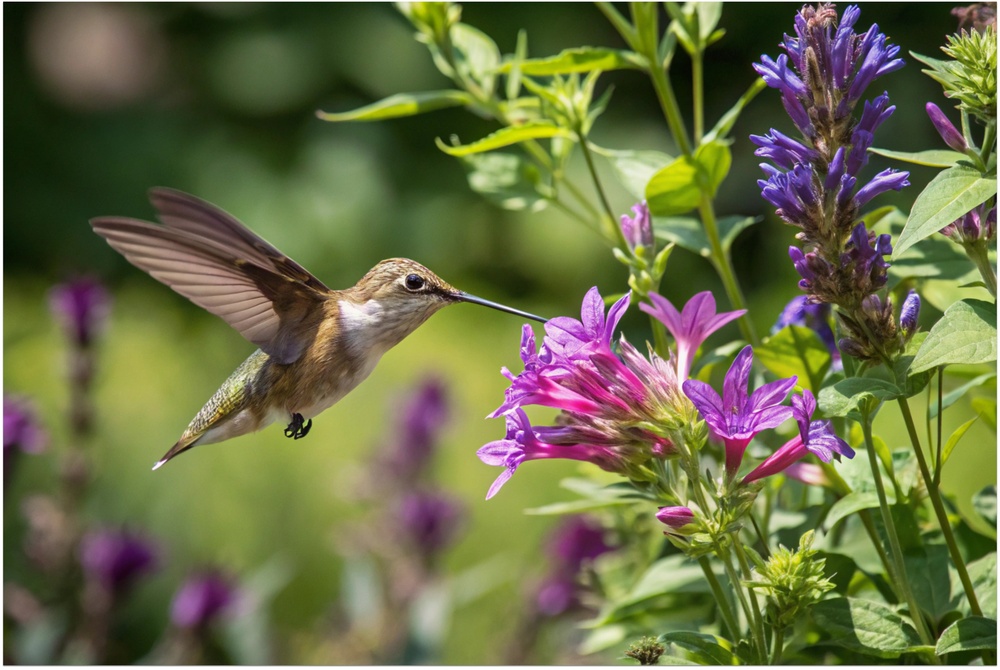
Bright wings flashing through the garden always steal attention, especially when hummingbirds arrive like tiny helicopters on a mission. These energetic pollinators search for nectar-rich blooms that can keep up with their rapid metabolism and nonstop movement. The right summer plants transform an ordinary yard into a buzzing, colorful feeding station within days. Gardeners who choose wisely often notice hummingbirds returning again and again, sometimes even defending their favorite flowers like prized territory.
Summer offers the perfect stage for bold blooms that produce abundant nectar. Heat-loving plants open wide under the sun, creating easy access for hovering birds. A well-planned garden does more than look pretty—it becomes a reliable food source that supports local wildlife.
1. Bee Balm (Monarda)
Bee balm explodes with spiky, firework-like flowers that hummingbirds notice almost immediately. Its tubular blooms hold rich nectar that matches the long beaks of these fast flyers perfectly. Red, pink, and purple varieties create a visual signal that stands out even from a distance. Bees and butterflies also flock to it, turning any patch into a lively pollinator hub.
This plant grows best in sunny locations with good air circulation to prevent mildew. Once established, it spreads quickly and fills garden beds with dense, colorful clusters. Hummingbirds often return multiple times a day to feed from its abundant nectar. A well-placed patch near a patio or window guarantees frequent aerial shows.
2. Cardinal Flower
Cardinal flower brings brilliant red spikes that act like neon signs for hummingbirds. Its tubular blossoms perfectly match a hummingbird’s feeding style, making it one of the fastest plants for attracting them. The intense color alone draws attention, even from across the yard. Few summer plants create such a strong, immediate response from wildlife.
This plant prefers moist soil and performs beautifully near ponds or rain gardens. Once it settles in, it produces tall stalks that sway gently in the summer breeze. Hummingbirds often guard these flowers aggressively, returning to them throughout the day. Gardeners often notice increased bird activity within just a few days of blooming.
3. Salvia
Salvia offers long flowering spikes packed with nectar-rich blossoms that hummingbirds cannot resist. Its vibrant reds, purples, and blues create a steady buffet throughout the summer season. The plant blooms continuously when trimmed properly, ensuring a constant food source. Hummingbirds often hover directly in front of the flowers like they are scanning a nectar bar.
This plant loves heat and handles drought conditions better than many garden favorites. It fits easily into borders, containers, or mixed pollinator beds without demanding much maintenance. Regular deadheading encourages even more blooms and more hummingbird visits. A well-placed salvia cluster can become a daily stop for returning birds.
4. Trumpet Vine
Trumpet vine delivers dramatic, oversized flowers shaped like bold orange or red horns. These blooms practically announce themselves to hummingbirds flying overhead. Its vigorous growth creates a natural feeding station that birds quickly learn to depend on. Few plants match its ability to pull in hummingbirds in large numbers.
This vine climbs aggressively, so sturdy support structures like fences or arbors work best. Once established, it produces waves of blooms during peak summer heat. Hummingbirds often chase each other around its dense clusters in energetic displays. Gardeners should plan for controlled growth to keep it from overtaking nearby plants.
5. Petunias
Petunias may seem simple, but modern varieties produce surprising amounts of nectar that hummingbirds appreciate. Their trumpet-shaped flowers make feeding easy for hovering birds. Bright reds, pinks, and purples stand out in containers, hanging baskets, and garden edges. A cluster of petunias often turns into a quick snack stop for passing hummingbirds.
These flowers perform best with full sun and regular watering to keep blooms coming. Deadheading encourages fresh growth and extends their feeding value throughout summer. Hanging baskets work especially well because they place flowers at ideal hummingbird eye level. Even small spaces can attract regular visits when petunias fill the area.
6. Fuchsia
Fuchsia produces elegant, drooping flowers that look like tiny lanterns hanging from stems. Hummingbirds hover underneath these blooms to sip nectar, creating a stunning upside-down feeding moment. The red and purple combinations act like a magnet for fast-moving birds. Few plants deliver such dramatic garden interactions.
This plant prefers cooler shade and consistent moisture, making it ideal for porches or shaded patios. Hanging baskets showcase its cascading flowers perfectly while keeping blooms accessible. Regular feeding support encourages nonstop flowering through the warm months. Gardeners often spot hummingbirds returning at the same times each day.
7. Lantana
Lantana bursts with clusters of tiny flowers that change color as they age, creating a multicolored nectar station. Hummingbirds love its constant bloom cycle and easy access to food. The plant’s strong fragrance adds another layer of attraction for pollinators. Its bright clusters stand out even in crowded garden beds.
This tough plant handles heat, drought, and poor soil without complaint. It spreads quickly in sunny locations and produces flowers from spring until frost. Hummingbirds often hover over multiple blooms in rapid succession, feeding efficiently. A single lantana patch can keep bird activity high all season long.
A Garden That Never Stays Still
Hummingbirds bring nonstop energy to any outdoor space, and the right plants turn a garden into their favorite stop. Each of these summer bloomers offers reliable nectar, bold colors, and shapes that fit a hummingbird’s unique feeding style. Strategic planting creates movement, sound, and color that keeps the yard feeling alive from morning to evening.
Gardeners who mix these plants often notice overlapping bloom cycles that support hummingbirds all season. The result feels less like a garden and more like a living stage filled with rapid flight paths and glittering wings. Thoughtful placement near windows, patios, or walkways increases the chances of close-up sightings. A hummingbird-friendly garden always rewards patience with unforgettable moments.
What summer plant has brought the most hummingbirds to your garden, and what surprised you about their behavior?
You May Also Like…
8 Nectar-Rich Options That Attract Hummingbirds
Which Plant Pairings Naturally Reduce Pests and Improve Yields
March Garden Pests That Hide Underground
March Garden Pests That Show Up Before You Notice the Damage
These Birdseed Additives Are Spreading Salmonella — Wildlife Officials Sound the Alarm

Brandon Marcus is a staff writer for FrugalGardening.com at District Media, Inc., where he delivers practical gardening advice with a relatable, no-nonsense style. An avid amateur gardener, he holds a BA degree and with over ten years of professional writing experience, he is also an award-winning published author whose first book, Questions For Deep Thinkers, was released by Adams Media. His work has appeared in major publications including Fandom.com, CHUD.com, TheColdWire.com, and Fansided.com.
Leave a Reply