• Skip to primary navigation
  • Skip to main content
  • Skip to primary sidebar

Frugal Gardening

Simple ways to save money while you garden

  • About
  • Contact Us
  • Garden Frugally
  • Buy These
  • Privacy Policy
  • Navigation Menu: Social Icons

    • Facebook
    • Pinterest
    • Twitter

5 Factors That Affect Plant Growth

December 14, 2020 by Steph Coelho Leave a Comment


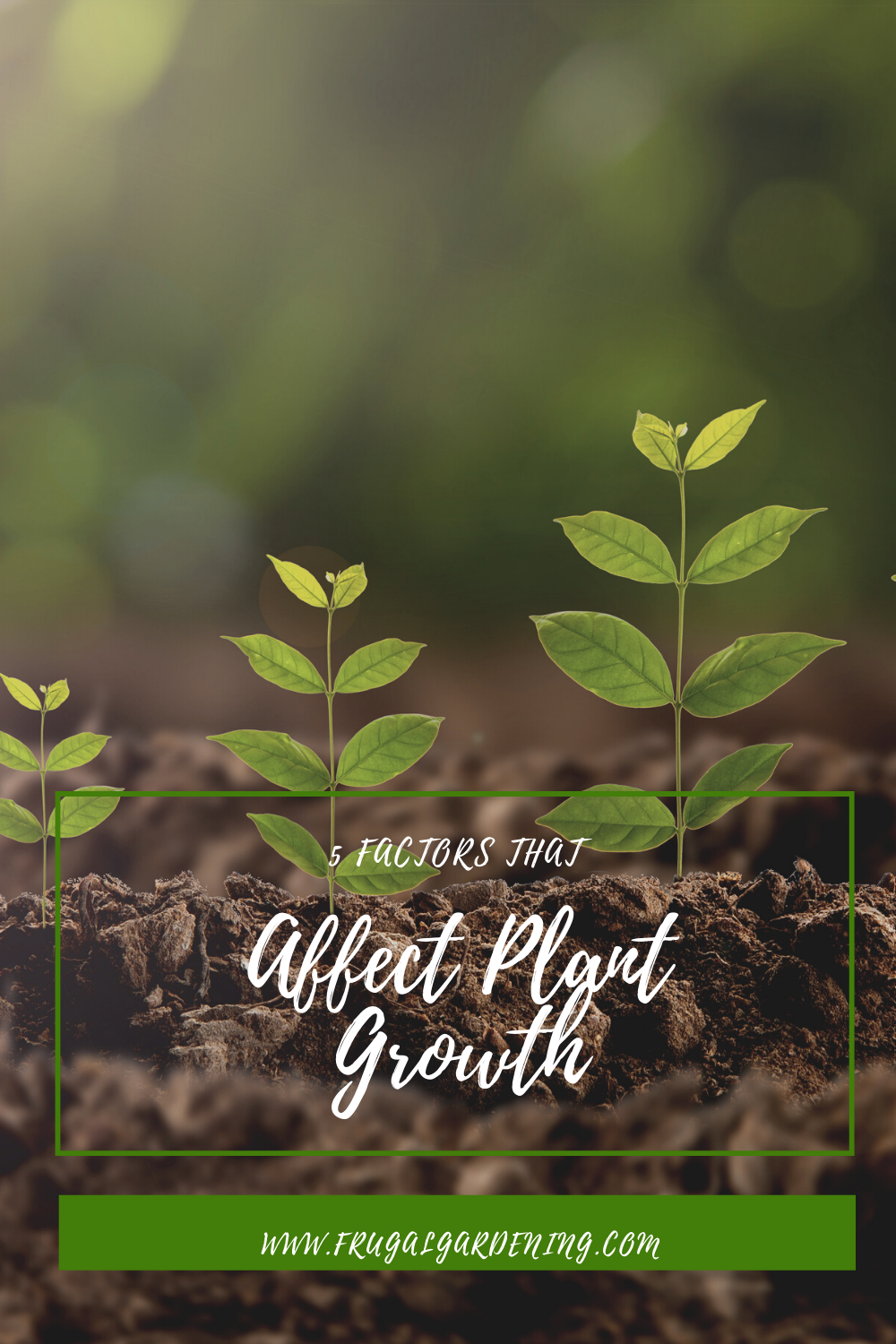
5 Factors That Affect Plant Growth

Many factors affect plant growth. Plants have a few basic needs. Having these needs unmet will cause them to perish. There are also factors outside of a gardener’s control that can impact how well a plant grows. While some variables are out of your control, there are things that you can influence.

What affects plant growth?

Plants need several things to stay happy. If you have the ability to control these variables, doing so can help your plants thrive.

Sunlight

Sunlight is the lifeblood of a plant. Without it, plants die. Sunlight enables photosynthesis, which is the process that allows plants to process nutrients. Without sunlight, they can’t properly take up nutrients. Some plants need more sunlight than others and providing your plants with the right amount of sunlight is key. Giving plants like lettuce too much sun can cause them to wilt, bolt prematurely, and wither. Not giving enough sun to plants, like eggplant, can stunt their growth and diminish overall yields.

Water

Honestly, this is probably the most confusing task for gardeners to get right. Even the most experienced gardeners sometimes over or under water their plants. It’s one of the important factors that affect plant growth. When you’re gardening outside, Mother Nature does some of the work for you. Indoors, it’s all you, baby. Either way, watering is a bit of an art. Without water, plants will eventually die—even the most drought tolerant. Outside, mulch is a helpful way to retain moisture. Irrigation systems can also help you water deeply and consistently—and waste less. Inside, I highly recommend getting an app that reminds you to water on a schedule or creating a makeshift calendar of your own. Watering plants that have different moisture needs on the same schedule is a recipe for disaster.

Air

Plants are a lot like people. They don’t like being squeezed together like sardines. Pack them too close, and you can encounter problems like stunted growth, pests, and disease. Space plants accordingly to prevent overcrowding. Keeping them spaced apart helps improve air circulation, which will reduce instances of disease. It’ll also give your plants plenty of room to grow. If you’re a patient person, you can try an experiment. Plant squash close together instead of following seed packet spacing guidelines and plant them in another area where they have plenty of room to breathe. You’ll see a noticeable difference in how they grow.

Temperature

Out of all the factors that affect plant growth, this one can be tricky to control—especially outdoors. The weather can be unpredictable. Sometimes, even the most diligent gardeners end up with dead or sickly plants on their hands because an unexpected frost occurs. You can use crop protection and other tricks to play around with temperature, but when it gets really cold, there’s nothing you can do to stop the freeze. When starting seeds, getting the temperature right is key. Tomato and pepper seeds, for instance, won’t even germinate if the soil is too cold.

Nutrients 

Plants need food to survive. Often, good quality soil that’s amended yearly contains plenty of nutrients to get you through a vegetable gardening season. However, that’s not always the case. Poor nutrient uptake can happen for several reasons, including inadequate pH and environmental conditions. Without the right nutrients, plants can become diseased and stunted and provide a diminished or non-existent yield.

Photograph of Steph Coelho.
Steph Coelho

Steph Coelho is a freelance writer gardening in zone 5b. She is a certified Square Foot Gardener and has taught various garden-related workshops. When she’s not digging in the dirt or writing, she’s cooking up fresh produce, running, or listening to her favorite podcasts.

Filed Under: gardening methods, houseplants, plant growth, seeds, water, watering Tagged With: growth, nutrients, plant growth, sunlight, water

Previous Post: « Container Gardening: Fabric Pots vs. Plastic Pots
Next Post: How I Feel About the Hunting of Garden Pests »

Reader Interactions

Leave a Reply Cancel reply

Your email address will not be published. Required fields are marked *

Primary Sidebar

Struggling to get your garden off the ground? Put those days behind you with our special starter kit – perfect for thrifty green thumbs everywhere. Get growing and add a splash of color today!

Popular Posts

  • usda free seeds websiteHow To Get Free Seeds From The Government by Amanda Blankenship Seeds might seem like a small expense, but any seasoned…
  • Enviro Ice On PlantsShould I Use Enviro Ice On My Plants? by Kathryn Vercillo Every week, I receive food from Hungryroot. It's a great…
  • is shredded paper good for the gardenFrom Trash to Treasure: Transform Shredded Paper Into Garden Gold by Amanda Blankenship Should you use shredded paper as garden mulch? It might…
  • Enviro IceWhat Happens to Plants If You Use Enviro Ice on Them? by Amanda Blankenship About a year ago, I wrote our first article about…
Why Planting Too Early Can Set Back Your Entire Garden

Why Planting Too Early Can Set Back Your Entire Garden

A garden doesn’t fail loudly. It stalls, struggles, and quietly refuses to thrive while everything looks “almost right.” That frustrating middle ground often starts with one simple decision: planting too early. The urge to get seeds in the ground the second winter loosens its grip feels powerful, especially when the sun sticks around longer and…

Read More

8 Easy Ways to Add Organic Matter Without Buying Compost

8 Easy Ways to Add Organic Matter Without Buying Compost

Healthy soil doesn’t come from a bag—it comes from smart, creative choices that turn everyday waste into garden gold. Rich, dark, crumbly soil fuels strong roots, boosts plant growth, and keeps moisture exactly where it belongs, but no one needs to spend money on store-bought compost to get there. The real secret hides in plain…

Read More

Tips for Growing Strong Roots in Tight, Compacted Soil

Tips for Growing Strong Roots in Tight, Compacted Soil

The ground tells the truth. When soil turns dense and stubborn, plants don’t just struggle quietly—they stall, weaken, and give up before they ever get the chance to thrive. That hard-packed surface might look harmless, but underneath, it locks roots in place and cuts off the air, water, and nutrients that keep everything alive and…

Read More

5 Warning Signs Your Compost Is Too Wet and Losing Nutrients

5 Warning Signs Your Compost Is Too Wet and Losing Nutrients

Compost smells like earth’s magic in progress, turning scraps into soil gold. But when things go too far and the pile gets soggy, that magic can start to stink—literally and figuratively. Overly wet compost isn’t just messy; it can drown the microbes that do all the heavy lifting and leach nutrients into the ground, leaving…

Read More

  • About
  • Contact Us
  • Garden Frugally
  • Buy These
  • Privacy Policy
  • Navigation Menu: Social Icons

    • Facebook
    • Pinterest
    • Twitter
  • Facebook
  • Pinterest
  • Twitter

Copyright © 2026 · Foodie Pro & The Genesis Framework