• Skip to primary navigation
  • Skip to main content
  • Skip to primary sidebar

Frugal Gardening

Simple ways to save money while you garden

  • About
  • Contact Us
  • Garden Frugally
  • Buy These
  • Privacy Policy
  • Navigation Menu: Social Icons

    • Facebook
    • Pinterest
    • Twitter

5 Factors That Affect Plant Growth

December 14, 2020 by Steph Coelho Leave a Comment


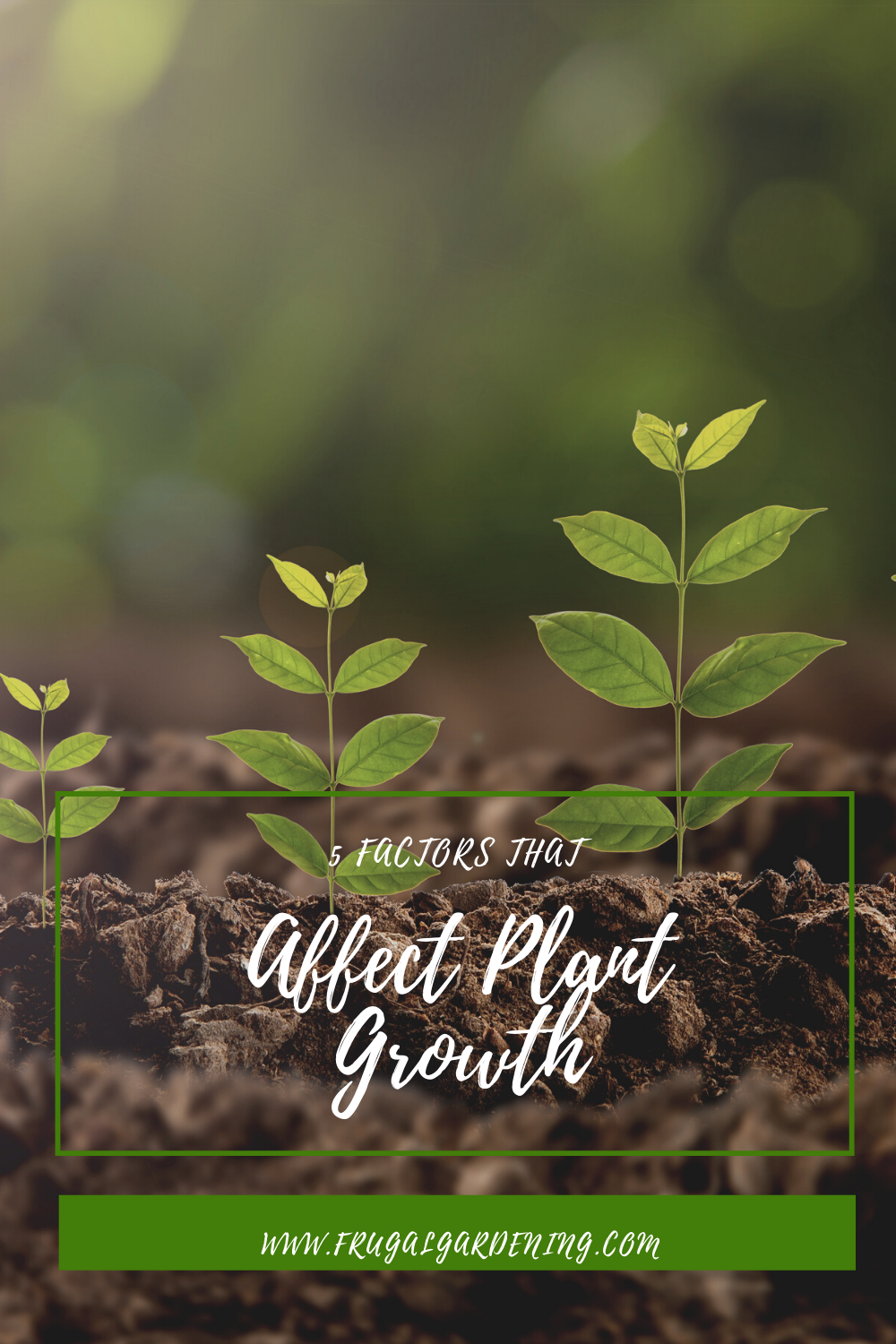
5 Factors That Affect Plant Growth

Many factors affect plant growth. Plants have a few basic needs. Having these needs unmet will cause them to perish. There are also factors outside of a gardener’s control that can impact how well a plant grows. While some variables are out of your control, there are things that you can influence.

What affects plant growth?

Plants need several things to stay happy. If you have the ability to control these variables, doing so can help your plants thrive.

Sunlight

Sunlight is the lifeblood of a plant. Without it, plants die. Sunlight enables photosynthesis, which is the process that allows plants to process nutrients. Without sunlight, they can’t properly take up nutrients. Some plants need more sunlight than others and providing your plants with the right amount of sunlight is key. Giving plants like lettuce too much sun can cause them to wilt, bolt prematurely, and wither. Not giving enough sun to plants, like eggplant, can stunt their growth and diminish overall yields.

Water

Honestly, this is probably the most confusing task for gardeners to get right. Even the most experienced gardeners sometimes over or under water their plants. It’s one of the important factors that affect plant growth. When you’re gardening outside, Mother Nature does some of the work for you. Indoors, it’s all you, baby. Either way, watering is a bit of an art. Without water, plants will eventually die—even the most drought tolerant. Outside, mulch is a helpful way to retain moisture. Irrigation systems can also help you water deeply and consistently—and waste less. Inside, I highly recommend getting an app that reminds you to water on a schedule or creating a makeshift calendar of your own. Watering plants that have different moisture needs on the same schedule is a recipe for disaster.

Air

Plants are a lot like people. They don’t like being squeezed together like sardines. Pack them too close, and you can encounter problems like stunted growth, pests, and disease. Space plants accordingly to prevent overcrowding. Keeping them spaced apart helps improve air circulation, which will reduce instances of disease. It’ll also give your plants plenty of room to grow. If you’re a patient person, you can try an experiment. Plant squash close together instead of following seed packet spacing guidelines and plant them in another area where they have plenty of room to breathe. You’ll see a noticeable difference in how they grow.

Temperature

Out of all the factors that affect plant growth, this one can be tricky to control—especially outdoors. The weather can be unpredictable. Sometimes, even the most diligent gardeners end up with dead or sickly plants on their hands because an unexpected frost occurs. You can use crop protection and other tricks to play around with temperature, but when it gets really cold, there’s nothing you can do to stop the freeze. When starting seeds, getting the temperature right is key. Tomato and pepper seeds, for instance, won’t even germinate if the soil is too cold.

Nutrients 

Plants need food to survive. Often, good quality soil that’s amended yearly contains plenty of nutrients to get you through a vegetable gardening season. However, that’s not always the case. Poor nutrient uptake can happen for several reasons, including inadequate pH and environmental conditions. Without the right nutrients, plants can become diseased and stunted and provide a diminished or non-existent yield.

Photograph of Steph Coelho.
Steph Coelho

Steph Coelho is a freelance writer gardening in zone 5b. She is a certified Square Foot Gardener and has taught various garden-related workshops. When she’s not digging in the dirt or writing, she’s cooking up fresh produce, running, or listening to her favorite podcasts.

Filed Under: gardening methods, houseplants, plant growth, seeds, water, watering Tagged With: growth, nutrients, plant growth, sunlight, water

Previous Post: « Container Gardening: Fabric Pots vs. Plastic Pots
Next Post: How I Feel About the Hunting of Garden Pests »

Reader Interactions

Leave a Reply Cancel reply

Your email address will not be published. Required fields are marked *

Primary Sidebar

Struggling to get your garden off the ground? Put those days behind you with our special starter kit – perfect for thrifty green thumbs everywhere. Get growing and add a splash of color today!

Popular Posts

  • usda free seeds websiteHow To Get Free Seeds From The Government by Amanda Blankenship Seeds might seem like a small expense, but any seasoned…
  • Enviro Ice On PlantsShould I Use Enviro Ice On My Plants? by Kathryn Vercillo Every week, I receive food from Hungryroot. It's a great…
  • is shredded paper good for the gardenFrom Trash to Treasure: Transform Shredded Paper Into Garden Gold by Amanda Blankenship Should you use shredded paper as garden mulch? It might…
  • Enviro IceWhat Happens to Plants If You Use Enviro Ice on Them? by Amanda Blankenship About a year ago, I wrote our first article about…
The 30-Day Harvest: Fast Crops That Put Food on the Table by Next Month

The 30-Day Harvest: Fast Crops That Put Food on the Table by Next Month

Fresh food in just 30 days sounds like a gardener’s cheat code, but it’s completely doable with the right crops and a little strategy. Fast-growing vegetables don’t just save time—they cut grocery bills, boost nutrition, and give you that unbeatable satisfaction of eating something you grew yourself. You don’t need acres of land or years…

Read More

The Winter Sowing Method: Why You Should Start Your Garden in the Snow

The Winter Sowing Method: Why You Should Start Your Garden in the Snow

Snow blankets your yard, the garden beds sit frozen solid, and most people assume planting season still sits months away. That’s exactly when savvy gardeners grab recycled containers, a handful of seeds, and get to work. The winter sowing method flips traditional gardening on its head by letting nature handle germination in real time. Instead…

Read More

The 'Native' Advantage: Why Local Plants Save You Hundreds in Maintenance

The ‘Native’ Advantage: Why Local Plants Save You Hundreds in Maintenance

Lush gardens don’t have to drain your wallet or your weekends. The secret sits right beneath your feet—literally. Native plants thrive without constant babysitting, expensive treatments, or sky-high water bills, making them one of the smartest financial moves a homeowner can make. While trendy landscaping fads come and go, native plant landscaping quietly delivers consistent…

Read More

The Fall Preview: Why Smart Budgeters Start Buying for Next Year Today

The Fall Preview: Why Smart Budgeters Start Buying for Next Year Today

Autumn doesn’t just signal the end of the growing season—it quietly opens one of the best money-saving windows in gardening. Retailers start clearing shelves, nurseries slash prices, and seasonal items suddenly cost a fraction of their spring price tags. Smart gardeners recognize this shift and treat fall like a strategic shopping season rather than a…

Read More

  • About
  • Contact Us
  • Garden Frugally
  • Buy These
  • Privacy Policy
  • Navigation Menu: Social Icons

    • Facebook
    • Pinterest
    • Twitter
  • Facebook
  • Pinterest
  • Twitter

Copyright © 2026 · Foodie Pro & The Genesis Framework