• Skip to primary navigation
  • Skip to main content
  • Skip to primary sidebar

Frugal Gardening

Simple ways to save money while you garden

  • About
  • Contact Us
  • Garden Frugally
  • Buy These
  • Privacy Policy
  • Navigation Menu: Social Icons

    • Facebook
    • Pinterest
    • Twitter

Container Gardening: Fabric Pots vs. Plastic Pots

December 7, 2020 by Steph Coelho Leave a Comment


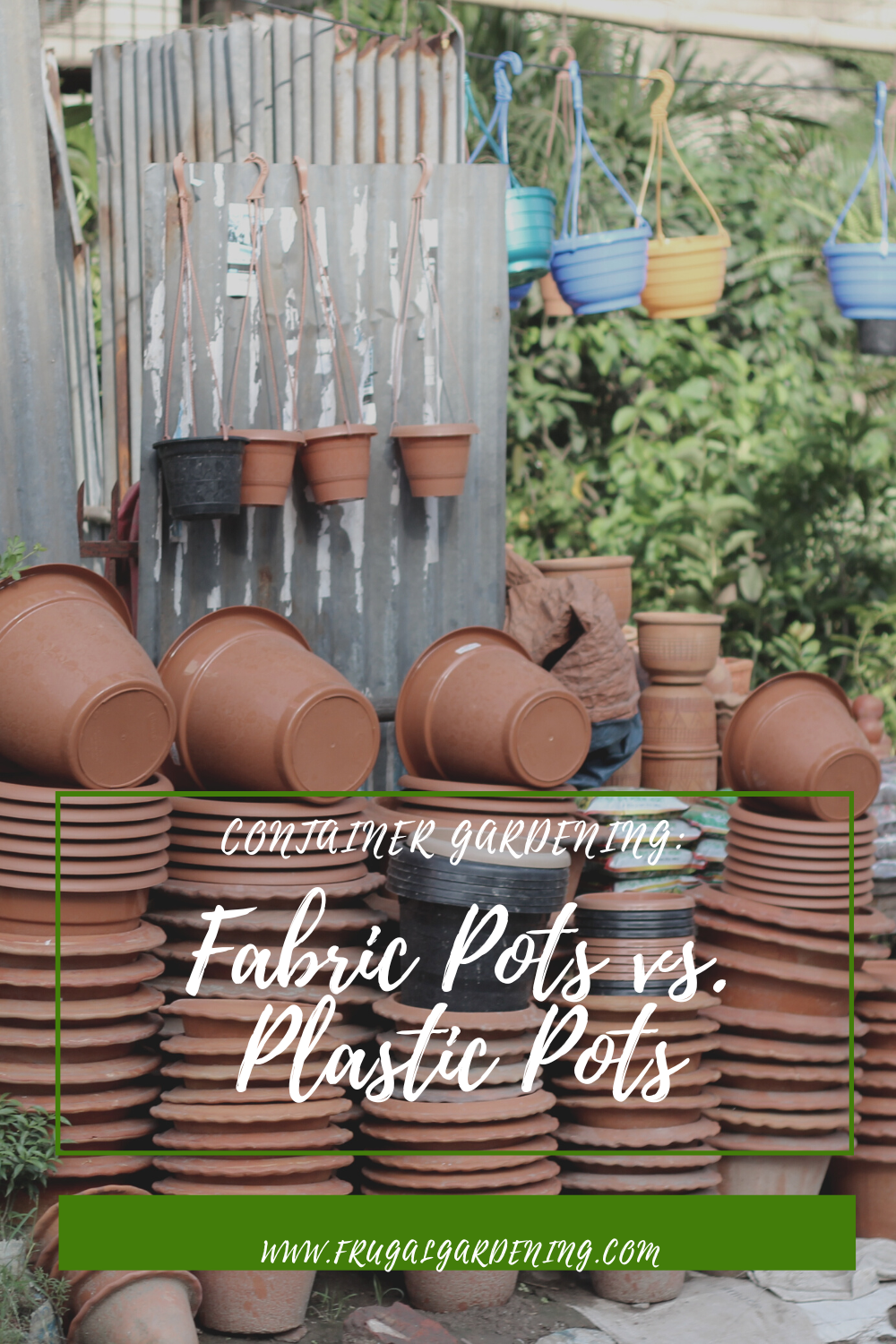
I love to plant crops in containers, especially finicky plants like eggplant and peppers. I use a variety of containers in my garden, including fabric pots. If it gets too cold, it’s simple enough to haul them inside. Containers are also great for those living in rental properties or those with limited space. It’s easy to shuffle them around a deck or balcony and you can manage to plant quite a bit in multiple containers. I’ve collected many plastic pots from the garden center over the years. I reuse them to plant herbs, tomatoes, and whatever doesn’t fit in the rest of my garden. But plastic pots have their pros and cons, and they aren’t the only option for your gardening needs.

The Trouble With Plastic

Black plastic pots are great for heat-loving plants because the dark material is a heat magnet. What’s not so great about plastic? Unless you’ve purchased self-watering containers, plastic pots require careful monitoring so that plants are evenly watered. Without proper drainage, plants may become root-bound or drown if over-watered (always make sure there are drainage holes underneath). Plastic doesn’t breathe very well, either. Imagine wrapping yourself in a sheet of plastic instead of breathable clothing. You’d end up a sweaty, suffocated mess.

That doesn’t mean plastic pots aren’t useful. They’re typically very inexpensive, easy to find, and they’re available in all shapes and sizes. But there’s already SO much plastic in the world. If there’s a worthy alternative, why not try it? By choosing a different type of plant pot, you can reduce your ecological footprint and stop creating unnecessary plastic waste.

An Alternative: Fabric Pots

You could use any pot for planting, but fabric pots offer a few distinct advantages:

  • They’re relatively cheap. Often sold in packs, fabric containers are a suitable option for frugal gardeners.
  • They last a long time. Cracked plastic and broken ceramic pots begone! Fabric pots are made of sturdy materials that won’t rip, even when filled with wet soil. Re-use them year after year.
  • They’re breathable. The fabric allows for optimal airflow.
  • No water-logging. You won’t have to contend with rotted roots using fabric pots, the material allows for proper drainage.
  • Easy to handle. Handles make it easy to drag fabric pots around the garden.
  • Foldable sides. Fabric pots are ideal for growing potatoes since the edges can be rolled down.

If you’re looking for a good beginner’s guide to growing in pots, I highly recommend the Vegetable Gardener’s Container Garden. It’s a book that I still refer back to!

I also recommend checking out this handy YouTube video on how to grow potatoes in containers:

What’s your favorite vegetable to grow in fabric pots? Leave us a comment to let us know!

Photograph of Steph Coelho.
Steph Coelho

Steph Coelho is a freelance writer gardening in zone 5b. She is a certified Square Foot Gardener and has taught various garden-related workshops. When she’s not digging in the dirt or writing, she’s cooking up fresh produce, running, or listening to her favorite podcasts.

Filed Under: container gardening, frugality, garden tools, gardening methods, houseplants, indoor gardening Tagged With: container gardening, containers, garden containers, plant pots, pots

Previous Post: « Do Pre-Packaged Seeds Grow Faster Than Fresh Seeds?
Next Post: 5 Factors That Affect Plant Growth »

Reader Interactions

Leave a Reply Cancel reply

Your email address will not be published. Required fields are marked *

Primary Sidebar

Struggling to get your garden off the ground? Put those days behind you with our special starter kit – perfect for thrifty green thumbs everywhere. Get growing and add a splash of color today!

Popular Posts

  • usda free seeds websiteHow To Get Free Seeds From The Government by Amanda Blankenship Seeds might seem like a small expense, but any seasoned…
  • Enviro Ice On PlantsShould I Use Enviro Ice On My Plants? by Kathryn Vercillo Every week, I receive food from Hungryroot. It's a great…
  • is shredded paper good for the gardenFrom Trash to Treasure: Transform Shredded Paper Into Garden Gold by Amanda Blankenship Should you use shredded paper as garden mulch? It might…
  • Enviro IceWhat Happens to Plants If You Use Enviro Ice on Them? by Amanda Blankenship About a year ago, I wrote our first article about…
Easy Techniques to Strengthen Weak Seedlings Before Transplanting

Easy Techniques to Strengthen Weak Seedlings Before Transplanting

Seedlings might look delicate, but with the right approach, those fragile sprouts can transform into rockstar plants that laugh in the face of wind, rain, and hungry critters. Every gardener knows that the real magic happens before the seedlings even touch soil outside, where preparation can spell the difference between wilted disappointment and a lush,…

Read More

5 Natural Methods to Repel Ants Without Toxic Chemicals

5 Natural Methods to Repel Ants Without Toxic Chemicals

Ants don’t knock before they invade, and once they set foot in your home, they march like tiny invaders on a mission. One moment, your kitchen looks pristine; the next, there’s a trail of determined little workers dragging crumbs twice their size across your countertops. Forget toxic sprays that leave a chemical haze over your…

Read More

The Safe Way to Use Coffee Grounds Without Damaging Plants

The Safe Way to Use Coffee Grounds Without Damaging Plants

Coffee isn’t just the lifeblood of mornings—it’s secretly a superhero in your garden too. Those leftover coffee grounds hiding in the kitchen aren’t trash; they’re miniature power-packed bundles of nutrients ready to give your plants a boost. Imagine turning your morning ritual into a green-thumbed adventure while reducing waste at the same time. It’s like…

Read More

How to Protect Seedlings From Cold Nights Without Buying Covers

How to Protect Seedlings From Cold Nights Without Buying Covers

Cold nights can strike tiny seedlings like a stealthy ninja, and even the healthiest ones can wilt and waver when temperatures dip unexpectedly. Protecting them doesn’t have to involve spending a fortune on fancy covers or plastic cloches. In fact, a little creativity and some everyday items around the house can shield these tender little…

Read More

  • About
  • Contact Us
  • Garden Frugally
  • Buy These
  • Privacy Policy
  • Navigation Menu: Social Icons

    • Facebook
    • Pinterest
    • Twitter
  • Facebook
  • Pinterest
  • Twitter

Copyright © 2026 · Foodie Pro & The Genesis Framework