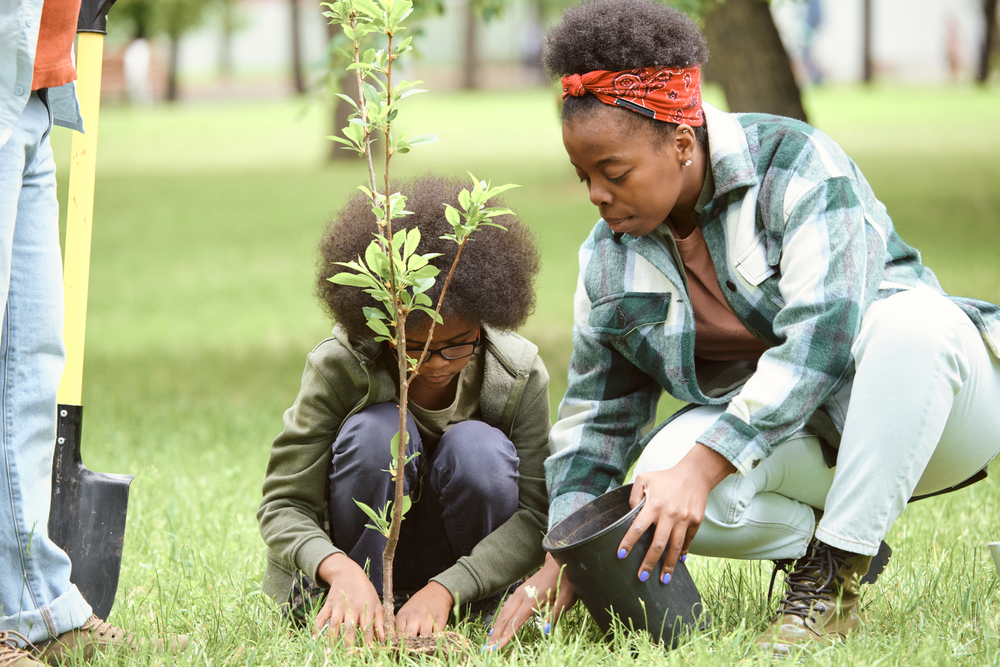
You can spend $100—or considerably more—on a beautiful young tree, carefully drive it home, dig a hole, and unintentionally create a problem before you’ve even put the shovel away. The mistake costs nothing: planting the tree too deeply. Digging the planting hole too deep the most common mistake when planting a tree. However, improper depth is by far the most common planting problem its experts encounter. A tree planted too deeply may not collapse next week, which makes this tree planting mistake particularly deceptive. It can struggle to establish, develop girdling roots, suffer decay, and ultimately live a much shorter life than the healthy tree you thought you were buying.
Find the Root Flare Before You Dig the Hole
Before measuring the root ball, find the place where the trunk begins widening as it transitions into the major roots—this is the root flare. NC State says the flare should remain visible and match the finished soil grade after planting. If the trunk disappears straight into the soil like a telephone pole, that’s a warning that the root flare may be buried. The tricky part is that trees sometimes arrive from the nursery with extra soil already covering the flare, so assuming the top of the container or root ball represents the correct planting depth can lead you astray. Locate the actual flare first, and you’ve already avoided one of the most expensive tree planting mistakes without spending another dollar.
Dig Wide, but Don’t Dig Deep
The classic image of tree planting involves digging an enormous deep hole, but width is much more useful than unnecessary depth. Penn State recommends a hole two to four times the diameter of the root ball in difficult soils and stresses that the hole should be no deeper than the root system itself. The root flare should ultimately sit at surrounding soil level rather than several inches below it. Digging too deeply also creates another problem because loosened soil beneath the root ball can settle after planting, carrying the tree downward with it. Think shallow and wide rather than narrow and deep, because most new root growth needs to spread outward into the surrounding soil.
Planting Too Deep Can Create Problems Years Later
This tree planting mistake is especially frustrating because the consequences aren’t always immediate. University of Florida IFAS explains that roots buried too deeply may receive inadequate oxygen and that affected trees can grow slowly for years before eventually failing. Roots growing near a buried trunk can also circle it and eventually become girdling roots, restricting movement of water and nutrients as both the trunk and roots expand. NC State warns that stem-girdling roots associated with buried root flares are a common cause of premature tree death. A tree that remains alive for five or ten years therefore isn’t necessarily evidence that the original planting depth was correct.
Don’t Bury the Trunk Under a Mulch Volcano
You can plant a tree at exactly the right depth and then effectively bury it by piling six inches of mulch around the trunk. Mulch is genuinely useful because it reduces evaporation, moderates soil temperature, suppresses weeds, and protects trunks from lawn equipment. However, the University of Minnesota recommends no more than about three inches and says the root flare should remain bare, with mulch kept away from the trunk. Excessive mulch can reduce oxygen, keep poorly drained soil too wet, encourage roots to grow into the mulch, and contribute to stem-girdling roots. Think doughnut rather than volcano: a broad mulch ring with a clear opening around the trunk.
Skip the Fancy Soil in the Planting Hole
After spending good money on a tree, adding compost, fertilizer, or premium garden soil to the planting hole can feel like giving it a luxurious head start. Surprisingly, the University of Maryland recommends against adding organic amendments to the planting hole because the difference between amended soil and surrounding native soil can interfere with root establishment. In poorly drained soil, heavily amended material can also hold excessive water and reduce the oxygen available to roots. University of Minnesota likewise recommends backfilling with the original native soil rather than compost or potting mix. One of the best things you can give a new tree is permission for its roots to grow outward into the soil where they’ll eventually have to survive anyway.
Don’t Ignore Circling Roots Just Because the Tree Looks Healthy
Container-grown trees deserve another inspection before they disappear into the ground. Roots that have reached the edge of a container can begin circling around the root ball, potentially creating future structural problems as they enlarge. You should always correct problematic container roots before planting rather than leaving roots that may eventually girdle the tree. Additionally, check for compacted roots and address them before the tree goes into its permanent location. Spending five minutes inspecting the root system now is easier than trying to diagnose a declining mature tree years after the original tree planting mistake disappeared underground.
Water the Root Ball, Not Just the Surrounding Yard
Planting day isn’t the end of the job because a newly installed tree still has most of its roots confined to a relatively small root ball. Consistent watering is critical during establishment and recommends checking soil moisture rather than relying on a rigid calendar. Newly planted trees can suffer from both insufficient water and overly wet soil, so the goal isn’t to leave a hose running indefinitely. Apply water slowly enough to penetrate the root zone, and adjust the frequency for rainfall, temperature, wind, soil drainage, and the size of the tree. Fall temperatures may be cooler, but that doesn’t mean you can plant a tree, walk away, and assume nature will provide exactly the moisture it needs.
Don’t Assume Fall Planting Eliminates Transplant Stress
Fall can be an excellent planting season because cooler temperatures reduce some of the stress trees face compared with hot summer conditions. Fall is a great time to plant trees, but proper planting technique remains essential because the tree still needs to establish a new root system. A wide planting hole, visible root flare, properly managed roots, sensible mulch, and adequate watering all contribute to that establishment process. Resist the urge to add unnecessary products when the most important factors are often things you can control for free. Avoiding a tree planting mistake usually costs far less than replacing a tree that never had a fair chance to establish.
Give Your $100 Tree the Chance to Become a $1,000 Tree
A young tree is unusual among garden purchases because you’re not really buying it for what it looks like today; you’re buying what it could become over decades. That’s why something as simple as planting depth deserves more attention than expensive fertilizers, decorative mulch, or other add-ons at checkout. Find the root flare, plant it at the finished soil grade or slightly above where appropriate, spread the roots, use native soil for backfill, and keep mulch away from the trunk. Those steps cost virtually nothing, yet they can help prevent the tree planting mistake that may not reveal itself until years after your receipt and warranty are gone.
Have you ever discovered that a tree in your yard was planted too deeply, and were you able to save it? Share your experience in the comments.
What to Read Next
What Is Causing Black Residue on Leaves Beneath Trees?
8 Ways to Help Young Fruit Trees Through Dry Late-Summer Weeks
Leave a Reply