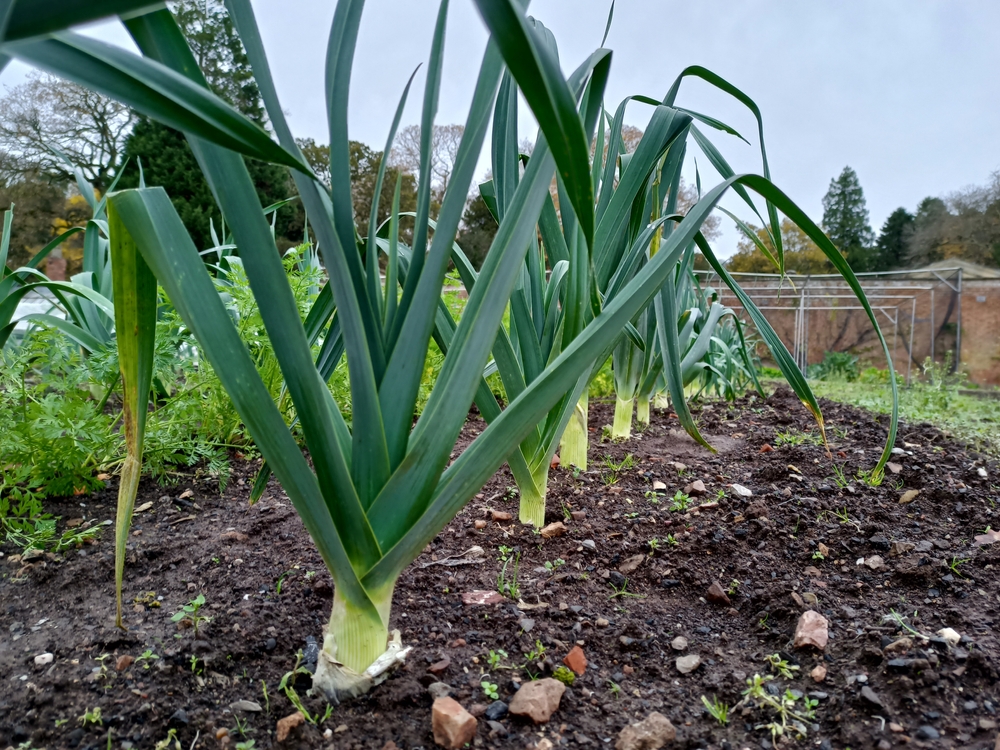
When leeks come out of the garden looking more like green drinking straws than sturdy vegetables, something has gone sideways. Those skinny stalks usually point to a growing problem involving timing, spacing, moisture, sunlight, soil, or some combination of the usual suspects.
Thin leeks rarely require some mysterious gardener-only trick involving moon phases and a secret handshake. Leeks simply need enough time and the right conditions to build that thick white shank, and a few small changes can make a surprisingly big difference.
Thin Leeks Often Need More Time
Leeks grow slowly, and that patience requirement can sneak up on even experienced gardeners. Unlike radishes, which practically sprint toward the finish line, leeks spend a long stretch quietly building leaves and thickening their stems.
A leek can look perfectly healthy above the soil while the edible stalk remains disappointingly narrow below it. Early planting gives the plants more time to develop before cold weather arrives, while choosing varieties suited to the local growing season can also help. Short-season varieties make a better choice where summers run brief, while long-season types need a longer runway. Pulling leeks too early simply guarantees a smaller harvest.
Crowded Leeks Have No Room to Bulk Up
Spacing matters because every leek needs access to light, water, nutrients, and physical room to expand. Seedlings that start life packed together may look charming in the garden bed, but they eventually compete like shoppers fighting over the last good parking spot.
Thin seedlings need thinning once they begin crowding each other, and transplants need enough space for their mature size. Around 6 inches between plants works well for many varieties, although gardeners should check the recommended spacing for the specific cultivar. Rows also need enough room for watering, weeding, and hilling soil around the stems. If leeks sit shoulder-to-shoulder, moving them earlier rather than later can give the remaining plants a much better shot at producing substantial stalks.
Feed the Soil, but Skip the Fertilizer Frenzy
Leeks appreciate fertile soil with plenty of organic matter, especially because they spend such a long time growing. Compost worked into the bed before planting can improve soil structure while supplying a broad range of nutrients.
Nitrogen matters because leeks produce lots of leafy growth, but dumping on high-nitrogen fertilizer can create a garden full of impressive green leaves without solving every problem underneath them. A soil test provides much better guidance than guessing with fertilizer, particularly in an established vegetable bed. If the soil lacks nutrients, gardeners can amend it according to the test results rather than reaching for fertilizer every time a leek looks skinny.
Water Stress Can Keep Stalks Skinny
Leeks need consistent moisture throughout the growing season, particularly while they establish roots and build their stalks. A plant that repeatedly swings from dry soil to a soaking drink spends energy dealing with stress instead of putting steady growth into the harvest.
Check the soil a few inches below the surface rather than judging moisture from the top layer alone. Water deeply when the soil begins to dry, and use mulch to slow evaporation and keep soil moisture more consistent. Mulch also helps suppress weeds, which otherwise compete for water and nutrients while quietly stealing the spotlight. Avoid keeping the bed soggy, because saturated soil can deprive roots of oxygen and encourage root problems.
Sunlight and Hilling Help Build Better Leeks
Leeks perform best in full sun, so a bed that receives strong direct light gives them a better growing environment than a shady corner tucked behind a shed. Insufficient light can limit growth, especially when other conditions already challenge the plants.
Hilling soil around the lower portion of the plants offers another useful trick because it helps lengthen the white edible shank. Gardeners can gradually draw soil around the stems as the leeks grow, taking care not to bury the center where the leaves emerge. Some gardeners plant leeks in shallow trenches and gradually fill those trenches as the plants develop. This approach both supports the plants and encourages a longer white section without requiring complicated equipment.
The Best Fix May Simply Be Patience
Before pulling every skinny leek in frustration, take a closer look at the plants and the calendar. Healthy green leaves, firm stalks, adequate moisture, good sunlight, and plenty of growing time usually point toward a harvest that simply needs more patience.
The most useful question involves timing rather than panic: are the plants actually finished growing? If the answer is no, keep watering consistently, control competing weeds, and continue hilling as appropriate. Gardeners sometimes harvest leeks because they expect them to reach grocery-store proportions on a particular date, even though the plants still have plenty of growing to do. Give those skinny stalks a little more runway, and the garden may deliver a much more satisfying harvest.
Give Those Skinny Stalks a Fair Shot
Thin leeks usually tell a story, and the clues often appear in the planting date, spacing, soil, moisture, sunlight, or harvest timing. Fixing one issue can help, but consistent care throughout the growing season gives leeks the best opportunity to develop thick, useful stalks.
A pencil-thin leek does not automatically mean a failed crop, either. Young leeks work beautifully in soups, stews, omelets, sauces, and other dishes where their mild onion flavor matters more than their diameter. For the next crop, start early when appropriate, give plants room, keep the soil evenly moist, build fertile soil, provide plenty of sun, and resist the temptation to yank them out before they finish their slow-and-steady growth. The garden rewards patience here, even if the leeks initially look like they belong in a pencil cup.
Which growing change has made the biggest difference in the size of the leeks in your garden?
You May Also Like…
Are Old-Fashioned Flowers Making a Comeback in Modern Gardens?
5 Reasons Tabletop Vegetable Gardens Work Well for Renters
Can Reflective Mulch Improve Harvests in Small Vegetable Beds?
10 Vegetables That Give the Best Return for Small Gardens
How to Tell If You’re Watering Deeply Enough

Brandon Marcus is a staff writer for FrugalGardening.com at District Media, Inc., where he delivers practical gardening advice with a relatable, no-nonsense style. An avid amateur gardener, he holds a BA degree and with over ten years of professional writing experience, he is also an award-winning published author whose first book, Questions For Deep Thinkers, was released by Adams Media. His work has appeared in major publications including Fandom.com, CHUD.com, TheColdWire.com, and Fansided.com.
Leave a Reply