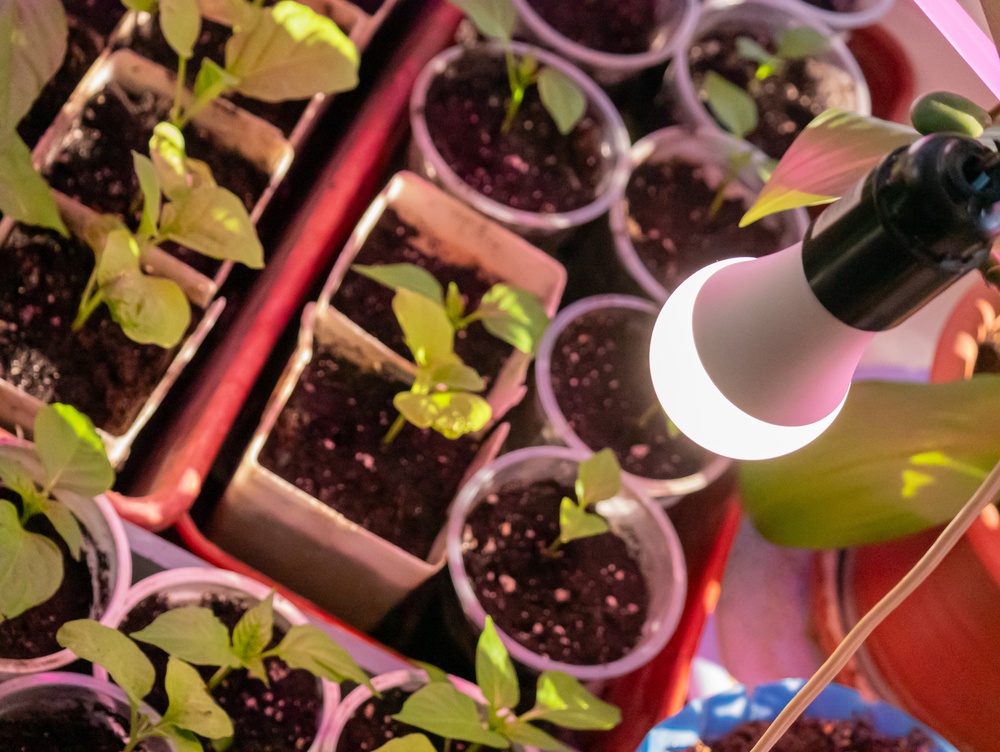
A $4 tomato plant doesn’t sound expensive until you need six tomatoes, four peppers, a tray of lettuce, basil, broccoli, and a few flowers. Suddenly, the spring garden-center trip costs $60 before anything has gone into the ground, making a $3 packet containing dozens of seeds look like an obvious bargain. But the real seed starting cost isn’t simply the price printed on the packet, especially if you’re starting plants indoors. Add seed-starting mix, trays, pots, plant labels, supplemental lighting, electricity, and the seedlings that don’t survive, and buying transplants can occasionally win. Let’s run the numbers on several realistic gardens to see when starting from seed actually saves money.
Direct-Sown Seeds Are the Easy Winner
For vegetables that can be planted directly into garden soil, it’s difficult for purchased transplants to compete financially. Iowa State University calls direct seeding much more economical than purchasing transplants and recommends the method for quick-growing crops such as radishes and plants that don’t transplant easily, including carrots and beets. Suppose a $3 packet gives you enough green bean, radish, lettuce, or carrot seed for dozens of plants, while individual nursery starts would cost several dollars each. You also avoid indoor trays, seed-starting mix, grow lights, and weeks of tending seedlings before transplanting. For these crops, the seed starting cost may essentially be the seed itself plus whatever ordinary soil amendments and water the garden would have needed anyway.
Indoor Seed Starting Changes the Equation
Tomatoes and peppers make the comparison more complicated because many gardeners start them indoors weeks before outdoor planting. University of Maryland recommends roughly five to six weeks indoors for tomatoes and eight to 10 weeks for peppers, eggplants, and onions. Seeds, germination medium, containers, lights, and other supplies are among what’s needed to produce quality indoor transplants. If you’re buying all of that equipment for the first time, a $3 seed packet can quickly turn into a $50-plus project. The seeds are inexpensive; creating a miniature indoor nursery is where the seed starting cost starts climbing.
Let’s Price a Small First-Year Setup
Imagine you want six tomato plants and buy a $3 seed packet, $8 bag of seed-starting mix, $8 tray and cell setup, and $30 basic grow light. Your first-year investment is already $49 before accounting for electricity, fertilizer, labels, or replacement seedlings, meaning those six tomatoes effectively start at more than $8 apiece if they’re the only plants you grow. By comparison, six hypothetical $5 nursery transplants would cost $30 and require no indoor setup or six weeks of daily attention. NC State Cooperative specifically warns that retail quantities of soil, containers, fertilizer, and seed can make homegrown transplants more expensive than commercially grown plants. Starting from seed therefore isn’t automatically cheaper in year one when you’re growing only a handful of plants.
Grow 30 Plants and the Same Setup Looks Better
Now use that same $49 setup to produce six tomatoes, six peppers, six broccoli plants, six flowers, and six herbs. Suddenly you’re growing 30 transplants at an average first-year setup cost of about $1.63 each, assuming successful germination and survival. If comparable nursery plants averaged even $4 each, buying 30 would cost $120, creating a theoretical $71 difference before electricity and other minor expenses. Seed costs less than store-bought transplants and also gives gardeners access to far more cultivars. Volume is what makes the seed starting cost work: the same light and tray become much more economical when they’re producing dozens of useful plants.
Reusing Equipment Changes Year Two
The grow light is where our hypothetical first-year budget really hurts, but you shouldn’t need to buy another one every spring. Reuse the $30 light and $8 tray the following year, and perhaps your recurring costs fall to $15 for several seed packets, fresh growing medium, and miscellaneous supplies. Produce another 30 usable plants and you’re down around 50 cents per plant before electricity and your time. Starting transplants yourself can save money over time even after accounting for the upfront cost of a grow light. That’s the important phrase—over time—because reusable equipment makes the economics considerably stronger after the first season.
Failed Seedlings Need to Be Included in the Math
Garden math becomes misleading if every seed is treated as a guaranteed mature plant. Seeds may fail to germinate, seedlings can develop problems from excessive moisture or inadequate light, and poorly hardened plants can struggle after they’re moved outdoors. Iowa State’s indoor seed-starting guidance stresses fresh seed, abundant light, proper watering, correct timing, and suitable germination conditions for successful transplants. If you spend $20 producing 20 seedlings but only 10 become garden-worthy plants, your effective seed starting cost is $2 per successful transplant rather than $1. Track usable plants instead of the number of seeds you originally dropped into the tray.
Your Time Has Value, Even If You Enjoy It
Starting plants isn’t difficult, but it isn’t instant either. Seedlings need watering, adequate light, temperature management, thinning or transplanting when necessary, and eventually hardening off before they’re planted outdoors. Vegetables may require roughly two to eight weeks before they’re ready for transplanting, depending on what you’re growing. Someone working long hours may reasonably decide that paying $5 for a healthy nursery tomato is worth avoiding weeks of seedling care. If seed starting is part of the hobby you enjoy, however, treating every gardening minute as an economic expense doesn’t necessarily reflect its value to you.
The Cheapest Strategy May Be Using Both
Frugal gardening doesn’t require picking Team Seeds or Team Transplants for every crop. Direct-sow carrots, beans, peas, radishes, and other appropriate vegetables where seeds provide a major cost advantage, while purchasing a few tomatoes or peppers if you don’t have enough indoor plants to justify a seed-starting setup. The UC Master Gardener Program notes that tomatoes, peppers, lettuce, broccoli, celery, cabbage, cauliflower, and eggplant are among vegetables commonly purchased as young plants, while many vegetables can also be grown from seed. Starting unusual cultivars yourself can make sense even when the savings are small because nurseries carry only a fraction of the varieties available as seed. The goal is to spend money where convenience matters and use inexpensive seed where it produces the biggest return.
Run the Numbers Before Buying Another Tray
So, is starting from seed still cheaper? Usually yes for direct-sown crops and often yes for gardeners producing lots of plants or reusing equipment over multiple seasons, but not necessarily for someone buying an indoor setup to grow four tomatoes. Calculate your seed starting cost using packets, growing medium, trays, lighting, fertilizer, and the number of seedlings that actually survive, then compare that figure with the transplants you’d otherwise buy. You can lower the cost further by reusing containers, storing leftover seed correctly, swapping seeds with friends, or checking whether a local library or Extension program offers inexpensive or free seeds. Once you know your own numbers, you’ll know exactly which plants deserve space under the grow light and which ones are worth buying already started.
Do you save money starting your garden from seed, or have you found buying a few healthy transplants actually costs you less? Share your numbers in the comments.
What to Read Next
We Compared Dollar Store Seeds With $5 Premium Seeds — Does Paying More Matter?
Before Buying Cheap Seeds From an Overseas Seller, Check These USDA Rules
Those “Rare Blue Strawberry” Seeds Online Look Amazing — But Do They Actually Exist?
Leave a Reply