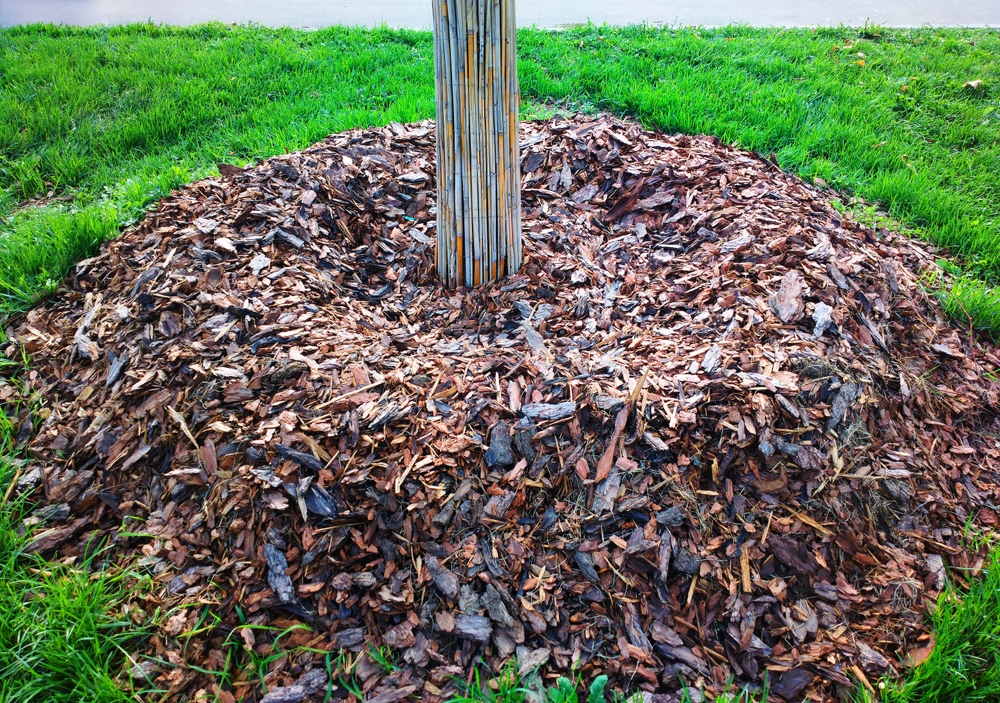
That fresh mound of mulch around your tree might look like you’ve done everything right to protect it before winter, but it could actually be causing damage that costs hundreds or even thousands of dollars to fix.
The practice is called volcano mulching, and it’s surprisingly common in residential neighborhoods, commercial landscapes, and even professionally maintained properties.
While mulch can protect tree roots from temperature extremes, conserve moisture, and reduce competition from weeds, piling it against the trunk creates conditions that can slowly weaken an otherwise healthy tree.
According to the University of Maryland Extension, excessive mulch around tree trunks can contribute to bark decay, root problems, and other issues that threaten long-term tree health.
Before you add another bag of mulch this fall, here’s what homeowners should understand about volcano mulching and how to protect their landscaping investment.
What Exactly Is Volcano Mulching?
Volcano mulching happens when homeowners or landscapers pile mulch high against a tree trunk, creating a cone-shaped mound that resembles a miniature volcano. Instead of spreading mulch across the root zone, the material becomes concentrated around the base of the tree, sometimes reaching several inches or more up the trunk. This appearance can be misleading because the thick mound may look neat, professionally maintained, and protective against winter weather. However, the International Society of Arboriculture recommends keeping mulch away from the trunk and spreading it evenly over the surrounding soil. The problem isn’t mulch itself but how it’s applied, particularly when excessive material covers the trunk and root flare.
Trapped Moisture Can Damage the Tree’s Bark
One of the biggest dangers of volcano mulching is the excessive moisture it can trap against the lower portion of a tree’s trunk. Tree bark isn’t designed to remain buried beneath constantly damp organic material, especially around the root flare where the trunk transitions into the root system. Prolonged moisture exposure can encourage bark deterioration and create conditions favorable to certain fungal diseases and decay organisms. The University of Minnesota Extension emphasizes the importance of proper moisture management when caring for established trees. During fall and winter, when cool temperatures can slow evaporation, a thick mound of wet mulch may remain damp for extended periods.
Buried Root Flares Can Lead to Long-Term Problems
A healthy tree typically has a visible root flare, the area where the trunk widens as major roots extend into the surrounding soil. When volcano mulching buries this transition, homeowners may overlook structural problems developing beneath the surface. Excessive mulch can encourage some trees to develop roots in the mulch layer, potentially contributing to girdling roots that interfere with normal trunk and root growth. Don’t cover the root flare, though. Proper exposure is important for tree health. Over time, problems involving root development and trunk deterioration can reduce vigor and increase the need for professional evaluation or corrective work.
Rodents May Find Shelter Beneath Thick Mulch
As temperatures drop, mice, voles, and other small rodents begin looking for sheltered places to spend the colder months. A thick mound of mulch surrounding a tree trunk can provide protective cover where these animals may remain hidden from predators. Some rodents chew bark near the base of trees, potentially damaging the tissues responsible for transporting water and nutrients. Young trees and thin-barked species can be particularly vulnerable when chewing extends around a significant portion of the trunk. Keeping mulch pulled back from the bark and monitoring for signs of gnawing can help reduce this wintertime risk.
Too Much Mulch Can Interfere With Water and Air Movement
Mulch is useful because it helps regulate soil moisture, but excessive amounts can create problems that defeat its original purpose. Thick layers of certain organic mulches may become compacted or matted, making it harder for water and oxygen to reach the soil beneath. Tree roots require oxygen for normal functioning, and poorly aerated soil conditions can contribute to declining root health. Using appropriate mulch depths rather than building excessively thick layers is recommended. For homeowners preparing trees for winter, maintaining a reasonable mulch layer is generally more beneficial than adding extra material simply because temperatures are falling.
The Financial Cost of a Mulching Mistake Can Add Up
The financial consequences of volcano mulching may not become obvious until a tree begins showing signs of stress or structural decline. A mature shade tree can represent years of growth and contribute to a home’s appearance, summer cooling, and overall landscape value. If improper mulching contributes to serious decline, homeowners could eventually face expenses for arborist inspections, corrective root work, pruning, or removal. Large tree removal projects can be particularly expensive when trees stand close to houses, fences, garages, or power lines. Spending a few minutes correcting mulch placement now may help avoid a much more expensive landscaping problem later, although not every declining tree can be saved through mulch adjustments alone.
How to Mulch Trees Correctly Before Winter
The good news is that correcting volcano mulching usually doesn’t require expensive tools or professional landscaping equipment. Start by gently pulling excess mulch away from the trunk until the root flare is visible, taking care not to damage the bark or surface roots. Try to maintain a mulch layer approximately two to four inches deep, depending on the material and site conditions. Spread the mulch outward in a broad, relatively flat ring rather than building a mound against the trunk, and leave a clear gap of several inches around the bark. This approach helps protect the root zone from temperature fluctuations while reducing unnecessary moisture accumulation around the trunk.
Check These Warning Signs Before Cold Weather Arrives
Fall is an excellent time to inspect established trees because declining leaves and changing weather can make certain problems easier to notice. Look for mulch covering the root flare, soft or deteriorating bark near the trunk base, visible fungal growth, or unusual root formations. Also watch for dead branches, thinning foliage during the growing season, and other symptoms that may suggest underlying tree stress. These warning signs don’t automatically mean volcano mulching caused the problem, since drought, soil compaction, pests, and diseases can produce similar symptoms. If a valuable tree shows significant decline or structural concerns, consider contacting an ISA Certified Arborist before attempting major corrective work yourself.
A Five-Minute Fix Could Protect Your Landscaping Investment
Protecting trees before winter doesn’t require piling on more mulch or purchasing expensive landscaping products. In many cases, simply redistributing existing mulch into a broad, shallow ring provides the benefits homeowners want without creating unnecessary risks. Avoiding volcano mulching can help protect bark, preserve the root flare, discourage rodent damage, and support healthier growing conditions. Because mature trees can be costly to replace or remove, proper mulching is one of the simplest preventive maintenance steps homeowners can take.
Have you noticed volcano-shaped mulch piles around trees in your neighborhood, or have you ever had to correct this problem in your own yard? Share your experience in the comments.
What to Read Next
The Best Mulch Depth for Protecting Roots in Cold Weather
Leaf Mulch Uses That Feed Garden Soil All Winter
You’re Mulching Too Deep — And It Could Slowly Kill Your Trees
Leave a Reply