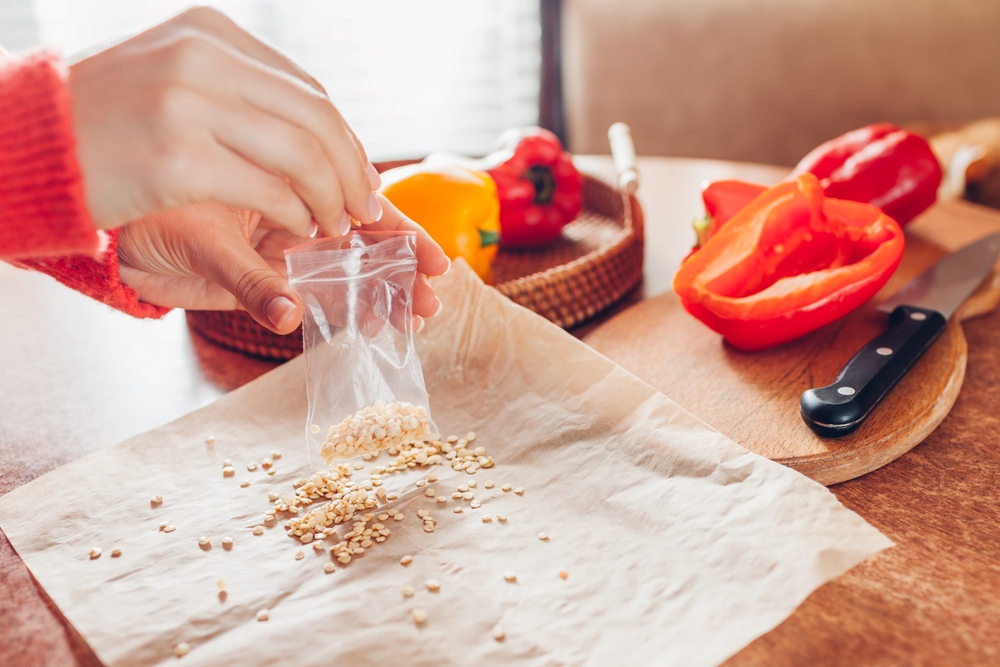
Garden season may be winding down, but some of its best souvenirs hide inside the vegetables and flowers already growing outside. Saving seeds lets gardeners carry favorite varieties into another growing season, and it can turn one especially delicious tomato, sturdy bean plant, or gorgeous flower into next year’s starting lineup.
Not every seed deserves a spot in the envelope marked “Definitely Plant This Again.” Open-pollinated varieties usually give gardeners the most predictable results, while hybrids can produce offspring with a grab bag of traits, and crops that cross-pollinate can create some very unexpected descendants.
1. Tomatoes
Tomatoes make excellent candidates for seed saving because most modern varieties self-pollinate, which keeps their seeds relatively consistent from one generation to the next. Choose a fully ripe tomato from a healthy plant that produced fruit worth remembering, rather than grabbing seeds from the first tomato within arm’s reach. Open-pollinated and heirloom varieties offer the most predictable results, while seeds from hybrids can produce plants with traits that differ from the parent.
Tomato seeds sit inside a slippery coating that benefits from fermentation before storage. Scoop the seeds and gel into a small jar with water, let the mixture ferment for several days, then rinse the seeds thoroughly and spread them out to dry completely before labeling and storing them.
2. Peppers
Pepper plants offer another tempting seed-saving opportunity, especially when a particular variety delivered exactly the heat, color, or shape the garden needed. Let the chosen fruit mature fully on the plant before harvesting it for seed, because immature pepper seeds may not develop the quality needed for good germination. Healthy plants should provide the seed source, since saving seed from a diseased plant can carry problems into the next growing season.
There is one spicy little complication: peppers can cross-pollinate, particularly hot and sweet types. Gardeners who grow several pepper varieties and want predictable offspring should give varieties plenty of separation or use another isolation method, otherwise next year’s pepper patch may deliver a surprise level of heat.
3. Beans
Beans belong near the top of the seed-saving list because common beans generally self-pollinate and need very little fuss. Instead of picking every pod while it still looks tender enough for dinner, leave selected pods on the plant until they dry, turn brown, and rattle when shaken. That change tells gardeners that the seeds have reached a much better stage for saving.
Harvest the dry pods and let them finish drying indoors before shelling if they still contain moisture. Pick seeds from strong, healthy plants that produced the qualities worth repeating, then store the dry seeds in a cool, dry, sealed container with a clear label.
4. Peas
Peas behave much like beans when it comes to seed saving, which makes them wonderfully uncomplicated. Let selected pods remain on the plants well past the tender eating stage until the pods dry and the seeds rattle inside. The garden may look slightly less tidy during this process, but those crispy pods contain next year’s potential.
Bring the dry pods indoors and give them additional drying time before removing the peas if they still feel soft. Choose seed from healthy plants with desirable growth and harvest qualities, because saving seed gives gardeners a chance to select which traits deserve another season in the garden.
5. Lettuce
Lettuce rarely gets the seed-saving spotlight, yet it makes a surprisingly good candidate because it strongly self-pollinates. Instead of harvesting every plant for salads, leave a few favorites in place until they send up flower stalks and eventually produce mature seed. The process takes patience, but the reward comes in a packet of tiny seeds that costs nothing to collect.
Let the seed heads mature and dry, then collect the seeds once they separate easily. Choose healthy plants with the leaf color, texture, flavor, and growth habit worth repeating, and keep the seeds dry before storing them for another planting.
6. Basil
Basil can supply a generous pile of seed once the plant stops producing leaves and starts concentrating on flowers. Allow selected flower stalks to mature and dry on the plant, then collect the small dark seeds from the dried structures. Gardeners should remember that basil relies on insects for pollination, so different basil varieties can cross if they grow close together.
That makes basil a better choice for gardeners who grow one variety or who do not mind some genetic surprises next season. Save seed from a healthy plant with the flavor and appearance worth keeping, and label the packet carefully because tiny brown basil seeds have a remarkable talent for looking exactly like every other tiny brown basil seed.
7. Dill
Dill produces seeds in obvious clusters after its flowers fade, making the harvest fairly easy to spot. Let the seed heads dry on the plant, then cut them when the seeds look mature and keep them somewhere dry while they finish curing. A paper bag works nicely for collecting loose seeds without turning the kitchen counter into a tiny herb confetti disaster.
Dill relies on insects for pollination, so nearby dill plants can influence the seed crop. If preserving a particular strain matters, grow only one variety or provide enough isolation to reduce unwanted crossing, but casual gardeners can simply save seeds from a healthy plant that performed well.
8. Cucumbers
Cucumbers can produce plenty of seed, but they require more planning than tomatoes or beans because insects readily move pollen among cucumber plants. If several cucumber varieties grow nearby, saved seed may produce fruit that looks or tastes different from the cucumber that supplied it. That does not make the seed useless, but it does make the result less predictable.
For the best chance of preserving a variety, save seed only when the pollination situation makes sense and let the chosen cucumber mature far beyond the crisp stage gardeners normally prefer. The mature fruit eventually becomes large and often yellowish, which looks more like a forgotten garden ornament than tomorrow’s salad ingredient, but that late stage gives the seeds time to develop.
9. Squash
Squash deserves a place on the list with a giant asterisk because different squash varieties can cross readily through insect pollination. That crossing does not change the squash sitting on the vine this year, but seeds from that fruit can produce plants with very different characteristics next year.
Gardeners who grow only one compatible variety can save squash seed with much less concern, while serious seed savers need isolation or controlled pollination to maintain a particular type. Let the squash mature fully, remove the mature seeds, clean away the pulp, and dry the seeds thoroughly before storage.
Give Those Seeds a Proper Winter Home
Saving good seed means little if dampness ruins it before planting time. Store completely dry seeds in tightly sealed containers, keep them cool and dry, and label every packet with the plant, variety, and collection date so next spring does not become a guessing game.
Most importantly, save seed only from healthy plants and desirable fruit or flowers. Diseased plants can pass certain pathogens through seed, so a beautiful harvest does not automatically make a good seed source.
A packet of saved seeds may look unimpressive sitting in a drawer, but it represents something much more useful: a favorite corner of this year’s garden waiting for another turn. Which seeds from this year’s garden are worth saving, and which varieties have earned a permanent spot on the planting list?
You May Also Like…
6 Ways to Save Seeds Without Ruining Next Year’s Germination
Ordered Seeds on Amazon? You May Not Know What You’re Actually Planting
Those Beautiful Seeds You Found Online May Be Fake — Here’s How to Tell
6 Signs Garden Soil Is Too Warm for Newly Sown Seeds
SNAP Benefits Can Buy Seeds—How Families Can Turn Food Assistance Into Fresh Produce

Brandon Marcus is a staff writer for FrugalGardening.com at District Media, Inc., where he delivers practical gardening advice with a relatable, no-nonsense style. An avid amateur gardener, he holds a BA degree and with over ten years of professional writing experience, he is also an award-winning published author whose first book, Questions For Deep Thinkers, was released by Adams Media. His work has appeared in major publications including Fandom.com, CHUD.com, TheColdWire.com, and Fansided.com.
Leave a Reply