A string trimmer can turn a tidy lawn into a masterpiece, but that same spinning line can deliver a surprisingly nasty wallop to a young tree. One careless pass around a thin trunk can strip bark, expose living tissue, and create an injury that may cause problems long after the grass has grown back.
Protecting young trees does not require fancy equipment or a complicated landscaping plan. A few smart habits can keep grass and weeds away from the trunk while giving the tree plenty of room to put on healthy new growth. Here are six practical ways to keep the weed whacker from becoming a tiny tree’s worst enemy.
1. Create a Mulch Ring Around the Tree
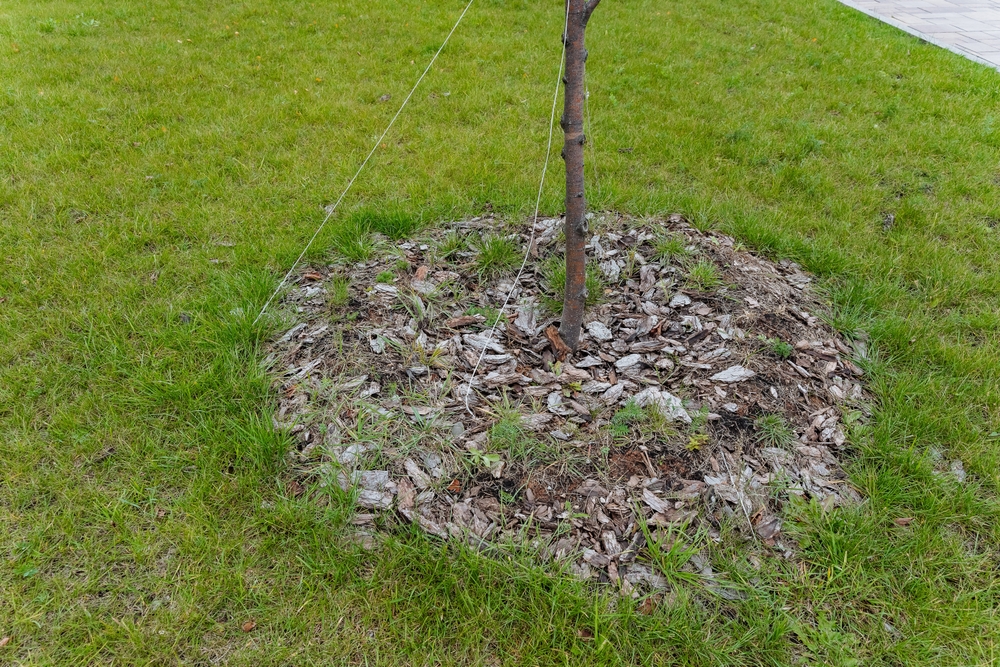
A mulch ring gives the string trimmer a clear “hands off” zone around the trunk, which makes it one of the simplest defenses available. Remove grass from the area around the tree, then spread a layer of organic mulch across the exposed soil without piling mulch directly against the trunk. Wood chips, shredded bark, or other suitable organic mulch can work well around young landscape trees.
Keep the mulch several inches away from the trunk itself so air can circulate around the bark and moisture does not collect against it. Extend the ring far enough that the mower and trimmer can stay comfortably away from the trunk during routine lawn care. A clean, visible boundary also makes it much easier to spot suckers, weeds, or other growth that needs attention.
2. Keep Grass Away From the Trunk
Grass growing directly against a young tree creates a tempting reason to bring the string trimmer closer than necessary. Instead, remove turf from around the trunk and maintain a distinct planting area that separates the tree from the lawn. This approach reduces competition from grass for water and nutrients while eliminating much of the trimming work that creates the danger.
The wider the grass-free area, the less often anyone needs to thread a trimmer line through the awkward space between blades of grass and delicate bark. Avoid digging deeply around a young tree, because its roots can occupy shallow soil and suffer damage from aggressive cultivation. Hand-pulling small weeds or using a suitable layer of mulch can handle many weeds without turning the tree’s root zone into a construction site.
3. Mark the Tree’s No-Trim Zone
Sometimes the biggest problem comes from simply forgetting where the danger zone starts. A small garden marker, decorative edging, or clearly defined mulch boundary can remind anyone handling lawn equipment to give the trunk plenty of space. The marker does not need to look like a miniature road sign, although a little visual drama never hurts when the alternative involves shredded bark.
Choose materials that will not scrape or constrict the trunk as the tree grows. Avoid wrapping wire, string, or tight plastic material around the trunk because the tree will continue to expand even when nobody notices it happening. A visible boundary works best when it creates space rather than physically restraining the tree.
4. Use a Trunk Guard Carefully
A purpose-made tree guard can add another layer of protection where grass, weeds, or frequent lawn maintenance create a genuine risk. Guards can help shield young trunks from accidental contact with equipment, but they should not become permanent plastic jackets that squeeze the tree or trap excessive moisture. Select a guard that allows airflow and leaves room for the trunk to expand.
Install the guard according to the manufacturer’s directions and check it regularly rather than treating it as a set-it-and-forget-it gadget. Look for rubbing, trapped debris, insect activity, or signs that the guard has started to press against the bark. Remove or adjust the guard when conditions no longer call for it, because protection should prevent injury rather than create a new source of trouble.
5. Change How the String Trimmer Approaches the Tree
Even with a mulch ring, trimming technique matters when the equipment gets anywhere near a young trunk. Keep the rotating line pointed away from the tree and make gradual passes around the outside of the grass-free zone instead of trying to shave every last blade beside the bark. A string trimmer can remove vegetation quickly, but it does not know the difference between an unwanted weed and the outer layer of a tree.
Work slowly around obstacles and avoid swinging the trimmer head toward the trunk at the end of a pass. If grass remains in a tight spot, a hand tool can provide far more control than a machine spinning a line thousands of times a minute. The goal does not involve achieving a perfectly clipped patch of lawn at the tree’s feet, because a slightly untidy edge beats a damaged trunk every time.
6. Check Young Trees After Every Lawn-Care Session
A quick inspection after mowing and trimming can catch bark damage before a small scrape becomes a bigger concern. Look around the entire trunk for missing bark, fresh cuts, exposed tissue, cracks, or other unusual damage, especially near the base where equipment operators often work. Young trees deserve extra attention because their trunks lack the thick protective bark that many mature trees develop.
If damage occurs, do not automatically reach for tree wound paint, tar, or another coating. Trees generally benefit from proper care and time rather than cosmetic attempts to seal every injury, although serious wounds or damage that circles much of the trunk can warrant advice from a qualified arborist. Most importantly, identify what caused the injury and change the lawn-care routine so the same mistake does not happen again.
Give the Trimmer a Boundary, Not a Target
Young trees do not need a complicated protection system, but they do need some breathing room from lawn equipment. A mulch ring, a grass-free zone, clear markers, appropriate guards, careful trimming technique, and quick inspections can dramatically reduce the chances of accidental bark damage. These habits also make routine yard work easier because nobody needs to balance a roaring trimmer within an inch of a fragile trunk.
Think of the area around a young tree as a tiny no-fly zone for lawn equipment. Give the trunk some space, keep competing grass at bay, and let the tree grow without repeated mechanical bruising. Which of these tree-protection tricks has worked best in your yard?
You May Also Like…
8 Ways to Help Young Fruit Trees Through Dry Late-Summer Weeks
5 Ways to Make a Small Garden Feel Cooler Without Adding Trees
Florida Gardeners Warned: This Invasive Beetle Is Destroying Fruit Trees
These Potted Fruit Trees Are Failing in Cold Weather — Experts Explain Why

Brandon Marcus is a staff writer for FrugalGardening.com at District Media, Inc., where he delivers practical gardening advice with a relatable, no-nonsense style. An avid amateur gardener, he holds a BA degree and with over ten years of professional writing experience, he is also an award-winning published author whose first book, Questions For Deep Thinkers, was released by Adams Media. His work has appeared in major publications including Fandom.com, CHUD.com, TheColdWire.com, and Fansided.com.
Leave a Reply