Summer flowers know how to make an entrance. By August, however, some of those dazzling blooms start looking a little tired, leaving gaps where all that glorious color once stood. The good news is that a garden does not need to become a collection of floppy stems and fading petals once summer reaches the home stretch.
The trick involves planting for structure, not just flowers. Certain shrubs, grasses, perennials, and even seed-producing plants keep their shape, texture, foliage, or architectural presence long after the peak bloom period passes. These eight choices can help a garden look intentional well into fall, even when the petunias have clearly decided their seasonal vacation has begun.
1. Ornamental Grasses Bring Movement and Height
Ornamental grasses make excellent late-season garden anchors because they keep contributing long after many flowers lose their sparkle. Switch grass, fountain grass, little bluestem, and feather reed grass can add upright or arching forms that catch wind and light without demanding constant attention.
Their foliage also creates a useful contrast against broad-leaved plants and fading perennials. Many grasses develop attractive seed heads as summer slips toward fall, giving the garden something to look at when flower production slows. Choose a grass suited to the site’s sunlight, soil, and winter conditions, because some varieties spread aggressively while others stay neatly clumped. That small bit of homework can prevent a future wrestling match with an enthusiastic plant.
2. Sedum Keeps the Garden Standing Tall
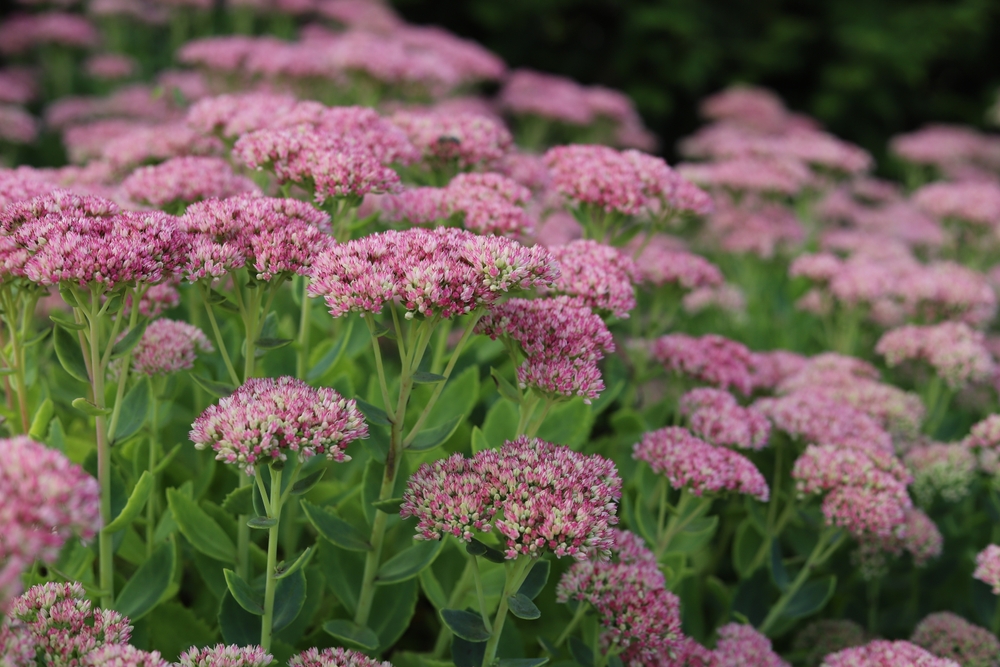
Tall sedums, particularly upright types such as ‘Autumn Joy,’ bring sturdy stems and succulent foliage to the late-season garden. Their flower clusters often begin with pale green tones before shifting toward pink, copper, or deeper rusty shades as the season progresses.
Unlike a delicate summer annual that collapses after a heat wave, upright sedum holds its shape remarkably well. The flower heads also dry attractively, so gardeners can leave them standing into fall and even winter if the stems remain sturdy. Sedum works especially well near ornamental grasses, where its chunky flower heads provide a visual counterpoint to fine, feathery foliage. Give it well-drained soil and plenty of sun, and avoid overwatering, because soggy conditions can cause trouble for these drought-tolerant plants.
3. Japanese Anemone Adds Late-Season Elegance
Japanese anemones bring fresh flowers to a garden just when many early and midsummer perennials start running out of steam. Their tall stems rise above mounds of foliage and carry simple flowers in shades that commonly include white and pink.
That late-season timing makes them particularly useful beside plants that have already finished flowering. They also create a loose, airy shape rather than forming another dense mound of foliage, which helps keep the border from looking visually heavy. Japanese anemones prefer moist, well-drained soil and generally perform best with protection from harsh afternoon conditions in hot climates. Give them room, too, because established plants can gradually spread and occupy more territory than their original footprint suggests.
4. Beautyberry Turns the Garden Into a Berry Show
Beautyberry does not need flowers to command attention. Its arching branches can produce clusters of vivid purple berries in late summer and fall, creating a striking display against green foliage.
The berries also provide useful visual structure when perennial beds start losing their summer color. American beautyberry grows as a substantial shrub, so it can serve as a backdrop for shorter plants rather than merely filling a small gap. Some gardeners cut it back in late winter because flowers and berries develop on new growth, but the exact pruning approach depends on the species and desired size. Give this shrub enough room to develop naturally, because squeezing a large, arching plant into a tiny corner rarely ends well.
5. Ornamental Kale Brings Color Without Relying on Flowers
When cooler weather arrives, ornamental kale can step into the spotlight with colorful rosettes of foliage. Purple, pink, cream, and green leaves can brighten containers, borders, and tired-looking sections of the garden after summer annuals begin fading.
The real appeal comes from foliage rather than flowers, which makes ornamental kale a useful reminder that gardens do not need blooms to look interesting. Cool temperatures generally improve its color, so it can become more attractive as the season progresses. It works beautifully with grasses, pansies, asters, and other plants that appreciate cooler weather. Treat it as a seasonal accent, however, because it does not replace a permanent shrub or perennial when the goal involves year-round structure.
6. Asters Keep the Color Going
Asters arrive with almost suspiciously good timing. Just as many summer perennials start packing up their flower show, asters produce masses of daisy-like blooms in shades that include purple, pink, blue, and white.
Their branching habit also helps fill the middle and back portions of a perennial border. Planting asters near plants with strong foliage or persistent seed heads creates layers of texture instead of one giant wall of flowers. Most asters prefer full sun and well-drained soil, although individual species and cultivars differ in their moisture preferences. Good air circulation matters, too, because crowded plants can develop foliar diseases, particularly when humid weather settles in.
7. Ornamental Alliums Leave Behind Architectural Seed Heads
Alliums may finish flowering earlier than some plants on this list, but their dried seed heads can continue adding structure for weeks or months. Their round heads stand above surrounding foliage like tiny botanical sculptures, which gives a fading garden a surprisingly sophisticated look.
That structure becomes especially useful when gardeners resist the urge to cut everything down immediately after flowering. Leave healthy seed heads standing if they still look attractive, and they can add shape through late summer and into fall. Alliums generally prefer sunny locations and well-drained soil, with many ornamental types growing from bulbs planted in fall. Their narrow foliage often fades before the flower heads disappear, so placing them among later-emerging perennials can hide that less glamorous stage.
8. Winterberry Holly Saves the Best Trick for Fall
Winterberry holly earns its name because its bright berries can persist after the leaves disappear, although the timing and persistence vary with weather and wildlife activity. Native winterberry, Ilex verticillata, offers a particularly useful combination of seasonal interest and strong woody structure.
The shrub looks quite different after autumn leaf drop, when its berries stand out against bare branches. Keep in mind that winterberry plants have separate male and female plants, and a compatible male plant must grow nearby for female plants to produce berries. That detail matters at the garden center, where a gorgeous berry-covered specimen can tempt an impulse purchase before anyone checks its pollination requirements. Give winterberry adequate moisture and room to grow, and it can provide one of the garden’s most dramatic transitions from autumn into winter.
Give the Garden Something to Say After Summer
A garden does not need to chase nonstop flowers from spring through fall to remain interesting. Strong stems, distinctive foliage, seed heads, berries, and graceful forms can carry the landscape when blossoms begin disappearing, and combining several of those features creates a garden with considerably more staying power.
The smartest approach involves thinking about what each plant contributes after its peak moment passes. One plant might provide height, another texture, another berries, and another late flowers, creating a sequence rather than a single summer spectacular. That strategy also makes seasonal cleanup more thoughtful because some fading plants contain the very structures that give the garden its next act. Before reaching for the pruners, take a second look at those fading stems and seed heads because the garden may not be finished with them yet.
Which plants keep your garden looking its best after the big summer flower show starts winding down? Let’s hear about your favorite late-season garden performers in the comments.
You May Also Like…
Should You Stop Mowing Dormant Grass During a Dry Spell?
8 Edible Flowers That Can Bridge the Gap Between Summer and Fall
Why Are More Gardeners Letting Seed Heads Stay on Summer Flowers?
Are Old-Fashioned Flowers Making a Comeback in Modern Gardens?
Warm Weather Can Delay Female Flowers on Melons—Gardeners Shouldn’t Panic Yet

Brandon Marcus is a staff writer for FrugalGardening.com at District Media, Inc., where he delivers practical gardening advice with a relatable, no-nonsense style. An avid amateur gardener, he holds a BA degree and with over ten years of professional writing experience, he is also an award-winning published author whose first book, Questions For Deep Thinkers, was released by Adams Media. His work has appeared in major publications including Fandom.com, CHUD.com, TheColdWire.com, and Fansided.com.
Leave a Reply