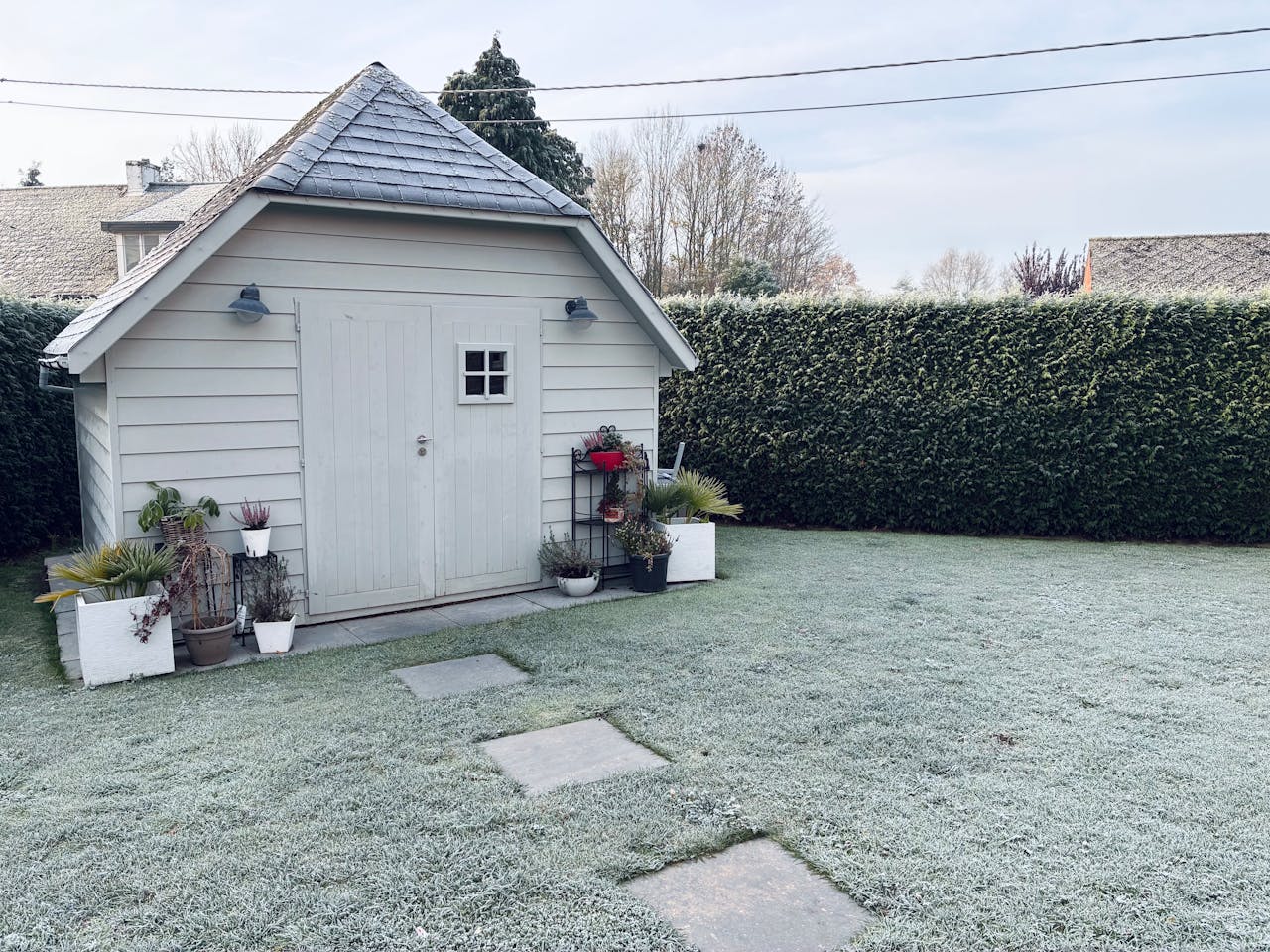
A garden shed can look harmless, even charming, tucked into the corner of a yard under a gray winter sky. But behind that simple door, a biological drama may already be unfolding. Cold air collides with trapped moisture, wood absorbs dampness, and organic debris piles up unnoticed. Give that mix a few weeks of neglect, and you have the perfect environment for mold to take hold and spread.
Winter does not kill mold. It often fuels it. When temperatures drop, sheds stay closed, airflow disappears, and condensation forms along walls and ceilings. That moisture feeds mold spores that float through the air all year long. Those spores need only water and a food source to grow, and a typical shed offers both in abundance.
The Perfect Storm Brewing Behind That Shed Door
Winter creates a moisture trap inside most garden sheds. Cold outdoor air meets slightly warmer interior air during sunny days, and condensation forms on metal tools, windows, and even the underside of the roof. Wooden walls and plywood floors absorb that moisture and hold onto it. Mold thrives in damp, poorly ventilated environments, especially when temperatures sit between about 40 and 100 degrees Fahrenheit, which many sheds reach even in winter.
Leaves, cardboard boxes, untreated lumber, and soil-stained tools all provide organic material that mold uses as food. Add in limited sunlight and stagnant air, and growth accelerates. Certain species, including Stachybotrys chartarum, often referred to as black mold, require consistent moisture but can develop in spaces that stay damp over time. Other common indoor molds such as Aspergillus and Penicillium can grow even with fluctuating moisture levels.
A shed rarely receives the same insulation, heating, or ventilation as a home, so moisture lingers longer. That prolonged dampness gives mold a comfortable foothold and plenty of time to expand across surfaces. Ignoring the problem does not freeze it in place; it allows it to deepen.
It’s Not Just Ugly: Why Mold in a Shed Matters
Some people dismiss mold in a shed as a cosmetic issue. After all, it sits outside the main living space. That thinking overlooks real risks. Mold releases microscopic spores into the air, and those spores travel easily when someone opens the shed door, moves items around, or carries tools back into the house.
Mold exposure can trigger allergic reactions, asthma attacks, coughing, wheezing, and eye or skin irritation. People with asthma, allergies, or weakened immune systems face higher risks. Even those without existing conditions can experience respiratory irritation after repeated exposure.
Mold also damages property. It stains wood, weakens structural components over time, and ruins cardboard boxes, fabric cushions, and paper goods. If mold spreads unchecked, it can compromise shelving, rot wooden framing, and corrode certain materials. Repair costs climb quickly when moisture damage continues through an entire winter season.
The Warning Signs Most People Miss
Mold does not always announce itself with a dramatic black patch on the wall. It often starts as a faint musty smell. That earthy odor signals microbial growth long before large visible colonies appear. Anyone who notices that smell when opening a shed should treat it as an early red flag rather than an annoyance.
Look closely at corners, around window frames, along roof seams, and beneath stored items. Mold can appear as black, green, white, or even gray spots. It may look fuzzy, slimy, or powdery depending on the species and moisture level. Discoloration on wood that seems darker than the surrounding material may indicate active growth.
Regular inspections matter. A quick monthly check during colder months can reveal early signs and prevent widespread contamination.
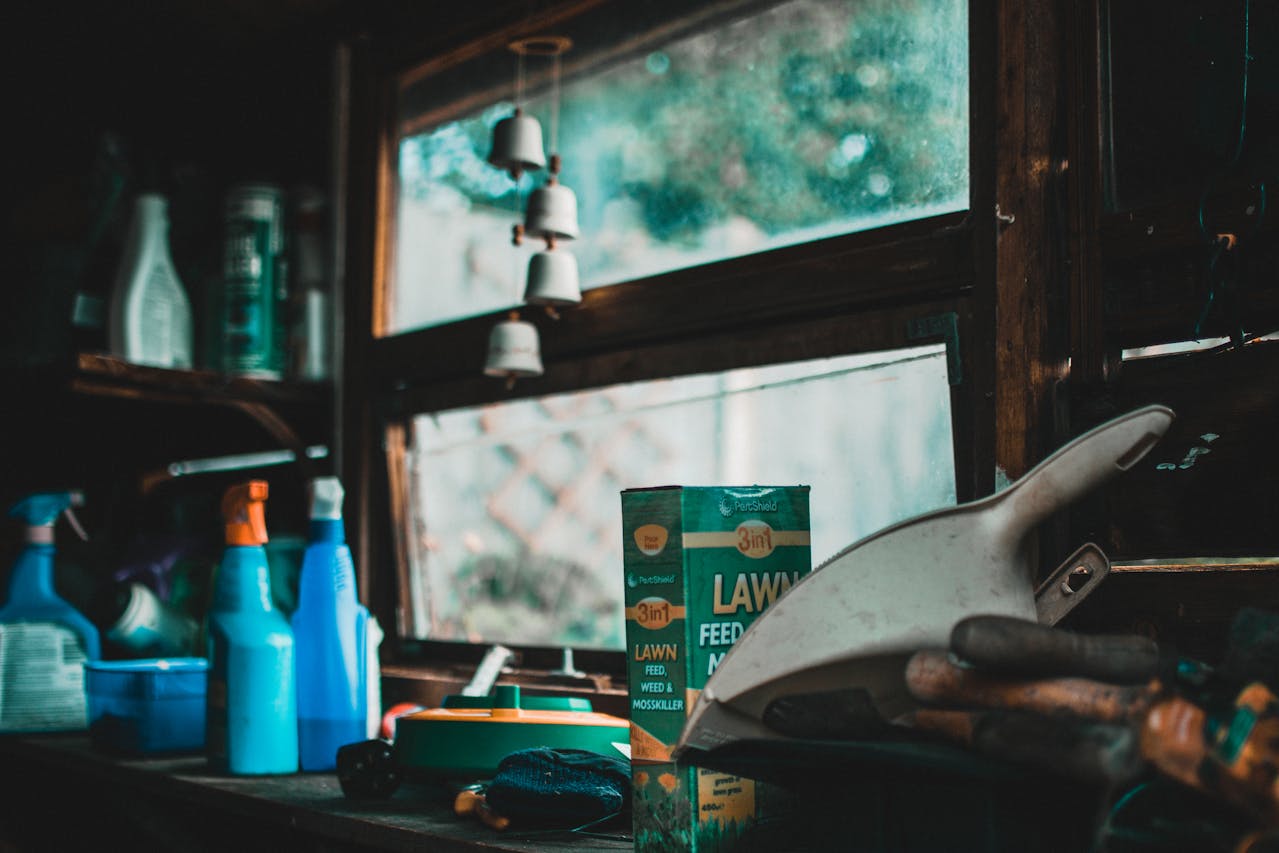
Stop Feeding the Fungus: Smart Prevention Strategies
Mold prevention starts with moisture control. Reduce humidity inside the shed by improving ventilation. Installing small vents near the roofline encourages air circulation and helps moisture escape. Opening the shed door on dry, sunny days also allows damp air to clear out.
Seal gaps and cracks where rain or melting snow can seep in. Check the roof for leaks and repair damaged shingles or panels promptly. Elevate stored items off the floor using shelves or pallets to prevent direct contact with damp surfaces.
For sheds with ongoing moisture issues, consider using moisture-absorbing products such as silica gel containers or calcium chloride dehumidifiers designed for small spaces. In areas with access to electricity, a small dehumidifier can make a significant difference. Maintaining airflow and limiting excess water remain the most effective long-term strategies.
When Cleanup Requires More Than a Sponge
Small areas of mold on non-porous surfaces can often be cleaned with proper precautions. Wear gloves, protective eyewear, and an N95 respirator to reduce inhalation of spores. Scrub hard surfaces with detergent and water, then dry them completely. Drying matters just as much as cleaning because moisture left behind allows regrowth.
Porous materials such as insulation, ceiling tiles, or heavily contaminated wood may require removal and replacement. Mold can penetrate deeply into these materials, making surface cleaning ineffective. If mold covers a large area, generally more than about 10 square feet, the Environmental Protection Agency recommends consulting a professional experienced in mold remediation.
Never mix cleaning chemicals, and avoid relying on paint to cover mold. Painting over active growth traps moisture and fails to solve the underlying issue. Address the source of water first, then clean and dry the area thoroughly.
Winter-Proofing Your Shed Before the Next Cold Snap
A proactive approach saves time, money, and stress. Before winter fully sets in, clear out clutter and sweep the floor to remove organic debris. Inspect the roof and walls for cracks or leaks, and apply weatherproof sealant where needed. Adding weather stripping around doors can block drafts and limit moisture intrusion from snow and rain.
Consider installing a vapor barrier on the interior walls if the shed frequently experiences condensation. This layer helps reduce moisture absorption into wooden framing. Improve drainage around the shed by ensuring the ground slopes away from the foundation, which prevents water from pooling near the base.
Regular maintenance keeps small issues from escalating. A shed may not demand daily attention, but it does require seasonal care. Treat it as an extension of the home rather than a forgotten box in the yard.
A Small Space With Big Consequences
A garden shed may seem minor compared to the main house, but it can become a concentrated source of mold if winter moisture goes unchecked. Mold does not respect property lines between outdoor and indoor spaces. It follows airflow, clings to tools, and spreads through simple contact.
Taking control of moisture, improving ventilation, and inspecting regularly create a strong defense against toxic growth. Ignoring the problem invites health risks and structural damage that no homeowner wants to face when spring arrives.
The door to that shed will open again soon. What will greet anyone who steps inside? Let’s share stories in our comments.
You May Also Like…
Fire Officials Say This Garden Tool Storage Mistake Is Causing Dangerous Shed Fires
11 Things Rodents Use to Sneak Into Your Garden Shed
Greenhouse Secrets: How to Turn a Drafty Shed Into a Cozy Plant Haven
These 10 Garden Hacks Are Going Viral — But Experts Say Some Are Ruining Soil Health
7 Tools That Help Seniors Stay In Their Gardens Longer

Brandon Marcus is a staff writer for FrugalGardening.com at District Media, Inc., where he delivers practical gardening advice with a relatable, no-nonsense style. An avid amateur gardener, he holds a BA degree and with over ten years of professional writing experience, he is also an award-winning published author whose first book, Questions For Deep Thinkers, was released by Adams Media. His work has appeared in major publications including Fandom.com, CHUD.com, TheColdWire.com, and Fansided.com.
Leave a Reply