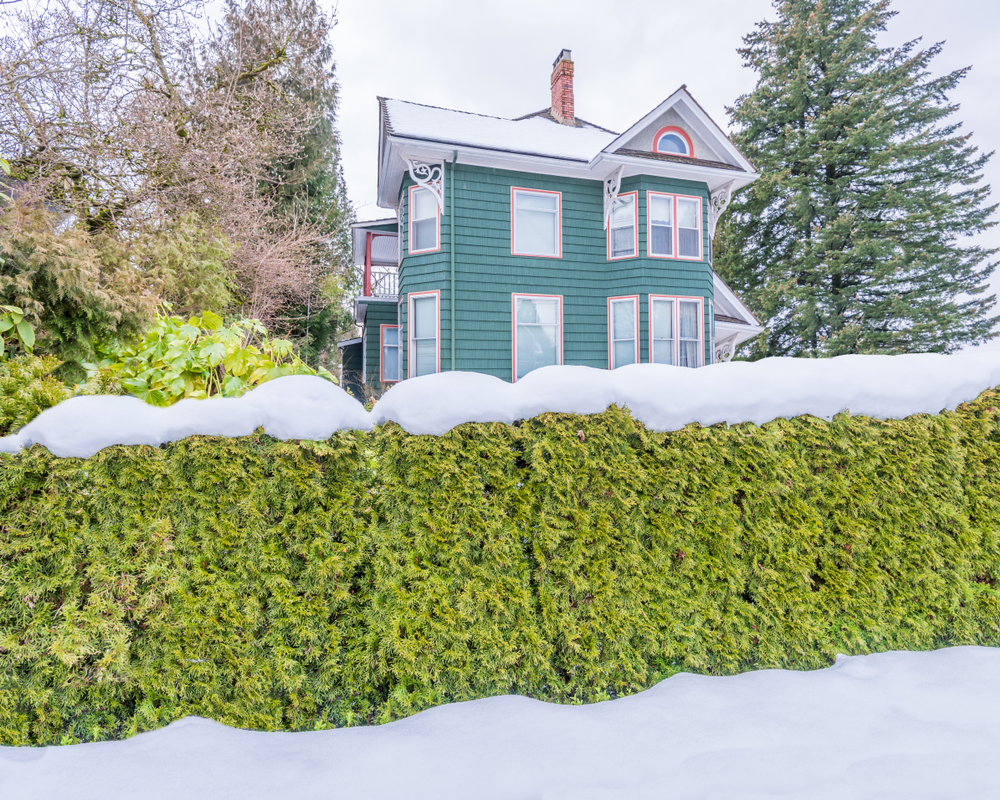
A heavy snowfall can turn your prettiest evergreen into a bent, split, stressed-out mess overnight. One storm is all it takes for branches to splay, tops to snap, and shrubs to never look the same again. The frustrating part is that most snow load problems are preventable with a little prep and a few cheap tools. You don’t need specialty gear or a landscaping crew—you just need the right timing and a couple of smart habits. Here are ten practical, frugal ways to protect your evergreens before snow load damage ruins months (or years) of growth.
1. Shake Off Fresh Snow Early And Often
Light, fluffy snow is easiest to remove before it compacts and turns heavy. Go out during the storm or right after it ends and gently shake branches to drop snow off. Use your hands on small shrubs, and keep your movements slow so you don’t snap cold, brittle twigs. If the snow is already icy, don’t force it because you’ll do more harm than good. Quick, gentle clearing reduces weight before it becomes a bigger problem.
2. Use A Soft Broom, Not A Hard Rake
A soft push broom can safely knock snow off taller shrubs and lower branches without tearing needles. Start at the bottom and sweep upward so you support branches instead of pushing them down. Avoid rakes, shovels, or anything with sharp edges because they can rip bark and break buds. If you need extra reach, tape the broom to a sturdy pole and keep the angle gentle. The goal is to remove snow, not reshape the plant.
3. Water Before Freeze-Ups So Plants Stay Strong
Evergreens lose moisture all winter, even when the ground feels dormant. If the soil is dry going into a stormy stretch, plants can become stressed and more likely to break under weight. Water deeply on a mild day before the ground freezes solid, especially for newer plantings. Mulch helps hold that moisture longer and stabilizes soil temperature. A well-hydrated plant handles winter strain better than a thirsty one.
4. Tie Up Upright Shrubs With Simple Twine
Columnar evergreens and tall shrubs often split outward when snow piles on top. Wrap soft twine around the shrub in a loose spiral from bottom to top, pulling branches gently inward. Don’t cinch it tight because you want airflow and you don’t want to crush foliage. This is one of the easiest ways to prevent snow load damage on arborvitae, juniper, and narrow spruce. Cut the twine off in early spring so growth isn’t restricted.
5. Stake Young Trees Before The Storm Season
Young evergreens with flexible trunks can lean under heavy snow and wind, then “set” crooked. Place one or two stakes on the windward side and use a wide, soft tie that won’t cut into bark. Keep the tie low enough to steady the trunk but high enough to allow some movement. Check ties mid-winter because rubbing can cause damage when branches sway. Remove stakes after the season so trunks can strengthen naturally.
6. Build A Cheap A-Frame For Vulnerable Shrubs
If you have a prized shrub or a delicate evergreen in an exposed spot, a simple A-frame can save it. Use scrap lumber, bamboo, or even sturdy branches to make a triangle that sheds snow instead of catching it. Anchor the frame into the ground so it won’t shift in wind. Covering isn’t always necessary because the frame’s job is to redirect weight away from the plant. This is a frugal “insurance policy” when one big storm could wreck years of growth.
7. Prune Smartly To Reduce Snow Traps
You can’t prune your way out of winter, but you can reduce weak points that catch and hold snow. In late fall or very early winter, remove dead, crossing, or overly long branches that create leverage. Focus on narrow crotches and heavy side branches that pull the plant off balance. Avoid heavy pruning right before extreme cold, because it can stress the plant and expose tender tissue. The goal is a slightly tighter shape that sheds snow better, preventing snow load damage.
8. Keep Roof Slides And Plow Piles Away
Many evergreens get crushed not by snowfall, but by snow dumping off roofs or being piled up by shovels and plows. If a roof edge funnels snow onto shrubs, add a simple snow diverter, or relocate smaller plants before winter. Mark beds with stakes so plows and snow blowers don’t bury shrubs in a dense, icy wall. Move shoveled snow to a consistent pile area that isn’t on top of plantings. Redirecting man-made snow piles prevents a lot of breakage.
9. Shield Plants From Wind That Adds Weight And Ice
Wind can drive snow into dense clumps and turn light powder into heavy, icy build-up. Use burlap screens, temporary fencing, or even pallets to create a windbreak on the windward side. Place the barrier a few feet away so air still moves, but not so fast that it packs snow into branches. This is especially helpful for evergreens near open driveways, fields, or corners of the house. Less wind-driven buildup means less stress on branches.
10. Know When To Leave Icy Branches Alone
Ice storms are different from snow storms, and the wrong response can snap branches instantly. If branches are coated in ice, don’t shake or sweep them while they’re frozen solid. Wait for temperatures to rise and let ice melt naturally, then remove slushy snow gently. If a branch is already bent, support it with a prop rather than forcing it upright. Patience can prevent snow load damage that comes from well-meaning “help.”
Your Winter Evergreen Defense Checklist
Evergreens do best when you combine light prevention with quick response after storms. Tie up vulnerable shrubs, stake young trees, and keep snow piles from landing where they shouldn’t. After each storm, remove fresh snow while it’s still soft and easy to clear. Skip aggressive cleanup during ice events and focus on protection instead. With a few low-cost habits, you can keep your landscape looking healthy and avoid springtime surprises.
Which evergreen in your yard gets hit hardest every winter, and what protection trick are you going to try first to prevent snow load damage?
What to Read Next…
12 Ways Snow Can Protect Your Soil and When It Hurts It
Extension Agents Say This One Winter Habit Is Ruining Your Spring Garden
Is Your Garden Ready for the First Snowfall?
7 Winter Mulches That Actually Warm Soil Instead of Chilling It
14 Garden Tasks to Do Before the First Snow Flurry

Catherine is a tech-savvy writer who has focused on the personal finance space for more than eight years. She has a Bachelor’s in Information Technology and enjoys showcasing how tech can simplify everyday personal finance tasks like budgeting, spending tracking, and planning for the future. Additionally, she’s explored the ins and outs of the world of side hustles and loves to share what she’s learned along the way. When she’s not working, you can find her relaxing at home in the Pacific Northwest with her two cats or enjoying a cup of coffee at her neighborhood cafe.
Leave a Reply