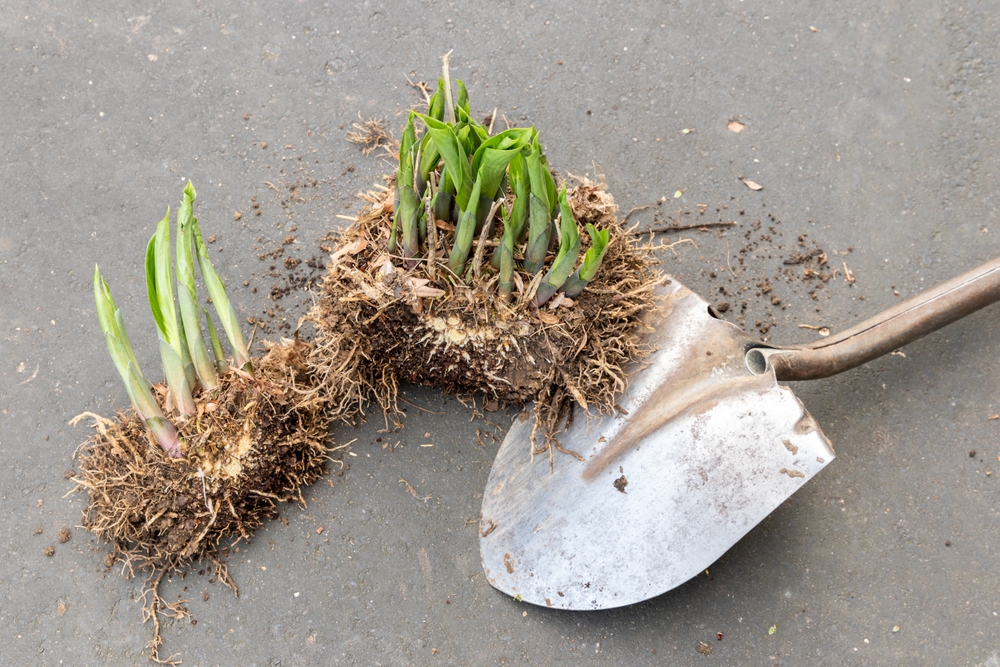
Walk through a mature perennial garden and you may be looking at hundreds of dollars’ worth of plants you haven’t created yet. Hostas, daylilies, irises, bee balm, and several other common perennials can be dug up and separated into multiple plants, giving you an inexpensive way to fill empty beds without another garden-center trip. The University of Minnesota describes dividing perennials as an easy, inexpensive way to increase the number of plants in your garden while potentially rejuvenating crowded plants at the same time. Division isn’t simply chopping roots into random pieces, however, because each new section needs enough healthy roots and growing points to recover. If you’re trying to stretch next spring’s gardening budget, start by checking whether you already own these seven plants.
1. Hostas Can Turn One Shady Clump Into Several
Hostas are among the easiest plants to recognize as candidates for division because established clumps can become enormous. University of Minnesota Extension notes that hostas have dense root systems that may require a sharp knife, garden fork, or even an axe to separate, and spring is an especially convenient time to divide them before they become large. Dig up the clump, remove enough soil to see what you’re working with, and separate it into healthy sections containing roots and vigorous shoots. Replant one section in the original location and suddenly the remaining divisions are free garden plants for another shady bed or containers. If a comparable hosta would have cost $10 or $20 at the nursery, splitting one established clump into four plants makes the savings easy to see.
2. Daylilies Are Practically Built for Sharing
An established daylily can expand into a substantial cluster of individual fans, which makes division relatively straightforward. University of Minnesota’s daylily guidance says vigorous daylilies can be divided every three to five years, with early spring or immediately after flowering being good times to do the job. Each new division should have two or three fans of foliage with roots attached, and the foliage can be trimmed back to roughly five or six inches before replanting. Water the divisions thoroughly once they’re back in the ground and keep an eye on moisture while their roots reestablish. One aging clump can potentially fill several empty spaces instead of sending you to the garden center for replacements.
3. Bearded Iris Can Multiply Without Buying New Rhizomes
Those iris rhizomes creeping across the surface of your flower bed are another opportunity to make free garden plants. Illinois Extension includes iris among perennials suitable for division, although timing matters because fleshy-rooted perennials such as iris are generally best divided in late summer to very early fall. Lift the clump carefully, inspect the rhizomes, and discard soft, damaged, diseased, or dead material rather than replanting everything simply because it’s available. Healthy sections need foliage and viable rhizome tissue capable of establishing a new plant. Division also gives you an opportunity to relieve an overcrowded iris planting that may no longer be performing as impressively as it once did.
4. Bee Balm Can Fill a Pollinator Garden Quickly
Bee balm is beautiful enough that buying several plants for a pollinator bed can become expensive, but an established patch can supply replacements for free. Illinois Extension lists bee balm among the many perennials that can be divided, and fall division is possible when gardeners provide enough time for roots to establish before winter. Its spreading habit means a happy planting can eventually occupy considerably more territory than you originally gave it. Division lets you control that expansion while moving healthy pieces to another location where you’d otherwise purchase additional plants. You can also trade extra divisions with another gardener and turn one perennial into entirely different plants without either person spending money.
5. Garden Phlox Can Be Rejuvenated While You Multiply It
A mature garden phlox clump that isn’t flowering as vigorously as it once did may be signaling that it’s ready for division. Illinois Extension explains that reduced flowering, smaller blooms, a dying center, loss of vigor, or plants that flop open can all indicate that a perennial needs dividing. Garden phlox is among the perennials Illinois lists as suitable for this treatment, allowing the healthy outer portions of an older clump to become new plants. Removing old or dead material instead of preserving every piece helps ensure you’re propagating the strongest sections. This is the rare gardening chore where solving an overcrowding problem can simultaneously increase the number of plants you own.
6. Coral Bells Can Become Several Smaller Plants
Coral bells, or Heuchera, are especially useful for gardeners who want colorful foliage in areas that don’t receive blazing afternoon sun. University of Minnesota Extension describes coral bells as particularly easy to divide because their crowns sit near the soil surface and smaller offsets develop from the central plant. Those offsets can become additional free garden plants rather than forcing you to purchase multiple specimens of the same cultivar. As with other divisions, keep newly separated plants shaded and moist until you can get them replanted so exposed roots don’t dry out. Several healthy divisions from one established plant can quickly repeat the same foliage color along a walkway or throughout a shade garden.
7. Peonies Can Be Divided—But Don’t Rush Them
Peonies prove that “can be divided” doesn’t mean “should be divided every few years.” University of Minnesota Extension says peonies have deep, fleshy roots that can break easily and may require several years after division before becoming established enough to bloom well again. Illinois Extension recommends leaving at least three to five eyes on a peony division, and fall is the preferred time to tackle the job. This is a plant to divide because you genuinely want another peony, need to relocate it, or have another practical reason—not because you’re looking for an annual garden chore. Done carefully, though, one mature and potentially expensive perennial can supply plants for another bed without another nursery purchase.
Divide at the Wrong Time and “Free” Can Get Expensive
Before dividing perennials, identify the plant and check its preferred timing rather than attacking every crowded clump on the same Saturday. A useful general rule from University of Minnesota Extension is to divide fall-blooming perennials in spring and many spring- and summer-blooming plants in fall, with fall divisions ideally completed four to six weeks before the ground freezes. Ornamental grasses are one important exception to the fall-division idea, with Illinois Extension recommending that they be divided in spring instead. Work on a cool or cloudy day, start with moist soil, discard dead or diseased sections, and keep exposed divisions moist and shaded until they’re replanted.
Which perennial in your yard has multiplied enough that you could divide it into free plants this year? Tell us what you’re planning to split in the comments.
What to Read Next
Before Spending $200 on Fall Plants, See What You Can Divide for Free
Can You Really Grow Free Plants From Grocery Store Produce? Here’s What’s Worth Trying
September Is One of the Best Times to Get Free Plants From the Ones You Already Own
Leave a Reply