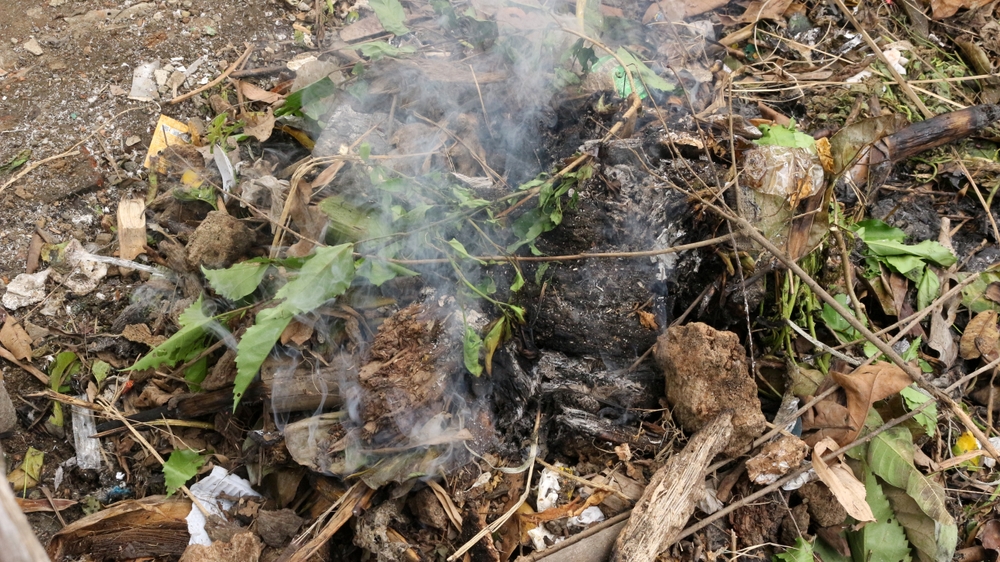
Fall cleanup can leave you staring at a pile of vines, weeds, branches, and dead plants that seems perfect for the backyard fire pit. Before striking a match, though, take a much closer look at what’s actually in that pile. Certain plants you should never burn contain oils or toxins that can become part of the smoke, potentially turning ordinary yard cleanup into a serious health hazard. The risk is especially easy to underestimate after plants have dried up and no longer resemble the lush vegetation you remember from summer. These five plants deserve a different disposal plan, and several are common enough that gardeners can encounter them without deliberately planting them.
1. Poison Ivy Can Put Urushiol Into the Smoke
Most gardeners know not to touch poison ivy, but burning it can create another route of exposure. The Centers for Disease Control and Prevention warns that poison ivy releases urushiol when damaged or burned and that people can inhale particles containing the oil from burning plants. Inhaling smoke from these plants can cause severe allergic respiratory problems, making a bonfire considerably more dangerous than an itchy rash on your arm. Dead-looking vines aren’t necessarily safe either, and the CDC notes that urushiol can remain active on contaminated objects such as tools for years. Poison ivy therefore belongs near the top of any list of plants you should never burn, whether it’s green, brown, leafy, or hiding among other brush.
2. Poison Oak Creates the Same Basic Danger
Poison oak may look different from poison ivy, but both belong to the Toxicodendron genus and contain the same troublesome oil. The National Park Service explains that poison oak contains potent urushiol and specifically describes reactions triggered by inhaling smoke from burning plants as particularly dangerous. That means tossing unidentified brush onto a fire can expose someone who never physically touched the poison oak in the first place. Gardeners in areas where poison oak grows should identify brush before burning it and wear appropriate protection when handling suspicious vegetation. Don’t depend entirely on the familiar “leaves of three” saying, either, because identifying plants becomes considerably harder after they’ve been cut, dried, or mixed into a brush pile.
3. Poison Sumac Shouldn’t Go Into the Fire Either
Poison sumac gets less attention than its notorious relatives, but it poses the same basic burning hazard. The CDC groups poison sumac with poison ivy and poison oak and explicitly says not to burn any of the three because inhaling their smoke can cause severe allergic respiratory problems. Poison sumac is generally associated with very wet areas such as swamps and boggy ground, so many homeowners will never find it growing beside the patio. However, anyone clearing vegetation around wetlands or unfamiliar wooded property should know what it looks like before creating a burn pile. If you aren’t certain whether cut vegetation contains one of these urushiol-producing species, treating the entire questionable pile as material that shouldn’t be burned is the safer choice.
4. Oleander Is Beautiful but Highly Toxic
Oleander’s showy flowers make it an attractive landscape shrub in warmer parts of the country, but its pruned branches shouldn’t become firewood. North Carolina State University classifies oleander as highly poisonous and gives unusually straightforward disposal advice: don’t burn the plant because its smoke is injurious. University of Florida IFAS similarly warns against burning pruned branches because toxins can become airborne and potentially cause respiratory difficulties when the smoke is inhaled. All parts of oleander contain naturally occurring cardiac glycosides, so this isn’t a plant you want children or pets chewing on, either. If you’re removing a mature oleander, check local yard-waste disposal requirements instead of assuming the branches can safely fuel your next backyard fire.
5. Poison Hemlock Can Release Toxins When Burned
Poison hemlock is an invasive plant that can appear along roadsides, fence lines, stream banks, fields, and disturbed ground, sometimes bringing it surprisingly close to gardens. Oregon State University warns gardeners not to burn poison hemlock because its smoke can contain deadly toxins and recommends gloves and a mask when handling the plant. University of California’s Statewide Integrated Pest Management Program gives similar advice, noting that all parts are highly poisonous and that burning can release toxins into the air. Poison hemlock can be confused with members of the carrot family, making confident identification particularly important before handling unfamiliar tall weeds with clusters of small white flowers. If you suspect you’ve found it, don’t casually pull it barehanded and throw it into the fire.
Don’t Assume Dry or Dead Means Safe
One dangerous misconception is that poisonous vegetation becomes harmless once it dries out. With poison ivy and its relatives, the CDC says urushiol can remain active on surfaces for up to five years, illustrating just how persistent the troublesome oil can be. Oleander is also toxic whether fresh or dried, and poison hemlock remains material that extension experts specifically advise people not to burn. This is why identifying yard debris before it becomes one giant mixed brush pile is much easier than trying to sort through everything immediately before burning. When removing any of these plants you should never burn, keep the material separate from ordinary firewood and follow local guidance for safe disposal.
What Should You Do With Questionable Yard Waste?
The safest disposal option depends on the plant and the rules where you live, so don’t automatically put toxic or invasive vegetation into municipal compost or curbside yard waste. Bagging may be appropriate in some communities, while others provide specific instructions for invasive or hazardous plant material, making your local extension office, solid-waste department, or invasive-species program a useful first call. Also check local fire regulations before burning any yard waste because open burning may be restricted or prohibited regardless of what plants are involved. If you’ve handled poison ivy, poison oak, or poison sumac, the CDC recommends cleaning exposed tools with rubbing alcohol or soap and plenty of water while wearing disposable gloves. Safe disposal takes slightly more effort, but it’s considerably cheaper than turning a pile of free yard debris into an avoidable medical problem.
If the Smoke Makes You Sick, Get Away From It
Don’t stand beside suspicious smoke trying to determine whether your scratchy throat or coughing will disappear. Move away from the fire and into fresh air, and don’t send someone else toward the burning pile to investigate what’s inside it. The CDC advises seeking medical attention for signs of inhalation exposure to poisonous plants, including difficulty breathing, swelling of the throat or face, or a choking sensation, and calling 911 for a severe allergic reaction. If you’re uncertain about a potential poisoning exposure in the United States, the Poison Help line is available at 1-800-222-1222. Knowing which plants you should never burn is useful, but knowing when an exposure requires medical help matters even more.
Know What’s in the Pile Before You Light It
A backyard fire may seem like the quickest free solution for disposing of garden debris, but not everything growing in the yard belongs in the flames. Poison ivy, poison oak, poison sumac, oleander, and poison hemlock are five plants you should never burn because credible health and extension authorities warn about risks from their smoke. Separate unfamiliar or potentially toxic vegetation while you’re doing yard work instead of tossing everything into one pile and sorting it later. When you can’t confidently identify a plant, skip burning it until you’ve checked with a reliable extension or government source and determined the appropriate disposal method.
Have you ever discovered poison ivy, poison hemlock, or another dangerous plant hiding in a pile of yard debris? Share your experience in the comments.
What to Read Next
Never Burn This Plant When Cleaning Up the Yard — Even If It Looks Dead
Powdery Mildew Is Everywhere This Fall — Can Those Leaves Go in Compost?
7 Garden Problems You Don’t Want Surviving in Next Year’s Compost
Leave a Reply