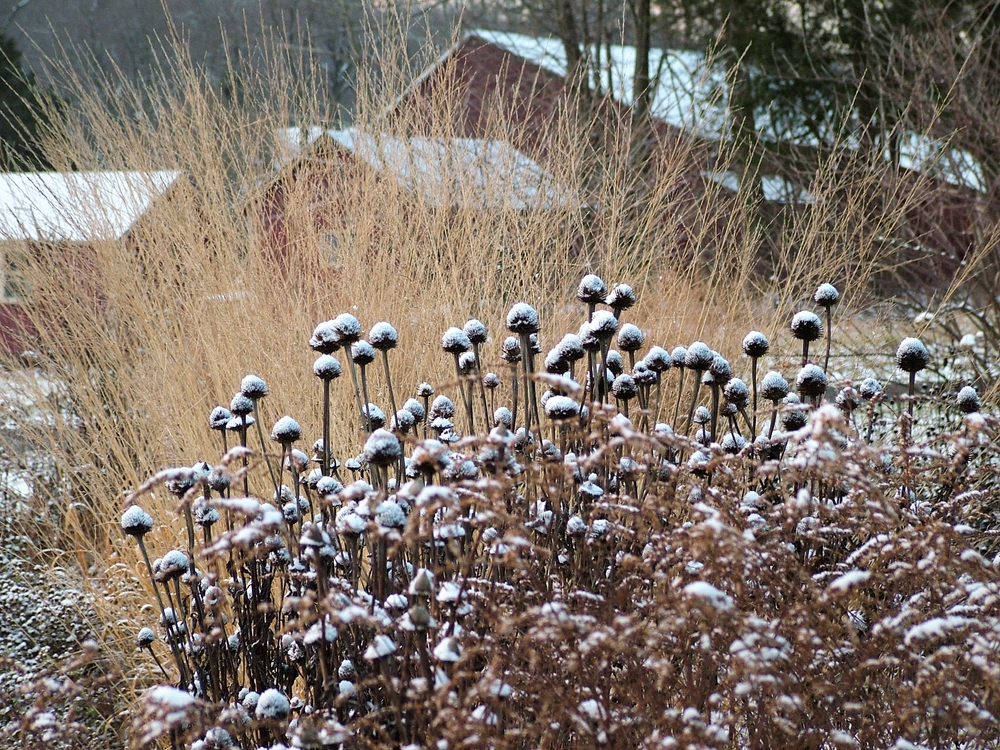
When the first hard frost turns a perennial garden brown, grabbing the pruners can feel like the obvious next step. But those dead-looking coneflowers, asters, and ornamental grasses may still be doing important work long after their flowers disappear. Standing stems can shelter overwintering insects, seed heads can feed birds, and dried plants can give an otherwise empty winter garden structure and texture. In some cases, leaving growth intact may even provide additional protection around the plant itself. Before cutting everything to the ground, here’s why leaving perennials standing in winter can sometimes be the better gardening decision.
Hollow Stems Can Become Tiny Winter Homes
A dead perennial stem may look empty to you, but it can be valuable real estate for certain insects. The Xerces Society recommends leaving perennial stems alone through fall and winter because some native bees use stems as nesting habitat. Small carpenter bees and some other stem-nesting species can use hollow or pithy plant material during portions of their life cycles. Cutting, shredding, and hauling every stalk away in fall can therefore remove habitat along with the garden debris. Leaving perennials standing in winter gives those stems a chance to perform another job before you eventually tidy them.
Seed Heads Become Free Bird Feeders
Coneflowers, sunflowers, black-eyed Susans, and similar plants don’t necessarily stop being useful when their petals fall. Penn State recommends leaving garden perennials standing because their seed heads attract songbirds while stems and nearby leaf litter provide habitat for beneficial insects. That means a patch of dried seed heads can essentially function as a natural bird-feeding station without requiring you to buy another bag of seed. Watching goldfinches balance on dried flower stalks can also make the winter garden considerably more interesting than a completely bare bed. If a plant produces seeds birds readily eat, deadheading every flower in autumn may mean throwing away something wildlife could have used.
Some Butterflies and Moths Need the Mess
Not every butterfly flies south or simply disappears when temperatures fall. Different species overwinter as eggs, caterpillars, pupae, or adults, and some use plant material and leaf litter as shelter during those vulnerable stages. The Xerces Society explains that stems, flower heads, fallen leaves, and other organic debris provide important winter habitat for numerous invertebrates. Penn State Extension likewise advises gardeners to resist excessive fall cleanup because beneficial insects may be overwintering in standing stems and surrounding leaves. Leaving perennials standing in winter therefore protects more than the visible birds visiting your garden during January.
Standing Plants Give a Winter Garden Some Structure
There is also a purely practical landscaping argument for not flattening every bed in October. Ornamental grasses, sturdy seed heads, and tall perennial stalks can catch frost and snow, creating shape and texture when almost nothing is flowering. Penn State’s fall pollinator guidance specifically notes that plants left standing can provide both homes for pollinators and winter interest. Choose the plants that remain upright attractively and remove those that simply collapse into soggy piles across walkways or neighboring plants. A selective approach can make the landscape look intentional rather than neglected while preserving useful habitat.
Some Plants May Benefit From Their Own Winter Cover
For certain perennials, standing foliage can do more than help wildlife. Penn State Extension recommends leaving pink turtlehead standing through winter and cutting it back in spring, while its guidance for the ‘Hot Lips’ cultivar notes that standing foliage can help protect the crown from winter damage. Recommendations vary considerably by species, climate, and garden conditions, so this isn’t a reason to assume every perennial needs its old foliage as insulation. It is, however, a good reason to check plant-specific care instructions before automatically cutting a perennial to soil level. Sometimes doing less in fall is exactly what the plant needs.
Not Every Perennial Should Stay Untouched
Leaving perennials standing in winter doesn’t mean abandoning all fall cleanup. Penn State recommends completely removing diseased plants and specifically advises cutting back plants such as peonies, irises and lilies rather than treating every perennial identically. Diseased foliage can potentially harbor pathogens, making ecological good intentions counterproductive when you’re dealing with a known plant-health problem. Material heavily affected by disease should generally be handled according to Extension recommendations for that disease instead of automatically entering the compost pile. The useful rule isn’t “never cut anything”; it’s “have a reason before you cut everything.”
You Can Keep the Front Tidy and Leave Habitat Elsewhere
Gardeners who prefer a neat landscape don’t have to choose between curb appeal and wildlife. Keep plants along sidewalks, driveways, and highly visible borders more groomed while allowing sturdier perennials toward the back of beds to remain standing. You can also retain more stems in a side yard, pollinator bed or less formal section of the property where winter messiness isn’t an aesthetic problem. That compromise is especially useful in smaller suburban landscapes where letting the entire yard go untouched isn’t realistic. Even a limited amount of standing material provides more habitat than stripping every bed completely bare.
Spring Cleanup Shouldn’t Mean Cutting Everything Immediately
Making it through winter doesn’t necessarily mean insects are ready for you to remove their shelter on the first warm March afternoon. The Xerces Society recommends waiting until spring is well underway before trimming stems so overwintering wildlife has more time to emerge. When you do cut old stems, Xerces suggests leaving some standing roughly knee-high, which can create nesting opportunities for stem-nesting bees during the coming season. This also spreads garden work across two seasons instead of turning October into a marathon of cutting, bagging and hauling. Leaving perennials standing in winter can consequently save labor in fall while making spring cleanup more deliberate.
Sometimes the Best Fall Garden Job Is the One You Skip
A garden doesn’t stop functioning simply because its flowers are gone. Standing perennials can provide bird food, insect habitat, visual interest, and, for certain plants, some winter protection while saving gardeners hours of unnecessary fall cleanup. The key is being selective: remove diseased growth and genuine problems while preserving healthy stems and seed heads that still have ecological value. You’ll also spend less time filling yard-waste bags and potentially less money buying mulch or bird food when you allow some natural materials to remain where they’re useful.
Do you practice leaving perennials standing in winter, or do you still prefer to cut your garden completely back each fall?
What to Read Next
The $30 Perennial Is Now $8 — Can You Plant It This Late?
Before You Cut Back Your Perennials, Check Who May Be Living Inside Them
10 Perennials You Can Divide This Fall Instead of Buying More Plants
Leave a Reply