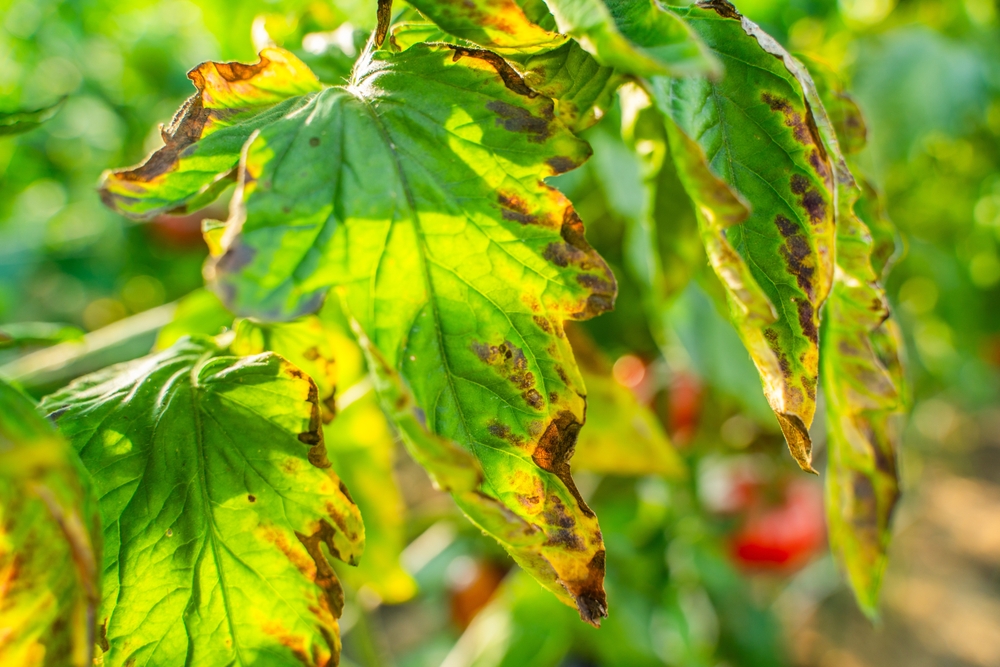
Pulling out tired tomato plants is one of those end-of-season chores that seems straightforward: yank the vines, toss them into the compost pile, and turn this year’s garden into next year’s free fertilizer. But if those plants have brown, spotted, yellowing, or dying leaves, adding them to an ordinary backyard pile could be a mistake. Several diseases commonly described by gardeners as tomato blight can survive in infected plant debris, potentially giving pathogens another opportunity to cause trouble. Penn State, for example, says the fungus responsible for early blight can survive on infected debris in soil, as well as on seed and volunteer plants. Before turning diseased vines into compost, take a closer look at what actually happened to your tomatoes.
Early Blight Can Survive in Old Plant Debris
Early blight is caused by Alternaria solani, and it commonly starts on older leaves near the bottom of tomato plants. Watch for brown lesions containing distinctive concentric rings that can make the spots resemble tiny targets or bull’s-eyes. The fungus survives on infected debris in the soil and recommends removing and properly disposing of infected lower leaves rather than composting them. Spores can later reach tomato foliage through splashing rain, making old infected material a problem you don’t want to casually recycle back into the vegetable bed. If you’re uncertain whether your dying plants have tomato blight, keeping suspicious material out of a typical cool backyard compost pile is the conservative choice.
Late Blight Is a Different—and Potentially Devastating—Disease
Despite their similar names, early blight and late blight aren’t simply early- and late-season versions of the same disease. Late blight is caused by the water mold Phytophthora infestans, which can infect tomato leaves, stems, and fruit and spread extremely quickly under favorable conditions. According to the University of Minnesota, infected leaves may develop large dark-brown blotches with green-gray edges, while fruit can develop firm dark-brown spots and infected tissue may show white growth in humid conditions. Under cool, wet conditions, the pathogen can produce thousands of sporangia from a lesion in less than five days, which helps explain why gardeners take suspected late blight seriously. Remove badly infected plants instead of leaving diseased vines lying around the garden while you decide what to do with them.
A Hot Compost Pile Changes the Equation
You may encounter conflicting advice about composting diseased plants, and there’s a legitimate reason for it. Diseased plant material can be composted when the pile reaches at least 148 degrees Fahrenheit, and the material completely breaks down. That’s considerably different from the cool, slow pile many home gardeners maintain by occasionally tossing in kitchen scraps, leaves, grass clippings, and spent plants. A properly managed hot pile requires enough volume, moisture, oxygen, and turning to expose material throughout the pile to sufficiently high temperatures rather than merely warming the center for a short period. Unless you monitor compost temperatures and know your system consistently gets hot enough, don’t assume it will reliably sanitize tomato blight debris.
Don’t Assume Every Brown Tomato Leaf Is Blight
Throwing away every tomato plant with a brown leaf isn’t necessary because tomatoes develop spots and discoloration for many reasons. Septoria leaf spot, bacterial diseases, nutritional problems, drought stress, and other conditions can resemble what gardeners casually call blight, so accurate identification matters. Leaves with some common leaf-spot diseases can be pinched off and buried within a compost pile. That illustrates why the answer to “Can I compost my sick tomato?” depends on the actual disease and how the compost is managed. Take clear photos while symptoms are visible and compare them with a university extension diagnostic guide instead of trying to identify a completely dead vine months later.
Clean Up More Than the Tomato Vines
Removing diseased foliage is only one part of preventing tomato blight from becoming next year’s headache. Pick up dropped fruit and plant debris, remove volunteer tomato plants, and clean stakes, cages, and reusable tools before putting them away. After handling diseased foliage, wash your hands before touching healthy tomatoes and wash and sanitize pruning tools used on infected plants. This matters because garden cleanup can accidentally move pathogens from one plant or area to another when dirty pruners, gloves, and equipment travel with you. Think of fall cleanup as disease prevention for next spring rather than simply an attempt to make the beds look tidy.
Give Next Year’s Tomatoes a Fresh Start
Once tomato blight has appeared, next year’s planting strategy matters just as much as what goes into the compost pile. Don’t plant tomatoes and related vegetables such as potatoes, peppers, and eggplants in the same location more than once every three years. You should also mulch, ensure adequate spacing, stake or trellis for better airflow, and water at the base of plants rather than soaking the foliage. These are inexpensive prevention strategies, which is especially useful for frugal gardeners who would rather prevent disease than repeatedly replace plants or purchase treatments. Disease-resistant tomato varieties can add another layer of protection, although “resistant” doesn’t mean a plant is completely immune.
When in Doubt, Keep Diseased Plants Out
Composting healthy tomato vines is a great way to recycle garden material, but diseased plants deserve more caution. A carefully managed hot compost system may reach temperatures capable of destroying many plant pathogens, yet an ordinary backyard pile that never gets sufficiently hot doesn’t offer the same assurance. If you suspect early blight, late blight, a tomato virus, or another serious disease and can’t verify that your compost reaches appropriate temperatures, dispose of the material according to your local yard-waste rules rather than spreading questionable compost around next year’s vegetable garden. A few tomato vines aren’t worth risking another season of tomato blight, especially when simple sanitation, crop rotation and better watering practices cost little or nothing.
Do you compost your tomato plants at the end of the season, or do diseased plants automatically go somewhere else? Share what has worked in your garden in the comments.
What to Read Next
Powdery Mildew Is Everywhere This Fall — Can Those Leaves Go in Compost?
7 Garden Problems You Don’t Want Surviving in Next Year’s Compost
Should You Compost Diseased Plants? The Answer Depends on How Hot Your Pile Gets
Leave a Reply