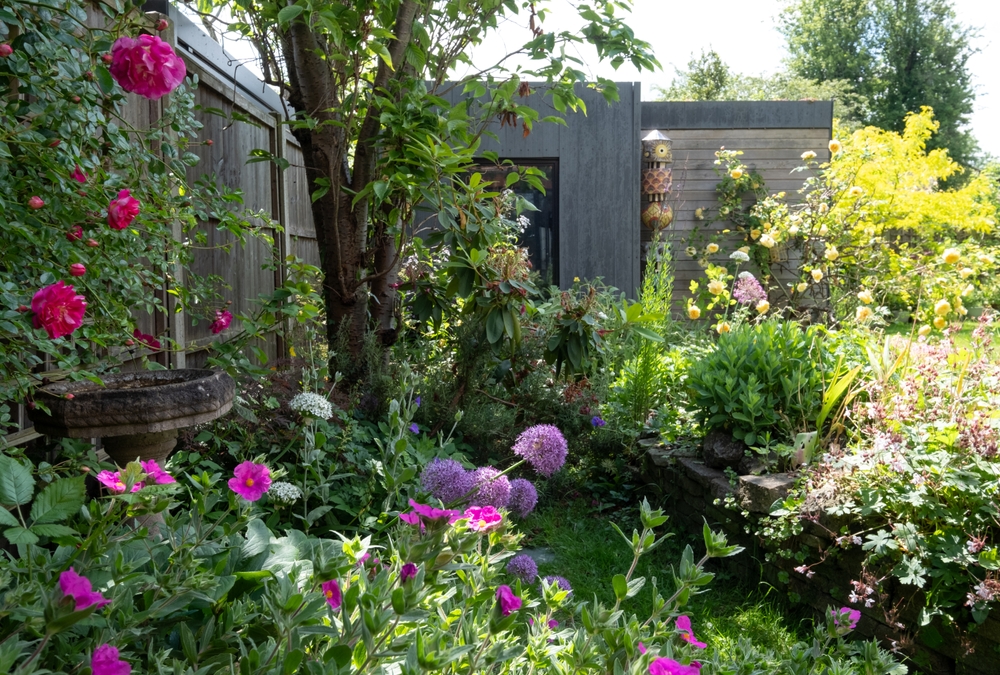
You replaced thirsty turf with coneflowers, milkweed, native grasses, and other plants that provide food and habitat for wildlife. The bees seem delighted, but then a letter arrives from the homeowners association saying your yard looks overgrown and needs to be cleaned up. HOA native plant rules are becoming a bigger issue as more homeowners replace conventional lawns with pollinator gardens and lower-maintenance landscaping. The frustrating part is that there isn’t one national rule determining whether the homeowner or HOA wins that argument, and state laws increasingly affect what associations can demand. Before pulling out plants—or ignoring a violation notice—gardeners should understand who actually gets to decide what belongs in the yard.
Start With Your HOA Documents, but Don’t Stop There
An HOA’s declaration, covenants, architectural guidelines, and landscaping rules are the logical starting point when a disagreement develops. Those documents may regulate plant height, lawn maintenance, edging, approved species, visibility, landscaping plans, or changes that require architectural approval. However, a covenant saying “lawns must be maintained” doesn’t necessarily settle the issue because state statutes can restrict what associations are legally permitted to prohibit. Washington law, for example, says qualifying association governing documents cannot prohibit drought-resistant landscaping or pollinator habitat, although associations may impose reasonable rules concerning placement and aesthetic appearance. That means understanding HOA native plant rules requires checking both the community documents and applicable state and local law.
Some States Give Homeowners More Protection
Where you live can dramatically change the answer to whether an HOA can reject environmentally friendly landscaping. Washington law, for instance, protects drought-resistant landscaping and pollinator habitat from outright prohibition in covered communities while still permitting reasonable aesthetic requirements. Florida law says a deed restriction or covenant may not prohibit or be enforced to prohibit property owners from implementing Florida-friendly landscaping, which includes principles such as water conservation, wildlife attraction, mulching, and reduced stormwater runoff. Colorado likewise limits HOA restrictions on xeriscape and drought-tolerant landscaping while preserving some association authority over design, plant types, numbers, and placement. Gardeners shouldn’t assume those examples apply everywhere, but they demonstrate why reading your state’s current law can be just as important as reading the HOA handbook.
“Native” Doesn’t Automatically Mean “Protected”
One potentially expensive mistake is assuming that planting native species automatically overrides HOA restrictions. The National Wildlife Federation specifically warns that its Certified Wildlife Habitat designation doesn’t override HOA regulations, zoning laws, or other local requirements. Even states protecting water-wise or environmentally beneficial landscaping can allow associations to impose reasonable design and maintenance standards. A homeowner might therefore have a right to use drought-tolerant plants without necessarily having a right to let them block sidewalks, spread onto neighboring property, or ignore every appearance requirement. Before challenging HOA native plant rules, identify exactly what protection your state’s statute provides instead of relying on the broader argument that native plants are good for wildlife.
One North Carolina Fight Shows Why Definitions Matter
A fascinating recent example came from Charlotte, North Carolina, where native gardeners ran into a rule originally aimed at controlling tall vegetation. The National Wildlife Federation reported in March 2026 that homeowner Lou Lesesne received a warning after creating a yard filled with native plants such as ironweed and coneflowers because the city’s property-maintenance code required nonwoody vegetation to remain below 12 inches. That’s a problem when some beneficial native species naturally grow several feet tall and need that height to flower and produce seed. After conservation groups and residents pushed for change, Charlotte’s city council approved an exemption for native plant gardens in February 2026, according to NWF. The episode illustrates how a landscape can be considered valuable habitat by one standard and prohibited “overgrowth” by another.
An Intentional Design Can Strengthen Your Position
One of the easiest ways to distinguish a native garden from an abandoned yard is to make the landscaping visibly intentional. Create defined beds, maintain clean pathways, use edging where appropriate, remove invasive plants, prune vegetation blocking sidewalks or sightlines, and group plants rather than scattering them randomly across the lawn. Those choices don’t guarantee victory in an HOA disagreement, but they make it harder to characterize a carefully maintained garden as simple neglect. Taking photographs throughout the growing season can also document flowering periods, maintained boundaries, pathways, and the work you’ve put into the landscape. When dealing with subjective HOA native plant rules, evidence that the garden was deliberately designed and regularly maintained can be valuable.
Get Approval in Writing Before Spending Heavily
The cheapest HOA dispute is usually the one that never starts. If your community requires architectural approval for major landscaping changes, submit a written plan before spending hundreds or thousands of dollars removing turf and buying plants. Include a simple diagram, plant list with mature heights, photographs of what the species will look like, planned borders, and an explanation of how the landscape will be maintained. Keep the association’s written approval along with your original submission because boards and management companies can change while your garden remains. An email saying “looks good” is better than a verbal conversation you’ll have trouble proving three years later.
Don’t Ignore a Violation Letter
Opening an HOA letter and deciding the board can “take it up with the butterflies” may feel satisfying, but it can make an otherwise manageable disagreement more expensive. Read the notice carefully and determine which specific covenant, rule, or architectural guideline the association says you’ve violated rather than assuming the objection is simply that your garden looks messy. Ask for clarification in writing, gather previous approvals, photograph the landscaping, review your governing documents, and check current state and local laws that could apply. If significant fines, liens, or legal action are threatened, a local attorney familiar with community-association law can explain how the relevant statutes and governing documents interact. This is especially important because HOA native plant rules and homeowner protections vary substantially by jurisdiction.
“Reasonable Rules” Can Be the Gray Area
Even laws protecting environmentally friendly landscaping frequently don’t give homeowners unlimited control over every detail of the front yard. Colorado’s water-wise landscaping legislation, for example, preserves an association’s ability to regulate aspects such as the type, number, and placement of drought-tolerant plantings and hardscapes, subject to statutory limits. Washington similarly allows reasonable aesthetic rules as long as they don’t make protected landscaping unreasonably expensive or effectively infeasible. The practical dispute may therefore shift from “Can I have this garden?” to “How much can the HOA control what this garden looks like?” That’s a much more nuanced question than either side simply declaring that native plants—or HOA covenants—automatically win.
The Best Defense May Be a Garden That Looks Deliberate
A wildlife-friendly landscape and an attractive neighborhood don’t have to be opposing goals. Homeowners can improve their position by researching HOA native plant rules before planting, choosing locally appropriate species, defining beds and paths, maintaining boundaries, keeping records, and getting required approvals in writing. At the same time, associations should recognize that a native garden won’t necessarily resemble a conventional lawn and that some state laws now specifically limit restrictions on water-wise or pollinator-friendly landscapes. The rules are changing as communities reconsider whether traditional definitions of a “well-maintained” yard make sense for every property.
If your HOA called your carefully maintained native garden “messy,” would you change the landscaping or challenge the rule? Share your thoughts in the comments.
What to Read Next
Can an HOA Force You to Grow Grass During a Drought?
The HOA Approved His Garden — Then a New Board Fined Him $750 for It
Your HOA Says the Garden Has to Go. What Can They Actually Make You Remove?
Leave a Reply