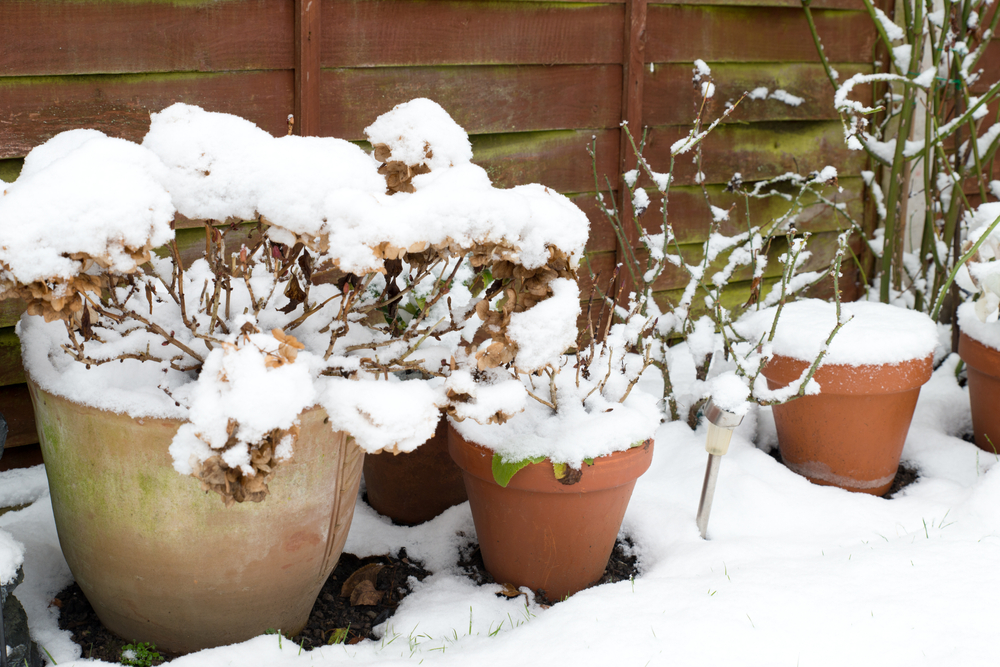
Those empty flowerpots sitting beside the garage may look like one fall chore you can safely postpone until spring, but freezing weather can turn an expensive container into a pile of cracked pottery. The problem isn’t simply cold temperatures; moisture that gets into porous materials can freeze, expand, and damage the pot as temperatures fluctuate. The University of Illinois specifically warns that water inside the pores of pottery can expand when frozen and crack the container. Proper winter pot storage can prevent that damage, and most of the work involves little more than emptying, cleaning, drying, and protecting containers before repeated freezes arrive. If you’ve invested in good planters over the years, an hour of fall cleanup can save you from replacing them next spring.
Empty the Soil Before You Store Most Pots
Leaving a container packed with damp potting mix all winter may seem harmless, but that soil holds moisture and expands when it freezes. The University of Illinois recommends emptying soil and plants from most planters before storing the containers upside down, noting that freezing and thawing can damage many pots when soil remains inside. Large concrete or wooden planters may be durable enough to remain outdoors depending on construction and climate, but smaller movable pots deserve more protection. Healthy potting mix doesn’t necessarily need to go into the trash; depending on how it was used and whether disease was present, it may be reused, amended, or added to an appropriate garden or compost system. Starting winter pot storage with an empty container also makes inspection and cleaning much easier.
Clean Pots Before Putting Them Away
Old roots, crusted soil, mineral deposits, and plant debris are easier to address now than after they’ve spent several months sitting in a shed. Scrape or brush away loose material and wash containers with soapy water, paying attention to rims, drainage holes, and saucers where debris collects. For used containers that need disinfecting, experts recommend cleaning them first and then using a solution of one part chlorine bleach to nine parts water. This step can be particularly worthwhile if the previous plants experienced disease problems rather than simply reaching the end of a healthy growing season. Never mix bleach with ammonia or other household cleaners, and rinse containers appropriately after cleaning.
Let Terra-Cotta Pots Dry Thoroughly
Terra cotta deserves extra attention because the very quality gardeners appreciate about it—its porosity—also makes it vulnerable in freezing conditions. Clay absorbs moisture, and water inside terra-cotta and clay pots can expand when frozen and cause cracking. After cleaning, give these containers enough time to dry completely before moving them into winter pot storage. An indoor garage, shed, basement, or other protected dry location is preferable when one is available. A $40 decorative terra-cotta planter becomes much less frugal when you have to buy the same pot again every spring because it spent winter collecting rain and snow.
Don’t Assume Glazed Ceramic Is Freeze-Proof
A glossy finish can make a ceramic pot look impervious to weather, but appearance doesn’t guarantee that a particular container is designed for repeated freeze-thaw cycles. Tiny cracks, chips, drainage openings, or unglazed surfaces can still provide places for moisture to enter, and freezing water can worsen existing damage. Penn State recommends storing pottery and terra-cotta containers to prevent breakage during freezing weather. Check manufacturer’s information when available, especially for expensive glazed planters marketed as frost-resistant or frost-proof, because construction varies. When you’re uncertain, and the pot is reasonably easy to move, protected storage is generally cheaper than testing its cold tolerance during the hardest freeze of the year.
Store Pots Upside Down When Appropriate
If pots must remain outdoors, orientation can make a meaningful difference. Try turning pottery upside down when it is stored outside because doing so helps prevent containers from filling with snow and leaves. A waterproof cover can provide additional protection, particularly for porous containers that cannot be moved into a building. University of Minnesota also recommends keeping large outdoor containers from sitting in pools of water, which can contribute to cracking when water freezes in the pot’s bottom or walls. Good winter pot storage is ultimately about minimizing the combination of trapped moisture and repeated freezing.
Treat Plastic, Resin, and Metal Differently
Not every empty planter requires the same level of winter protection as terra cotta. Plastic, resin, fiberglass, and metal don’t absorb moisture in exactly the same way porous clay does, but thin or brittle containers can still crack, warp, blow away, or become damaged under harsh winter conditions. If leaving plastic or metal containers outside, Penn State emphasizes the importance of adequate drainage so water isn’t trapped inside. Empty lightweight pots are also surprisingly easy for winter wind to send across a yard, driveway, or deck, so nest or secure them in a protected location. Bringing them under cover when you have room remains an easy way to extend their useful life.
Be Careful When Stacking Containers
Stacking saves space, but tightly wedging fragile pots inside one another can create a new problem while solving the storage problem. Make sure containers are completely dry before nesting them, and avoid forcing together pots that don’t slide apart easily. For delicate ceramic or terra-cotta pieces, consider placing cardboard, newspaper, cloth, or another soft separator between containers so rims aren’t grinding directly against one another. Store heavy pots at the bottom and lighter ones above them rather than building an unstable tower that could topple when you retrieve something in January. Thoughtful winter pot storage should leave you with intact containers in spring, not a stack that’s impossible to separate without breaking something.
A Few Minutes Now Can Save Next Spring’s Garden Budget
Garden containers are easy to overlook because they aren’t living plants, but replacing several cracked pots can quickly become one of spring’s unnecessary expenses. Empty most movable containers, clean away soil and plant debris, let porous pots dry thoroughly, and move vulnerable pottery into a protected location whenever possible. When outdoor storage is unavoidable, keep containers dry, elevate large pots where necessary, cover vulnerable materials, and turn appropriate empty pots upside down so they don’t collect precipitation. Those simple winter pot storage habits can extend the life of everything from inexpensive nursery containers to decorative planters you’ve used for years.
How do you store your empty garden pots for winter—inside the garage, upside down outdoors, or wherever you can find room?
What to Read Next
Why Cannas Need Special Care Before Winter Storage
7 Budget Seed Storage Tips That Preserve Germination
Fire Departments Say These Common Garden Tool Storage Habits Is Causing Accidents
Leave a Reply