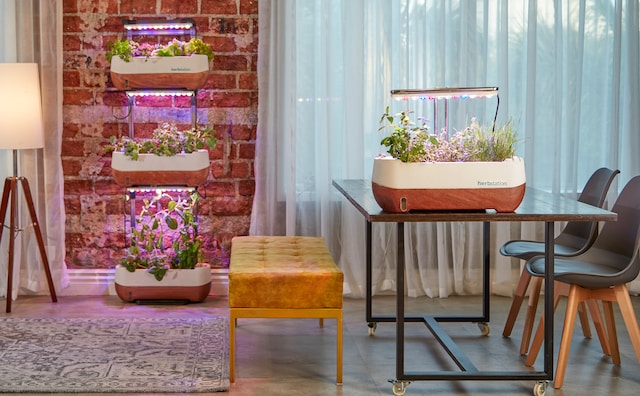
If you’re venturing into the realm of indoor gardening, one essential tool you’ll need to master is the grow light. These artificial light sources mimic the sun’s rays, providing the energy necessary for plants to thrive. However, choosing the best grow lights for plants can be a daunting task. After all, there are a large number of options on the market. You want to stay frugal but you want to get a good light. One thing to consider is the number of lumens required for your plants.
What Are Lumens?
Lumens are a unit of measurement used to quantify the total amount of visible light emitted by a light source. This is calculated as it is perceived by the human eye. In simpler terms, lumens are a measure of how bright a light appears to us.
The concept of lumens is based on the sensitivity of the human eye to different wavelengths of light. The eye is more sensitive to green-yellow light, so light sources that emit more light in this range will appear brighter to us.
Brighter Isn’t Always Better
In the context of grow lights, lumens can be somewhat misleading. That’s because plants have different light requirements than humans. Whereas lumens are measure by how our eyes perceive them, a plant’s “eyes” would see them differently. Plants primarily use specific wavelengths of light in the blue and red spectrum for photosynthesis. Therefore, even though a grow light might have a high lumen output, it may not provide the right light spectrum or intensity that plants need for healthy growth. Nevertheless, lumens are one good indicator to look at when choosing the best grow lights for your plants.
Lumens and the Best Grow Lights for Plants
Let’s start out speaking generally. First, higher lumens generally indicate a brighter light output. If you know that you have plants that need a lot of bright light, then you might want to look for grow lights with higher lumens. But what’s a high number for lumens? Most grow lights will offer between 2000 – 10000 lumens per square foot, so plants that need a lot of light will be closer to that 10000.
As a very general guideline, some indoor growers recommend around:
- 2000 to 5000 lumens per square foot for low-light plants
- 5000 to 7000 lumens per square foot for medium-light plants
- 7000 to 10000 lumens per square foot for high-light plants
What does that mean?
Low-light plants can tolerate indirect or filtered light. They are ideal for areas in your home or office with less intense light levels. Examples include spider plants and snake plants as well as peace lilies.
Medium-light plants thrive in moderate light levels and can tolerate some direct sunlight. Placing them in locations with a bit more light will help them grow and remain healthy. Examples include philodendron, African violets, and Boston fern.
High-light plants benefit from intense light exposure, making them well-suited for use with high-output grow lights. They are often cultivated for their flowers, fruits, or specific culinary uses. Tomato and basil plants are common examples. Orchids are also in this category.
The Best Low, Medium and High Light Grow Lights for Plants
If you’re ready to start looking at some good options for grow lights, then you can head to Amazon to get started. Here are some top options in each category:
Low Light Grow Lights
- GYTF’s T5 White Full Spectrum LED Plant Growing Lamp Strips are 3000 lumens. They have very bright LED bulbs that provide full spectrum light. This is great for plants. You can get them in packs of 2, 3 or 4 ranging in price from $19.99 to $34.99.
- FECiDA’s Desk Grow Lights for Indoor plants are another good option at 2000 lumens. These are designed to sit nicely on your desk. They have an adjustable height of 16″ – 24″. They cost a little over $30 on Amazon.
- Need something a little taller? LBW’s Adjustable Tripod Stand adjusts to between 15 and 48 inches. It’s 3800 lumens.
- Monios-L T8 LED Grow Light 4FT grow light strips are 4300 lumens, so they’re at the higher end for low light grow lights.
Medium Light Grow Lights
MILYN’s 100W Led Grow Light Bulb is 5000 lumens. If you have a range of low-light and medium-light plants then you might want to try these.
FECiDA’s 600W LED Grow Light Dimmable lights are good for seed starting and for medium-light plants. It offers 5000 lumens.
High Light Grow Lights
FECiDA’s dimmable lights don’t just come in the 600W. There’s also a 1000W and even a 2000W. These offer 12000 and 20000 lumens respectively. Therefore, if you primarily grow indoor plants that fruit or flower, then you might want to check out what they have to offer.
In Addition to Lumens: PPFD
If you want to use lumens as a rough reference, you can look for grow lights with higher lumen outputs, but it’s crucial to also consider the light spectrum and coverage area. For example, plants in the vegetative stage require a higher proportion of blue light, while flowering and fruiting plants benefit from more red light. Therefore, a balanced spectrum with a higher total output of usable PAR light would be more valuable than just looking at lumens.
If you want to dig deeper, then you should also look at Photosynthetic Photon Flux Density (PPFD). PPFD measures the number of photons in the photosynthetically active radiation (PAR) range that reach a specific area (usually measured in micromoles per square meter per second, µmol/m²/s).
Different plants have varying PPFD requirements at different stages of growth.It’s crucial to provide the right amount of light for optimal photosynthesis and overall health. Therefore, when shopping for grow lights, it’s essential to consider the light’s PPFD output and its spectral distribution (the balance of red and blue light), rather than focusing solely on lumens.
But, getting the right number of lumens is a great place to start! It will help you narrow down the options. Then you can choose among those select options by looking at PPFD, cost, and other details.
Read More:
- 6 Inexpensive Grow Lights for Indoor Plants
- 6 Tips to Revive Wilted Plants
- Container Gardening: Fabric Pots vs. Plastic Pots

Kathryn Vercillo is a long time writer, crafter and author of several books. A resident of San Francisco, she is committed to helping others explore, articulate and share their own individuals stories. When she’s not evaluating investing opportunities Kathryn is an avid knitter, researcher, and blogger.
Leave a Reply