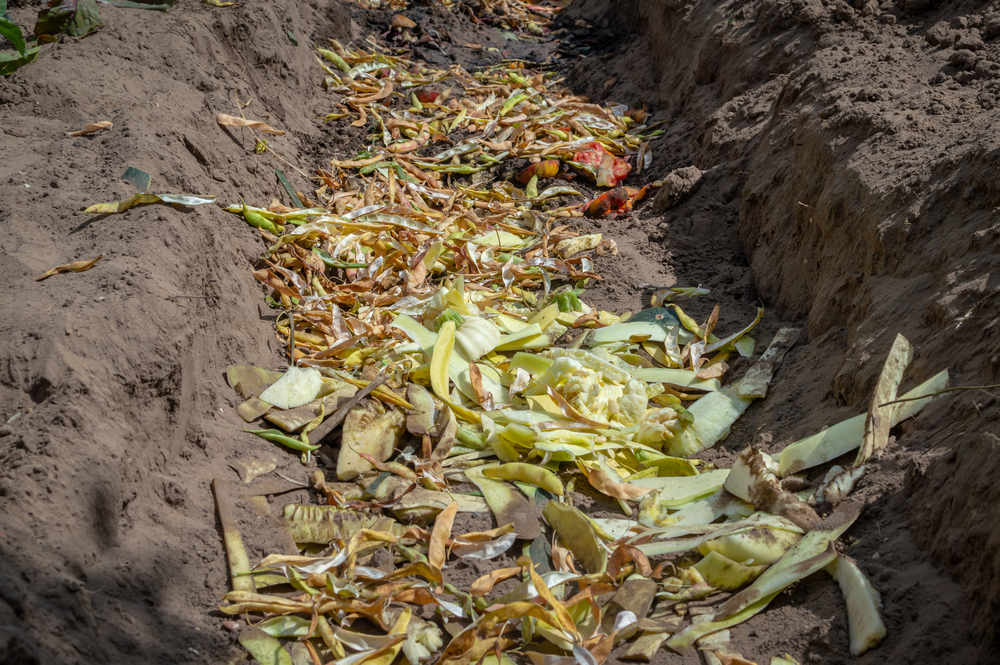
If maintaining a compost pile sounds like one garden chore too many, you may have wondered why you can’t simply bury your vegetable peels and coffee grounds directly in the soil. It turns out you can—gardeners sometimes call the technique trench composting, in-place composting, or compost pockets. Instead of decomposing organic material in a separate pile and later spreading finished compost, you let microorganisms and soil organisms break down appropriate kitchen scraps underground. Oregon State University describes in-place composting as burying organic material directly in garden soil, making the basic concept surprisingly legitimate. The catch is that where, how deeply, and what you bury determine whether you’re improving next year’s garden or creating problems for this year’s plants.
The Scraps Eventually Become Organic Matter
Fruit and vegetable scraps don’t simply disappear underground; bacteria, fungi, worms, and other decomposers gradually break the material into simpler substances. That decomposition can ultimately contribute organic matter to the soil, which is one reason trench composting has been used as a low-effort alternative to a conventional compost pile. Trench gardening is composting organic material without a pile and recommends chopping and mixing kitchen scraps with materials such as leaves or straw before covering them with soil. Depending on the material, soil temperature, moisture, and biological activity, decomposition can take anywhere from about one month to a year. Don’t expect to bury an apple core on Tuesday and uncover beautiful finished compost the following week.
You Need to Bury Scraps Much Deeper Than You Might Think
A two-inch layer of soil over yesterday’s vegetable scraps probably won’t discourage a hungry raccoon, dog, or other curious animal. Oregon State recommends burying material at least 12 inches deep and covering it with at least 8 inches of soil to discourage animals from digging it back up. That means trench composting requires a real hole or trench rather than simply scratching back the mulch and hiding a banana peel underneath it. There is also a similar compost-pocket technique using holes roughly 10 to 15 inches deep with at least 8 inches of soil covering the food waste. If you repeatedly discover your scraps scattered across the lawn the following morning, inadequate burial depth may be the problem.
Fresh Scraps Can Temporarily Compete With Plants
Here’s the part that gets overlooked when social media presents burying kitchen scraps as instant homemade fertilizer. Microorganisms need nutrients while decomposing fresh organic material, and decomposition during soil incorporation can temporarily reduce nitrogen available to plants. Its trench-composting guidance says decomposition may take about a year under low-oxygen conditions and recommends avoiding planting directly in that location during that period. Oregon State also warns that young roots can be damaged by organic acids released from fresh, actively decaying material in newly created sheet-mulched beds. Think of buried scraps as an investment in future soil rather than an instant meal you should pack around a tomato plant’s roots.
Some Scraps Are Better Candidates Than Others
The safest materials for this method are generally the same kinds of plant-based kitchen scraps that work well in ordinary backyard compost. Think fruit and vegetable peelings, cores and trimmings, coffee grounds, and similar materials rather than turning the garden into an underground garbage disposal. Oregon State warns that meat, fish, fats, oils, dairy products, bread, grains, and bones can be particularly attractive to wildlife when composting, so burying questionable leftovers isn’t worth creating a backyard buffet. Smaller pieces also expose more surface area to decomposers, which can help organic materials break down faster. If you’re unsure whether something belongs underground, using a conventional composting guide before burying it is safer than assuming anything once considered food will work.
You May Get Surprise Plants Next Season
One entertaining side effect of trench composting is discovering that everything you buried didn’t actually decompose. Oregon State specifically warns that uncooked kitchen waste may produce volunteer potatoes, carrots, and other vegetables. Tomato seeds, squash seeds, and other viable seeds can sometimes survive long enough to germinate when conditions become favorable as well. A volunteer isn’t automatically a problem—you might happily keep a surprise tomato—but it may emerge somewhere you didn’t intend to grow one. If preserving a carefully planned garden layout matters to you, remove viable seeds or be prepared to pull volunteers just as you would weeds.
Rotating the Burial Spot Matters
Dumping every week’s kitchen scraps into exactly the same square foot of garden isn’t the best way to use this technique. Oregon State recommends rotating in-place composting sites to avoid concentrating too much organic material in one location. One practical approach is dividing an unused bed into sections and moving to a new section each time you have enough scraps to bury. Traditional trench composting can also use pathways between beds, keeping actively decomposing material away from the immediate root zones of current crops. Marking the burial locations with stakes or noting them on a garden plan can prevent you from accidentally digging into a pocket of half-rotted scraps two weeks later.
Fall Is an Especially Useful Time to Try It
Burying scraps becomes easier to manage when you’re preparing soil for a future season rather than working around actively growing vegetables. Incorporating undecomposed organic material can temporarily tie up nitrogen and recommends fall for certain in-ground composting approaches so decomposition occurs while the garden is fallow. A gardener cleaning up an empty vegetable bed in October, for example, has months for soil organisms to work before spring planting begins. Cold conditions can slow decomposition substantially, however, so don’t assume everything will completely disappear simply because it spent winter underground. The farther ahead you prepare the area, the less likely actively decomposing material is to interfere with tender new roots.
A Compost Pile May Still Be Better for Some Gardeners
Trench composting eliminates turning piles, buying a tumbler, and hauling finished compost from one part of the yard to another, but convenience comes with trade-offs. Limited oxygen underground slows decomposition, while an actively managed compost pile can break down organic material much faster. A conventional pile also makes it easier to see whether material has become finished compost before you spread it around valuable plants. Gardeners with limited space, persistent rodents, hard clay soil, or underground utility concerns may find that a secure compost bin or worm bin makes more sense than repeatedly digging deep holes. The cheapest composting system isn’t necessarily the simplest one if you dread using it.
Bury Scraps for Tomorrow’s Garden, Not Today’s Fertilizer
The biggest misconception about trench composting is that burying a handful of kitchen scraps beside a plant instantly gives its roots extra nutrients. In reality, you’re beginning a decomposition process that can take months, temporarily affect nutrient availability, attract animals if scraps aren’t buried deeply enough, and occasionally produce volunteer plants. Use appropriate plant-based scraps, chop large pieces, bury them deeply, rotate locations, and give the material plenty of time before relying on that space for new plants. Done correctly, in-place composting can be a remarkably low-cost way to keep kitchen waste out of the trash while gradually returning organic material to your garden.
Would you rather bury kitchen scraps directly in an empty garden bed or stick with a traditional compost pile? Tell us what has worked in your garden in the comments.
What to Read Next
7 Kitchen Scraps That Belong in Compost—and 4 That Do Not
Should You Compost Diseased Plants? The Answer Depends on How Hot Your Pile Gets
Leave a Reply