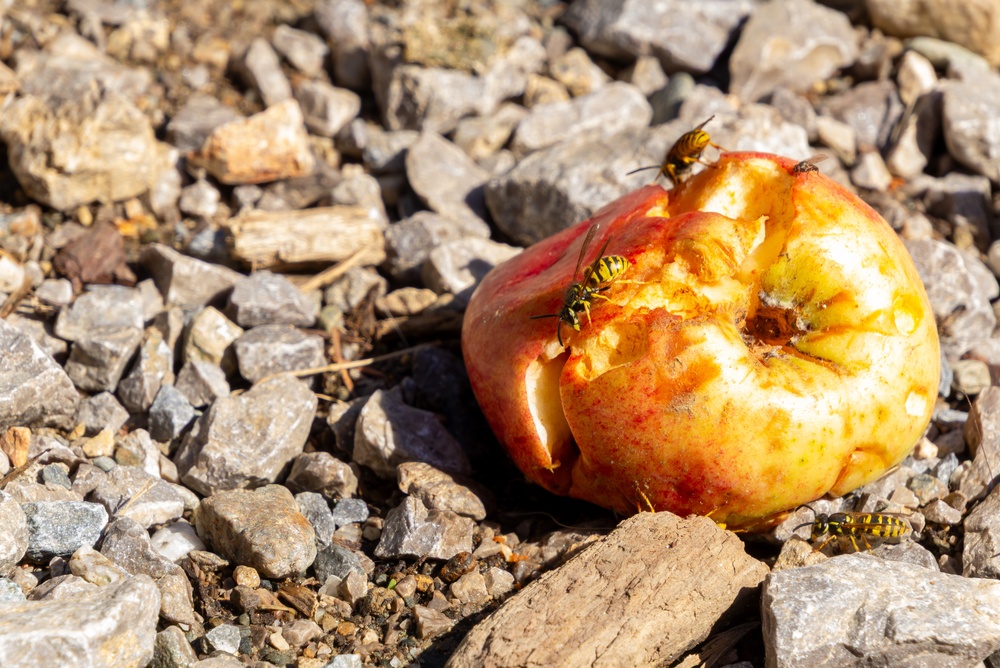
You’re harvesting the last tomatoes, picking up fallen apples, or taking a quick drink while cleaning up the garden when suddenly several yellow-and-black insects seem determined to join you. Yellowjackets can become particularly noticeable in late summer and fall, precisely when gardeners are spending hours harvesting produce and preparing beds for winter. The change isn’t your imagination: colonies are reaching their largest populations while workers increasingly forage around the sugary foods people—and gardens—provide. That combination can make yellowjackets in fall seem far more aggressive than the insects you barely noticed earlier in the growing season. Knowing what attracts them, where nests may be hiding, and what not to do around them can make fall garden cleanup considerably safer.
Yellowjacket Colonies Are Huge by Fall
A yellowjacket colony doesn’t begin spring with thousands of angry workers waiting underground. A queen starts the colony, and its population grows throughout spring and summer until numbers peak toward the end of the growing season. The University of Minnesota reports that a nest can contain approximately 5,000 wasps at its late-summer peak. That means gardeners aren’t necessarily seeing a new yellowjacket problem in September—they’re seeing the enormous result of a colony that has quietly been growing for months. More workers also means more opportunities to encounter yellowjackets in fall while mowing, pruning, harvesting, or simply eating outside.
Their Menu Changes as the Season Winds Down
Earlier in the season, yellowjackets can actually be valuable garden helpers because workers hunt caterpillars, flies, and other insects to feed developing larvae. Virginia Tech explains that adult yellowjackets also consume liquids produced by larvae and later turn toward nectar, ripe fruit, and other sources of sugar. As colony growth changes late in the season and natural resources become scarcer, human food becomes especially tempting. Soft drinks, juice, fruit, ice cream, meat, pet food, and garbage can all attract foraging yellowjackets. Suddenly, the insects that spent summer hunting garden pests are competing with you for whatever is sitting on the patio table.
Fallen Fruit Can Turn Your Garden Into a Buffet
Gardeners don’t need to host a barbecue to attract hungry yellowjackets. Yellowjackets in fall can be found around ripening and fallen fruit as they search for food and water. Apples, pears, peaches, grapes, raspberries, and other damaged or overripe produce can provide exactly the sugary meal they’re seeking. Regularly harvesting ripe produce and removing damaged fruit from the ground therefore does more than make the garden look tidy. It removes a food source that could otherwise draw numerous yellowjackets into the same area where you’re bending, reaching, and working.
Don’t Swat at the Yellowjacket Inspecting Your Lunch
The instinctive reaction to a yellowjacket hovering around your sandwich is usually to wave your hands until it leaves, but that’s exactly the response experts caution against. UMass Amherst recommends staying still rather than swatting when a yellowjacket investigates picnic food, then covering or removing the food after the insect leaves. Yellowjackets can sting repeatedly, unlike honey bees, which makes provoking one unnecessarily a particularly bad bargain. If you’re eating or drinking while gardening, keep food covered and don’t leave open sweet beverages sitting beside the raised beds. Check cups and cans before drinking as well, because a yellowjacket crawling inside a sugary beverage can be surprisingly difficult to see.
Garden Cleanup Can Put You Too Close to a Nest
Food isn’t the only reason gardeners experience unpleasant yellowjacket encounters during autumn. Yellowjackets commonly establish nests underground in old rodent burrows and other cavities, although nests may also occur inside walls, landscape timbers, hollow logs, and similar protected spaces. Oregon State University warns that colonies reach peak size in late summer and early fall and become increasingly aggressive as they grow. Running a mower over an underground entrance, moving landscape timbers, digging a bed, or clearing vegetation around the nest can trigger defensive behavior. Watch for repeated insect traffic entering and leaving one spot before doing aggressive fall cleanup in an unfamiliar section of the yard.
A Nest Doesn’t Always Need to Be Destroyed
Finding a yellowjacket nest can be alarming, but its location matters when deciding what to do next. Social wasp colonies last only one year and die during winter, with fertilized queens surviving elsewhere to establish new colonies the following spring. A nest far from people, pets, walkways, play areas, or gardening activity may therefore be something you can simply avoid until cold weather ends the colony. A nest beside the back door, vegetable beds, children’s play equipment, or another high-traffic area presents a much different risk. If removal is necessary—especially when someone in the household has a known sting allergy—professional pest management may be safer than experimenting with a DIY attack on a large colony.
Traps Aren’t a Magic Solution
It’s tempting to hang a few traps and assume you’ve solved a serious yellowjackets in fall problem. Unfortunately, traps capture only a small number of wasps, and it’s recommended to minimize attractants as the best strategy for scavenging yellowjackets. Keep outdoor trash tightly covered, clean up sugary spills quickly, harvest ripe produce, and remove fallen fruit rather than allowing it to ferment underneath trees. Pet food left outdoors can also provide another easy meal, so don’t leave bowls sitting near garden work areas unnecessarily. Basic sanitation may sound less satisfying than eliminating an entire colony, but it addresses one of the biggest reasons yellowjackets keep visiting your space.
Yellowjackets Aren’t Entirely Garden Villains
As annoying as yellowjackets in fall can become, killing every wasp you see isn’t necessarily good garden management. Yellowjackets prey on numerous insects and arthropods, including potential garden pests, while adults visiting flowers can also contribute to pollination. For much of the growing season, those behaviors can make them useful members of the backyard ecosystem. Problems generally arise when their nests overlap with human activity or large numbers begin scavenging around food later in the year. Understanding that distinction lets gardeners manage genuine safety problems without treating every yellow-and-black insect as something that needs to be sprayed.
Give Them Space Until Cold Weather Arrives
Seeing more yellowjackets in fall doesn’t necessarily mean something has suddenly gone wrong in your yard. Colonies are simply reaching their seasonal peak, and changing food needs make sugary drinks, ripe produce, fallen fruit, garbage, and outdoor meals particularly attractive. Remove those attractants, cover food and drinks, watch for nest entrances before mowing or digging, and resist the urge to swat at individual foragers. If a nest presents an unavoidable sting hazard, especially for someone with a known allergy, getting professional help is safer than disturbing a large colony yourself.
Have yellowjackets become more noticeable around your garden this fall, and where are you seeing them most often? Share your experience in the comments.
What to Read Next
Powdery Mildew Is Everywhere This Fall — Can Those Leaves Go in Compost?
This Tiny Pest Can Hitchhike Indoors on Your Houseplants This Fall
Garlic Goes in the Ground This Fall, But Timing It Wrong Can Ruin Next Year’s Harvest
Leave a Reply