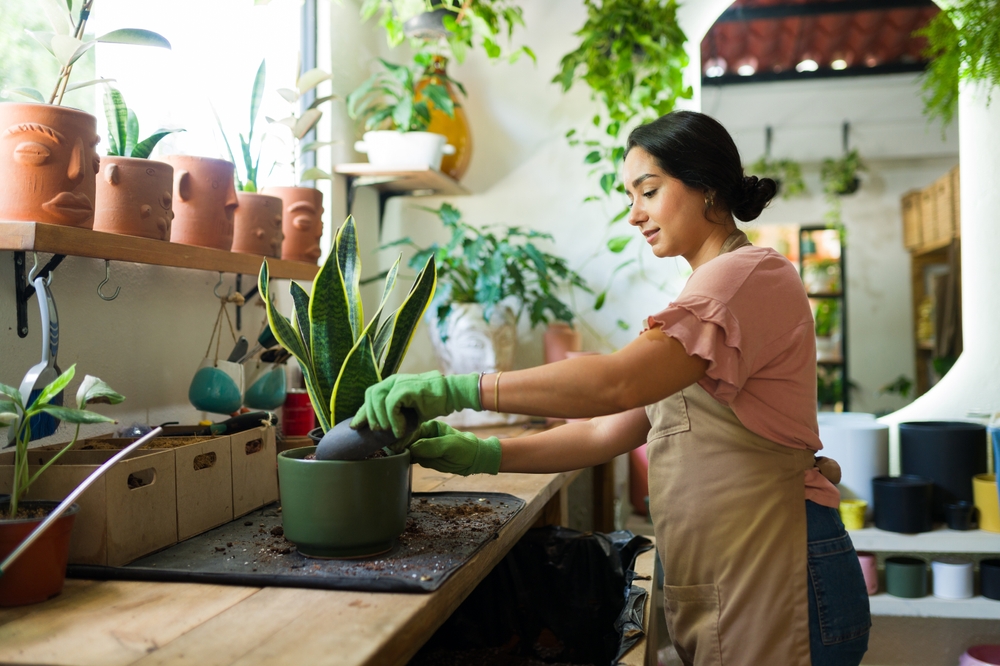
Life gets busy, schedules fill up, and plant care often slips to the bottom of the to-do list. That reality leaves many people staring at a sad pot of wilted leaves and wondering if they simply lack a green thumb. Fortunately, some plants seem almost determined to survive regardless of occasional forgetfulness.
The best low-maintenance plants tolerate missed waterings, inconsistent attention, and less-than-perfect growing conditions. Many of them even look better than fussier varieties that demand constant monitoring. For anyone who wants greenery without turning plant care into a second job, these resilient favorites deserve a closer look.
1. Snake Plant
The snake plant ranks among the toughest houseplants available, and many gardeners consider it nearly impossible to kill. Its upright, sword-like leaves create a bold look that fits modern, traditional, and minimalist spaces alike. This plant stores water in its thick leaves, which helps it survive long periods without a drink. It also adapts well to a variety of lighting conditions, from bright rooms to dim corners. Because it asks for so little while delivering so much visual appeal, it remains a favorite among beginners.
Many plant owners make the mistake of loving their snake plant too much. Overwatering causes more problems than neglect ever will. A snake plant often thrives when watered only after the soil dries completely. That forgiving nature makes it ideal for busy professionals, frequent travelers, and anyone who occasionally forgets where they placed the watering can.
2. ZZ Plant
The ZZ plant earns praise for its glossy leaves and incredible resilience. Its thick underground rhizomes store water efficiently, allowing the plant to handle drought with ease. Even in offices with artificial lighting and inconsistent care, ZZ plants often continue growing without complaint. Their rich green foliage adds elegance to spaces that might otherwise feel sterile or dull. Few plants combine toughness and beauty so effortlessly.
Many people choose ZZ plants because they remain attractive year-round with minimal effort. A missed watering rarely causes noticeable damage. In fact, this plant prefers drying out between waterings rather than sitting in constantly moist soil. That preference turns a common plant-care mistake into an advantage for forgetful owners.
3. Pothos
Pothos brings a lush, cascading appearance without demanding much attention. Its trailing vines can spill from shelves, hang in baskets, or climb supports for a dramatic effect. The plant tolerates a wide range of lighting conditions and recovers quickly from occasional neglect. Even when leaves droop slightly from dryness, a good watering often restores them within a day. That resilience explains why pothos appears in so many homes and offices.
This plant also grows quickly, giving owners a satisfying sense of success. Beginners often appreciate how easy it feels to keep pothos healthy. It forgives missed watering schedules and adapts to changing environments. Few houseplants offer such a rewarding combination of beauty, flexibility, and durability.
4. Cast Iron Plant
The cast iron plant earned its name through sheer toughness. This hardy species handles low light, inconsistent watering, and temperature fluctuations better than many other indoor plants. Its deep green leaves create a calm, classic appearance that works well in nearly any room. While some plants throw a tantrum at the slightest environmental change, the cast iron plant simply carries on. That dependable attitude makes it a hidden gem among houseplants.
Gardeners often recommend this plant for challenging indoor spaces. Hallways, darker rooms, and neglected corners frequently suit it just fine. Because it grows slowly, it rarely requires repotting or extensive maintenance. For people who want greenery without constant upkeep, the cast iron plant lives up to its reputation.
5. Spider Plant
Spider plants have remained popular for generations, and their durability plays a major role in that success. Their arching leaves create an attractive fountain-like shape that brightens indoor spaces. Spider plants tolerate occasional neglect and recover quickly when conditions improve. They also produce baby plants, often called spiderettes, which dangle from long stems. These offshoots add charm while providing easy propagation opportunities.
Many households pass spider plants from one generation to the next because they multiply so readily. Even novice gardeners can grow new plants from the babies with little effort. While regular watering helps them look their best, they generally bounce back after minor lapses in care. That forgiving nature keeps them near the top of many low-maintenance plant lists.
6. Jade Plant
Jade plants combine resilience with a distinctive sculptural appearance. Their thick, fleshy leaves store water, helping them endure dry periods with ease. As they mature, jade plants develop sturdy stems that resemble miniature tree trunks. This growth habit gives them an attractive, almost bonsai-like character. Their longevity also makes them popular among plant enthusiasts.
Some jade plants remain in families for decades with proper care. Because they prefer dry soil over constant moisture, they suit people who tend to forget watering duties. Bright light helps them thrive, but they rarely demand constant attention. Their ability to survive and grow steadily with minimal intervention makes them an excellent choice for busy households.
7. Aloe Vera
Aloe vera offers both decorative appeal and practical benefits. Its thick, spiky leaves contain a gel that many people use for minor skin irritations and sunburn relief. Like other succulents, aloe stores water efficiently and tolerates drought conditions remarkably well. It thrives when owners resist the urge to water too frequently. This simple requirement makes it easy to maintain.
Aloe also adds a clean, modern look to kitchens, offices, and sunny windowsills. The plant prefers bright light but usually forgives occasional care mistakes. Many owners appreciate having a living plant that serves both aesthetic and practical purposes. That versatility helps aloe remain one of the most widely grown houseplants in the world.
8. Peace Lily
The peace lily offers a unique advantage for forgetful plant owners because it communicates its needs clearly. When thirsty, its leaves droop noticeably, creating a visual reminder that watering time has arrived. After a drink, the plant often perks back up within hours. This built-in alert system removes much of the guesswork associated with plant care. Its elegant white blooms add another layer of appeal.
Despite its graceful appearance, the peace lily proves tougher than many people expect. It adapts well to indoor conditions and tolerates lower light levels better than many flowering plants. While consistent care encourages blooming, occasional neglect rarely causes lasting harm. For people who appreciate beauty with built-in forgiveness, the peace lily delivers both.
9. Rubber Plant
The rubber plant combines striking looks with impressive durability. Its large, glossy leaves create a bold statement that instantly elevates a room’s appearance. Although it appreciates regular care, it tolerates occasional missed waterings far better than many other popular houseplants. This flexibility makes it accessible to beginners and experienced plant owners alike. It also grows into an impressive indoor specimen over time.
Many interior designers favor rubber plants because they provide significant visual impact without requiring constant maintenance. They adapt well to indoor environments and generally resist common care mistakes. With occasional watering and reasonable light, they continue producing attractive new growth. Their balance of beauty and resilience explains their enduring popularity.
A Little Greenery Without the Stress
A thriving indoor garden does not require a strict watering calendar, specialized equipment, or endless attention. The right plant can handle occasional neglect while still bringing color, texture, and life into a home. Snake plants, pothos, ZZ plants, and the other hardy options on this list prove that successful plant ownership often comes down to choosing species that match real-world lifestyles.
What is the toughest houseplant you have ever owned, and which of these low-maintenance plants would you add to your home? We want to hear your stories of resilience and garden strength in the comments below.
You May Also Like…
8 Plants That Help Create Natural Backyard Shade
7 Sun-Loving Houseplants That Actually Refuse To Die In Direct Light
Why So Many Homeowners Are Replacing Shrubs With Edible Plants
The No-Mow Gardening Trend Saving Homeowners Time and Money
7 Plants That Help Pollinators Survive Extreme Heat

Brandon Marcus is a staff writer for FrugalGardening.com at District Media, Inc., where he delivers practical gardening advice with a relatable, no-nonsense style. An avid amateur gardener, he holds a BA degree and with over ten years of professional writing experience, he is also an award-winning published author whose first book, Questions For Deep Thinkers, was released by Adams Media. His work has appeared in major publications including Fandom.com, CHUD.com, TheColdWire.com, and Fansided.com.
Leave a Reply