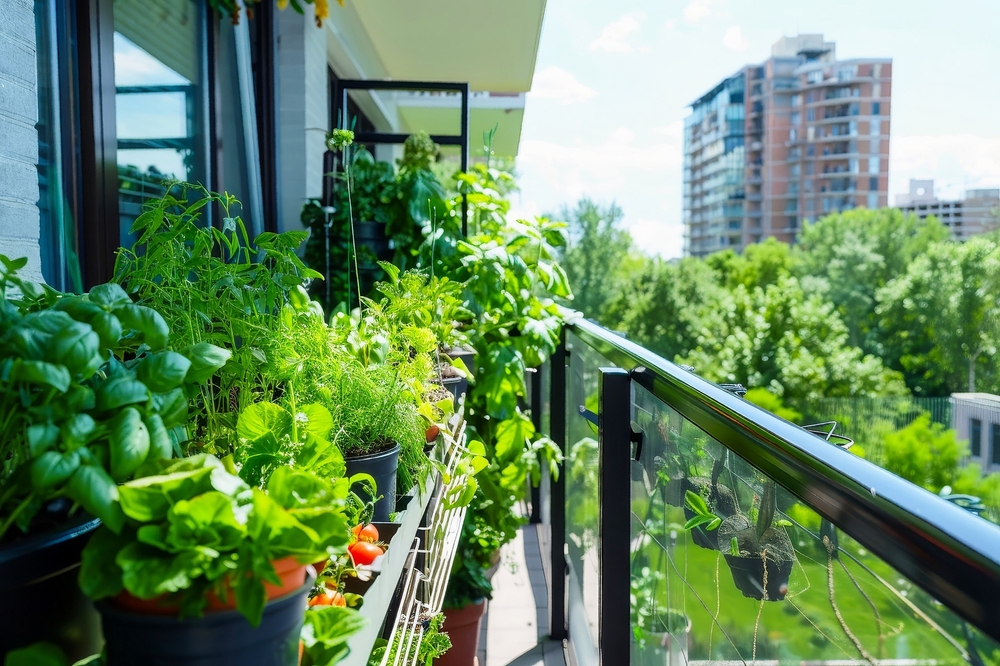
City living has taken a surprising turn, and it now includes rows of leafy greens sitting right outside apartment doors. Balconies once held forgotten bikes, dusty chairs, and storage bins, but they now host herbs, tomatoes, and even strawberries in compact containers. People want fresher food, lower grocery bills, and a stronger sense of control over what lands on their plates. This shift does not require acres of land or fancy equipment, just smart choices and a willingness to experiment.
Even the smallest balcony can transform into a productive green corner with the right approach and a bit of curiosity. The movement keeps growing because it blends practicality with the simple joy of watching food come to life.
The Rise of Balcony Food Farming
Urban lifestyles push people toward convenience, but many now want a closer connection to their food sources. Balcony food farming fills that gap by bringing edible plants into everyday living spaces without requiring a backyard. Apartment dwellers across cities stack pots along railings and shelves to create layered growing systems that maximize every inch. This trend also reflects rising grocery costs, which encourage households to supplement store-bought produce with homegrown alternatives. A few basil plants or lettuce containers can noticeably reduce weekly shopping lists while adding freshness to meals.
Social media has also fueled this movement by showcasing compact gardens that fit into tight urban settings. People share creative setups that include hanging planters, vertical grids, and repurposed household items turned into growing containers. These ideas spread quickly and inspire others to experiment with their own balconies, even when space feels limited. Environmental awareness also plays a role, as balcony gardens reduce packaging waste and shorten the distance between soil and plate. The rise continues because it blends savings, creativity, and environmental responsibility into one accessible hobby.
Smart Space-Saving Growing Techniques
Balcony gardeners rely heavily on vertical thinking to make the most of limited square footage. They install wall-mounted planters, stackable pots, and railing boxes to create multiple layers of growing space. This approach keeps plants organized while ensuring each one receives enough light and airflow. Clever layouts allow gardeners to grow more food without crowding their living areas or blocking walkways. Strategic placement turns even narrow balconies into productive mini farms.
Many gardeners also use modular systems that adjust as plants grow or seasons change. Lightweight shelves and movable containers make it easy to rearrange crops based on sunlight patterns throughout the day. Reflective surfaces sometimes help bounce light toward shaded areas, which boosts plant growth in tricky spots. People also group plants with similar needs together to simplify watering and care routines. These techniques prove that small spaces can still support abundant and diverse harvests when design meets intention.
Best Crops for Small Balcony Gardens
Successful balcony gardens start with choosing crops that adapt well to containers and limited soil depth. Herbs like basil, mint, and parsley grow quickly and deliver frequent harvests without demanding much space. Leafy greens such as spinach and lettuce also perform well because they grow fast and allow repeated cutting. Compact vegetables like cherry tomatoes and chili peppers add color and flavor while staying manageable in pots. These choices help beginners build confidence while enjoying steady results.
Strawberries also shine in balcony setups because they grow vertically and produce fruit in small clusters. Radishes offer another fast-growing option that rewards patience with quick harvest cycles. Gardeners often rotate crops to keep soil healthy and maintain continuous production throughout the year. Mixing herbs with vegetables also helps maximize space and improve pest resistance naturally. These crop selections turn even modest balconies into reliable sources of fresh ingredients.
Container Choices That Boost Yield
Container selection plays a major role in how well balcony gardens perform over time. Deep pots support root-heavy plants like tomatoes, while shallow trays suit herbs and leafy greens. Drainage holes prevent water buildup, which protects roots from rot and keeps plants healthier. Lightweight materials like fabric pots and plastic planters allow easy movement when sunlight shifts. The right container choice directly influences plant strength and productivity.
Many gardeners also experiment with self-watering containers that maintain steady moisture levels during hot days. These systems reduce stress on plants and help maintain consistent growth patterns. Hanging baskets add another layer of productivity by freeing up floor space for larger crops. Recycled containers also work well when properly cleaned and adapted for drainage. Thoughtful container selection turns small balconies into efficient growing systems that produce more food with less effort.
Watering, Soil, and Sunlight Strategies
Watering routines shape the success of any balcony food farm because containers dry out faster than garden beds. Gardeners often water early in the morning to reduce evaporation and help plants absorb moisture throughout the day. Soil choice also matters, with lightweight potting mixes offering better drainage and root aeration than dense garden soil. Compost additions improve nutrient levels and support steady plant growth over time. These habits create a stable foundation for healthy crops.
Sunlight management also drives plant performance in balcony settings. Most edible plants need at least six hours of direct light, so gardeners track sun patterns carefully before placing containers. Some balconies benefit from rotating pots to ensure even exposure across all plants. Shade-tolerant crops fill in gaps where direct light remains limited. Together, these strategies help plants grow consistently even in challenging urban environments.
Common Mistakes and How to Avoid Them
Many beginners overcrowd their balconies with too many plants, which leads to weak growth and poor airflow. Smart gardeners space containers properly and avoid stacking plants too tightly together. Overwatering also causes problems, especially in containers without proper drainage systems. Careful watering schedules prevent root damage and keep plants strong throughout the season. Simple adjustments like these often improve results quickly.
Another common mistake involves choosing crops that do not match the available sunlight or climate conditions. Successful balcony gardeners research plant needs before filling containers with seeds or seedlings. Neglecting soil quality also limits growth, since poor soil cannot support healthy root systems. Regular soil refresh cycles help maintain nutrient balance and long-term productivity. Avoiding these mistakes allows balcony gardens to remain productive and visually appealing.
A Small Space With Big Harvest Potential
Balcony food farming continues to grow because it blends practicality with creativity in a way that fits modern living. People discover that even small spaces can deliver fresh produce, savings, and a calming connection to nature. The process rewards patience and experimentation while offering tangible results throughout the seasons. Each container, shelf, and hanging pot contributes to a larger system that turns unused space into something productive. This shift shows how everyday environments can support meaningful food production without requiring land ownership.
What creative balcony gardening setup has caught your attention or worked well in your space?
You May Also Like…
8 Vegetables That Grow Surprisingly Well in Containers
Transform Your Balcony into a Green Oasis with These Gardening Secrets!
Why More Families Are Starting “Emergency Gardens” This Year
Apartment Gardening: The $20 Setup for a Balcony Bounty
The Backyard Gardening Trend That’s Exploding Across America This Summer

Brandon Marcus is a staff writer for FrugalGardening.com at District Media, Inc., where he delivers practical gardening advice with a relatable, no-nonsense style. An avid amateur gardener, he holds a BA degree and with over ten years of professional writing experience, he is also an award-winning published author whose first book, Questions For Deep Thinkers, was released by Adams Media. His work has appeared in major publications including Fandom.com, CHUD.com, TheColdWire.com, and Fansided.com.
Leave a Reply