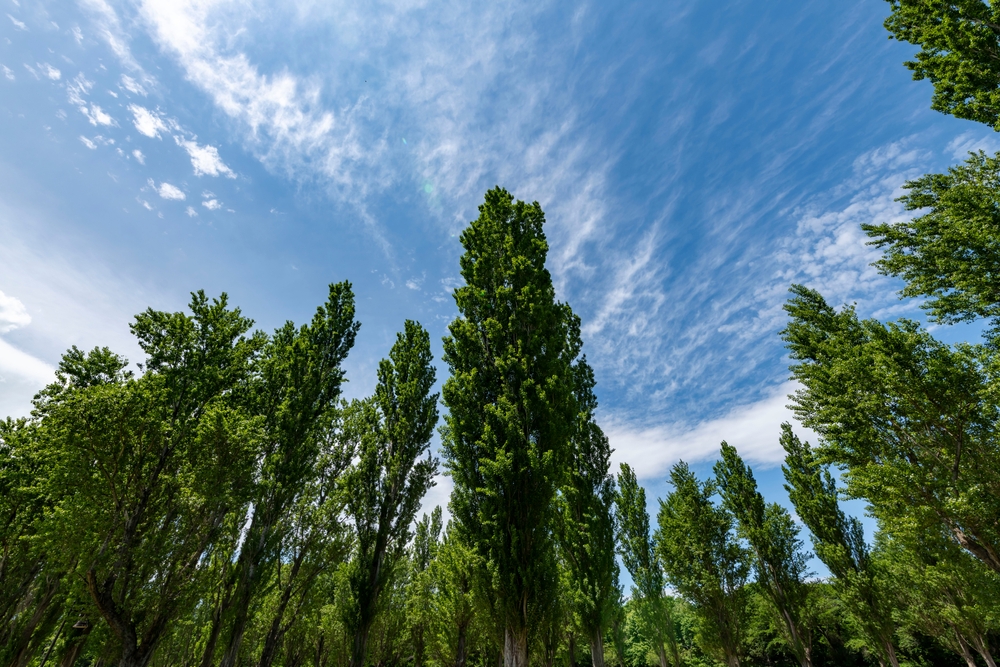
Planting a tree in your backyard or garden isn’t just beautiful but also truly useful. And if you’ve ever felt the wrath of a winter gust slapping you across the yard—or watched your carefully arranged patio furniture go tumbling like acrobats—you know the value of a good windbreak. That’s where evergreens step in like quiet superheroes.
They stand tall, stay green all year, and create natural walls that protect your home, your garden, and your sanity. The best part? Some of the most beautiful evergreens just so happen to be powerful windbreakers.
1. Norway Spruce
The Norway Spruce is a classic, with a strong presence that makes your yard look like it belongs in a postcard. It grows incredibly fast, which means you won’t have to wait a decade for it to shield you from seasonal winds. Its dense branching pattern acts like a natural fortress, blocking strong gusts and creating calm pockets of air behind it. Even in winter, when many trees stand bare, this evergreen keeps its full shape and color. If you need a dependable, handsome windbreaker, this one rarely disappoints.
2. Eastern White Pine
The Eastern White Pine is beloved for its soft, elegant needles and tall, sweeping form that adds a sense of movement to your landscape. Despite its graceful appearance, it’s a tough performer when it comes to slowing down wind. The long, flexible branches bend rather than break, making it ideal for areas with heavy gusts. Over time, these pines create a thick, protective screen that feels both natural and calming. If you want beauty and utility working together, this evergreen nails it.
3. American Holly
American Holly brings year-round charm with its glossy foliage and bright red berries that pop vividly against the winter landscape. Its thick, leathery leaves create a sturdy barrier that helps break up cold winds before they reach your home. Because it’s an evergreen shrub-tree hybrid, you can plant several close together to form a dense and decorative windbreak. Wildlife loves it, too, which adds extra life and color to your yard. It’s a great choice for homeowners who want something functional and festive.
4. Colorado Blue Spruce
Few trees are as striking as the Colorado Blue Spruce, with its unmistakable silvery-blue color that looks like it was painted by winter itself. This tree doesn’t just stand out visually—it stands strong against fierce winds. Its thick, pyramid-like shape makes it a natural shield, redirecting gusts around your property. Even better, it grows in a variety of soils and climates, making it widely adaptable. If you want a windbreak that doubles as a statement piece, this one delivers.
5. Arborvitae Green Giant
Arborvitae Green Giant is a favorite among homeowners who want fast results without sacrificing beauty. It grows tall and narrow, allowing you to plant multiple trees close together for an instant hedge-like barrier. The dense, feathery foliage grabs and slows down wind efficiently, creating a quieter outdoor space. Unlike some evergreens, it stays vibrant and lush no matter the season. When you need a windbreak that fills in quickly and looks uniform, this evergreen is a rock star.
6. Western Red Cedar
Western Red Cedar has a naturally rich fragrance and gorgeous reddish bark that adds warmth to any backyard. It’s one of the strongest performers when it comes to deflecting wind thanks to its thick, full branches. The tree also stands up well to moisture and cold climates, making it perfect for regions where storms hit hard. Its layered foliage helps trap moving air, reducing the chill that reaches your home. Choose this evergreen if you want something visually stunning and impressively durable.
7. Serbian Spruce
The Serbian Spruce brings elegance and strength in equal measure, with its slim silhouette and slightly arching branches. Even though it’s narrower than other spruces, it grows densely enough to work effectively as a windbreak. Its two-tone needles—green on top, silvery beneath—give it a unique shimmer that stands out throughout the year. This tree handles harsh winds remarkably well, making it a reliable choice for open landscapes. If you want a windbreak that feels refined and resilient, the Serbian Spruce is a winner.
Your Yard Deserves Beauty And Protection
Selecting the right evergreen doesn’t just enhance your landscape—it transforms it into a functional, year-round sanctuary. Whether you’re combating cold winter gusts or looking for privacy with a purpose, these evergreens offer strength, style, and long-term protection. Each one brings its own personality and benefits, turning your property into a natural shield.
Now it’s your turn: have you planted windbreaks before, or are you planning to try one of these evergreens?
You May Also Like…
- Why Evergreen Plantings Provide More Than Color
- 9 Shrubs With Berries Birds Rely on in Winter
- The Easiest Way to Keep Young Trees Safe from Winter Winds
- 5 Winter Storage Crops That Don’t Need Canning
- The Foolproof Way to Keep Potted Plants Alive All Winter

Brandon Marcus is a staff writer for FrugalGardening.com at District Media, Inc., where he delivers practical gardening advice with a relatable, no-nonsense style. An avid amateur gardener, he holds a BA degree and with over ten years of professional writing experience, he is also an award-winning published author whose first book, Questions For Deep Thinkers, was released by Adams Media. His work has appeared in major publications including Fandom.com, CHUD.com, TheColdWire.com, and Fansided.com.
Leave a Reply