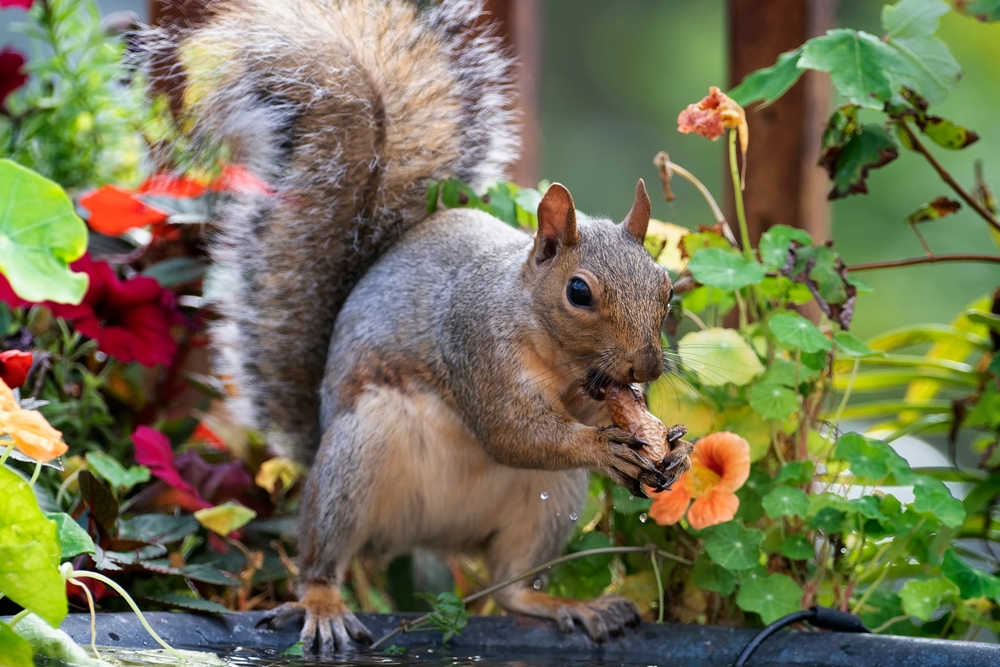
Squirrels can turn a beautiful container garden into a daily excavation project. Fresh potting mix feels soft, easy to dig, and surprisingly attractive to curious squirrels searching for buried nuts or looking for a convenient place to stash new ones.
The great news is that container gardens rarely need drastic solutions. A few smart changes can make pots far less appealing while keeping plants healthy and attractive. The best methods work with squirrel behavior instead of fighting against it, and most gardeners already have several of these materials sitting around the house.
1. Cover Bare Soil Before Squirrels Claim It
Fresh, exposed potting soil practically invites squirrels to investigate. The loose texture makes digging quick and easy, especially during spring and fall when squirrels spend extra time burying food.
A layer of mulch changes that experience immediately. Pine bark nuggets, decorative stones, pea gravel, pinecones, or coarse wood chips create a surface that squirrels generally dislike digging through. The goal is not to bury plant stems but to cover the exposed soil around them. Decorative gravel also helps reduce moisture loss while giving containers a polished, finished appearance. Lightweight mulch often works well for flowers, while heavier stones stay put during windy weather and make digging much less rewarding.
2. Add a Physical Barrier That Stops Digging
Sometimes the simplest solution wins. A physical barrier prevents squirrels from reaching the potting mix in the first place.
Chicken wire, hardware cloth, plastic garden mesh, or specially made pot protectors fit neatly over the soil surface. Cut openings just large enough for plant stems so roots receive water while squirrels lose access to their favorite digging spot. The barrier usually disappears beneath a thin layer of mulch, so the container still looks attractive instead of looking like a construction project. This approach works especially well for newly planted bulbs, seedlings, and vegetable containers that attract constant attention.
3. Skip Tasty Temptations Around Containers
A squirrel rarely visits only one food source. If birdseed, fallen nuts, or ripe fruit sit nearby, containers often become part of the same foraging route.
Keeping the area tidy reduces those repeat visits. Sweep up spilled seed beneath bird feeders, collect fallen fruit promptly, and harvest ripe vegetables before they linger on the plant. Bird feeders placed directly above patio containers often shower the soil with irresistible snacks, encouraging squirrels to investigate every nearby pot. Simply relocating feeders to another part of the yard can dramatically reduce container damage without affecting backyard bird watching.
4. Choose Scents and Textures Squirrels Usually Avoid
Strong scents do not guarantee success, but they can convince squirrels to move on to easier opportunities. Many gardeners find that several mild deterrents work better together than relying on a single product.
Sprinkling cayenne pepper around the outside edge of containers often discourages digging, although rain requires frequent reapplication. Commercial animal repellents designed specifically for squirrels may last longer when used according to label directions. Planting fragrant herbs such as rosemary, lavender, or mint nearby can also make containers less inviting while adding beauty and useful harvests to the garden. No scent works forever, so rotating methods often produces better long-term results than sticking with only one approach.
5. Water and Maintain Containers Regularly
Moisture plays an unexpected role in squirrel behavior. Newly watered potting mix packs together more firmly than dry, fluffy soil, making digging less enjoyable.
Regular maintenance also helps gardeners catch problems before squirrels create major damage. Refill holes quickly, press disturbed soil gently back into place, and replace any mulch that squirrels scatter. Young seedlings benefit from this extra attention because exposed roots dry out quickly after repeated digging. Healthy, well-maintained containers also recover faster from occasional squirrel visits than neglected pots with compacted or dried-out soil.
6. Give Squirrels a Better Place to Dig
This idea sounds backward at first, yet it often solves the problem surprisingly well. Squirrels naturally dig and bury food, so offering another location sometimes redirects that instinct away from prized containers.
A quiet corner filled with loose soil, leaf litter, or mulch provides an easier destination for their digging habits. Some gardeners place fallen acorns or unshelled peanuts in that area to encourage squirrels to investigate there instead of patio planters. While this strategy may not eliminate every visit, it frequently reduces repeated digging in decorative containers. Pairing a designated digging spot with mulch or physical barriers around containers creates a combination that many squirrels decide simply is not worth challenging.
A Smarter Garden Wins the Battle
Squirrels rarely target containers out of spite. They follow instincts that help them find food, bury supplies, and explore loose soil, which means gardeners can often solve the problem by making containers less attractive rather than trying to chase squirrels away.
Success usually comes from combining two or three techniques instead of relying on a single trick. A layer of decorative mulch, a discreet mesh barrier, cleaner surroundings, and regular maintenance create enough obstacles that squirrels often move on to easier locations. The result protects flowers, herbs, vegetables, and bulbs while allowing wildlife to remain part of the backyard landscape without constantly rearranging freshly planted containers.
What has worked best for keeping squirrels away from your container garden? Share your favorite tip or biggest squirrel story in the comments below.
You May Also Like…
The Cheapest Way to Start a Community Garden Plot
Which Plant Pairings Naturally Reduce Pests and Improve Yields
Can Playing Animal Crossing Inspire Real-Life Frugal Gardening?
Why Backyard Chickens and Gardening Are Becoming the Ultimate Frugal Combo

Brandon Marcus is a staff writer for FrugalGardening.com at District Media, Inc., where he delivers practical gardening advice with a relatable, no-nonsense style. An avid amateur gardener, he holds a BA degree and with over ten years of professional writing experience, he is also an award-winning published author whose first book, Questions For Deep Thinkers, was released by Adams Media. His work has appeared in major publications including Fandom.com, CHUD.com, TheColdWire.com, and Fansided.com.
Leave a Reply