• Skip to primary navigation
  • Skip to main content
  • Skip to primary sidebar

Frugal Gardening

Simple ways to save money while you garden

  • About
  • Contact Us
  • Garden Frugally
  • Buy These
  • Our Editorial Commitment
  • Navigation Menu: Social Icons

    • Facebook
    • Pinterest
    • Twitter

Making Your Pumpkin Last: 5 Tips

October 18, 2021 by Steph Coelho Leave a Comment


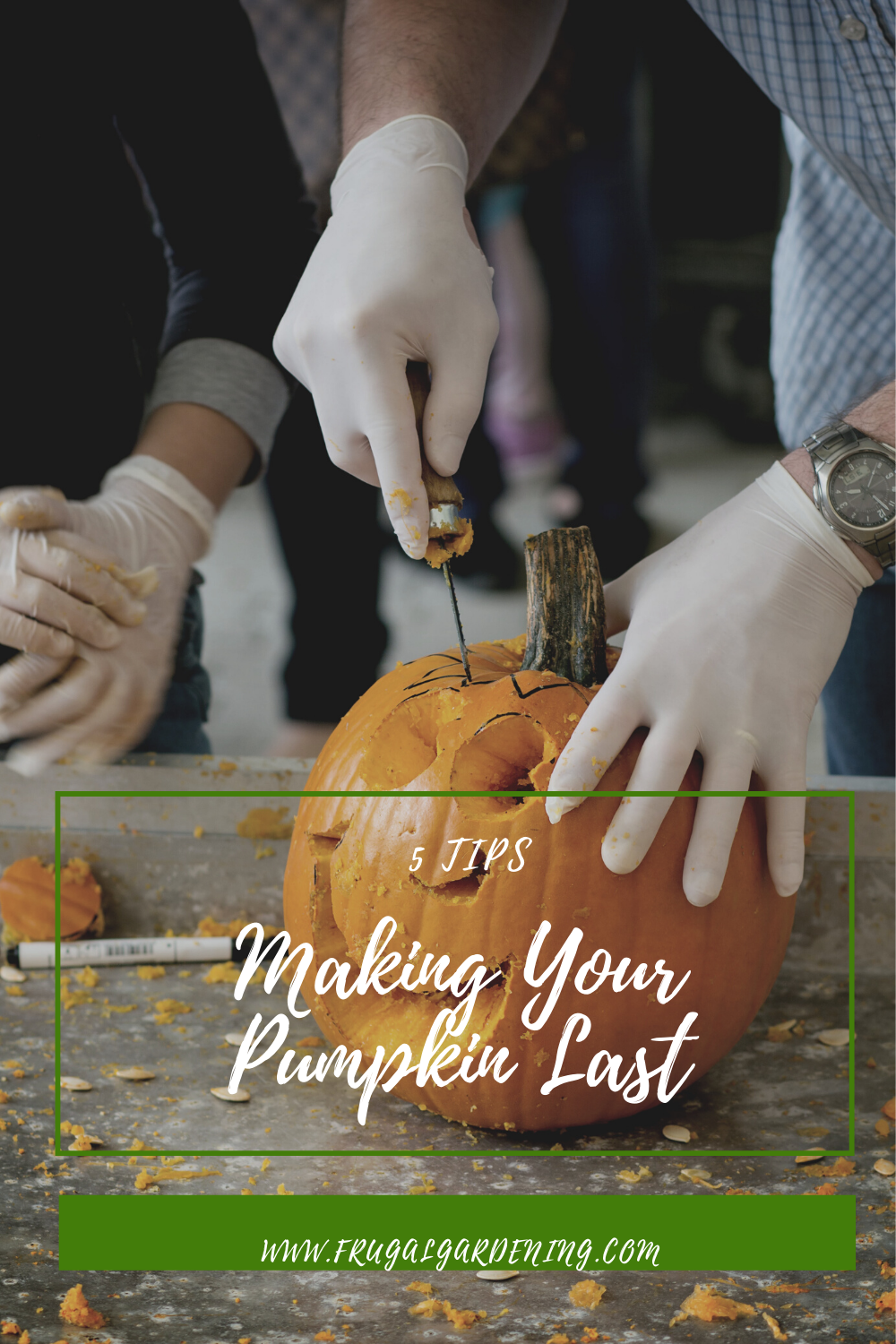
Making Your Pumpkin Last 5 Tips

It’s fall ya’ll! My favorite season! Unfortunately, it’s been a lot warmer than years past thus far. And while that may be good news for those wanting to extend the gardening season, it’s bad news for fall decor.

Whether you put out pumpkins to celebrate fall or Halloween, they’re a fun way to accessorize the front stoop. I think I’ve put out a pumpkin every year of my life, except for last year when Halloween was virtually canceled where I live.

Sadly, the unusually warm weather means that pumpkins are rotting faster than ever. So besides putting it out at the last minute, what are some tips for making your pumpkin last longer?

Making your pumpkin last longer

It’s time to carve, paint, and otherwise decorate pumpkins! But if you want to decorate this season, you’ll have to battle both warm weather and hungry squirrels.

Here are some tips for keeping that pumpkin around until November 1st:

Pick the right pumpkin.

Choose a pumpkin that’s free of holes, scrapes, cuts, dents, or odd dark spots. Blemishes will cause your pumpkin to rot quickly.

If you have the option, pick your own pumpkin! (This is also way more fun than grabbing one from the grocery store). Since it’ll be going from the field straight to your home, it won’t get bounced around like pumpkins that travel long distances.

Stop touching it.

The more you touch a pumpkin, the higher the chances are that you’ll knick or scratch it in some way. The more cuts and scratches a pumpkin has, the faster it’ll rot into oblivion.

That means carving also speeds up the rotting process. If you’re having trouble keeping pumpkins looking good-as-new, consider painting this squash-family fruit instead of cutting into it.

Put it in the right spot.

Plop a pumpkin in a moist patch of dirt, and you’ll end up with a soggy, mushy mess in no time. The ideal spot for a pumpkin is dry and out of direct sunlight—a covered porch, for example.

Dry it out.

To make sure the kiddies get to admire your pumpkin carving skills at Halloween, make sure to thoroughly clean out the insides of a pumpkin and then dry it out before slicing and dicing. Less goopy, moist parts mean fewer opportunities for mold to grow.

Grab the vaseline.

Rubbing a dried, carved pumpkin with vaseline helps seal the surfaces and prevent mold growth.

Bottom line

Your pumpkin will rot eventually. And while some of these things can slow the process, others are out of your control (like outdoor temps and humidity). Consider taking it in every night if you really want to protect that pumpkin—especially from squirrels and other nibblers.

Another way to deter hungry pests is to keep the pumpkin off the ground. Use a small table or another elevated surface to keep it out of reach. It’s not a foolproof protection method, but it’s better than nothing!

Photograph of Steph Coelho.
Steph Coelho

Steph Coelho is a freelance writer gardening in zone 5b. She is a certified Square Foot Gardener and has taught various garden-related workshops. When she’s not digging in the dirt or writing, she’s cooking up fresh produce, running, or listening to her favorite podcasts.

Filed Under: garden tips Tagged With: making pumpkin last, making pumpkin last longer, pumpkin, pumpkin decor

Previous Post: « 5 Reasons Why You Should Plant Wildflower Seeds In The Fall
Next Post: What To Do With Your Harvest »

Reader Interactions

Leave a Reply Cancel reply

Your email address will not be published. Required fields are marked *

Primary Sidebar

Struggling to get your garden off the ground? Put those days behind you with our special starter kit – perfect for thrifty green thumbs everywhere. Get growing and add a splash of color today!

Popular Posts

  • usda free seeds websiteHow To Get Free Seeds From The Government by Amanda Blankenship Seeds might seem like a small expense, but any seasoned…
  • Enviro Ice On PlantsShould I Use Enviro Ice On My Plants? by Kathryn Vercillo Every week, I receive food from Hungryroot. It's a great…
  • is shredded paper good for the gardenFrom Trash to Treasure: Transform Shredded Paper Into Garden Gold by Amanda Blankenship Should you use shredded paper as garden mulch? It might…
  • Enviro IceWhat Happens to Plants If You Use Enviro Ice on Them? by Amanda Blankenship About a year ago, I wrote our first article about…
buying clearance trees and shrubs

Should You Buy Clearance Trees and Shrubs in Fall? Check the Roots First

A $60 shrub marked down to $20 can make the garden-center clearance rack very difficult to walk past. Fall discounts on trees and shrubs can be genuine bargains, particularly when retailers simply need to reduce inventory before winter, but a low price doesn’t automatically make a struggling plant worth rescuing. Plants that have spent months…

Read More

planting grocery store potatoes

Can You Plant Potatoes From the Grocery Store? Here’s the Catch

We’ve all found one: a forgotten potato at the back of the pantry with several determined-looking sprouts growing from its eyes. Throwing it away feels wasteful, especially when those sprouts make it look ready to become an entire crop of free potatoes. Technically, planting grocery store potatoes can produce plants because the potato itself is…

Read More

free uses for fall leaves

Before You Bag Your Fall Leaves, Try These 5 Free Uses for Them

Every autumn, homeowners rake up something surprisingly valuable, stuff it into bags, and send it away—only to spend money on mulch, compost, and soil amendments a few months later. Fallen leaves contain organic matter and nutrients that can be recycled right where they land, and Penn State estimates that the leaves from one large shade tree can provide…

Read More

bare garden soil over winter

Leaving Soil Bare All Winter? You May Be Creating More Work for Spring

After the last tomatoes are picked and exhausted vegetable plants come out, a perfectly bare garden bed can feel satisfyingly clean. The problem is that soil doesn’t necessarily benefit from spending the next several months exposed to pounding rain, wind, weeds, freezing temperatures, and repeated freeze-thaw cycles. University of Minnesota recommends keeping garden soil covered…

Read More

  • About
  • Contact Us
  • Garden Frugally
  • Buy These
  • Our Editorial Commitment
  • Navigation Menu: Social Icons

    • Facebook
    • Pinterest
    • Twitter
  • Facebook
  • Pinterest
  • Twitter

Copyright © 2026 · Foodie Pro & The Genesis Framework