• Skip to primary navigation
  • Skip to main content
  • Skip to primary sidebar

Frugal Gardening

Simple ways to save money while you garden

  • About
  • Contact Us
  • Garden Frugally
  • Buy These
  • Our Editorial Commitment
  • Navigation Menu: Social Icons

    • Facebook
    • Pinterest
    • Twitter

5 Reasons Why You Should Plant Wildflower Seeds In The Fall

September 27, 2021 by Steph Coelho Leave a Comment


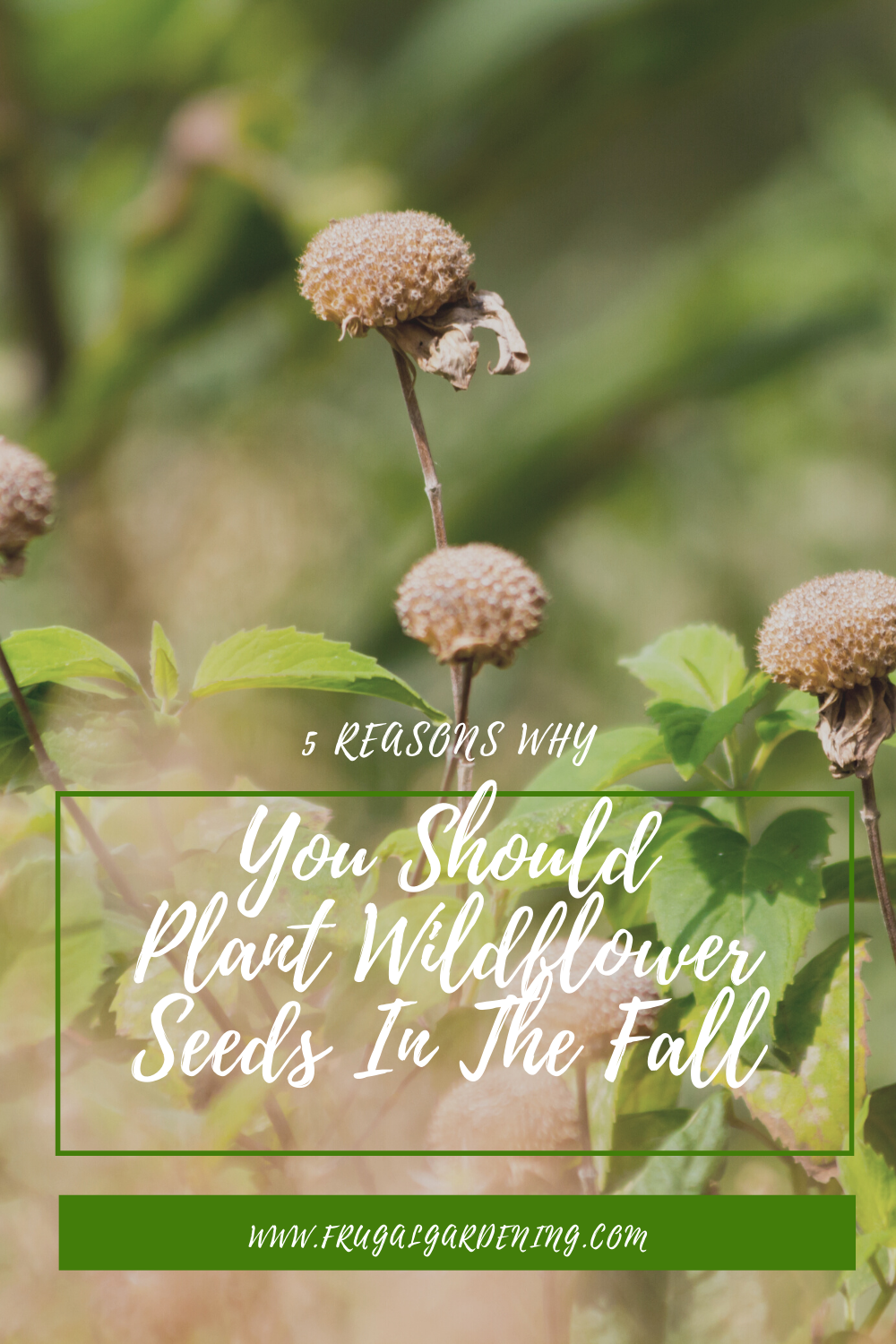
5 Reasons Why You Should Plant Wildflower Seeds In The Fall

There are so many reasons why you should plant wildflower seeds in the fall.

Can you believe I used to think planting flowers was a waste of space? I wanted veggies to take up every ounce of square footage I had when I first started gardening.

Now, my garden contains more flowers than ever before. Planting flowers, wildflowers included, is great for so many reasons. And fall is the perfect time to scatter those seeds.

Why you should plant wildflower seeds in the fall

Here’s why you should plant those seeds soon.

You’ll have flowers in the spring.

Fall planting means you’ll be gifted with pretty blooms as soon as spring arrives—timing, of course, depends on the varieties you choose to plant.

If you’re planting wildflower seed in a cold climate like mine, you need to ensure you get the timing right.

Plant too soon, and you risk having those seeds germinate. If they germinate, they’ll get killed right away by frost.

The best time to sow wildflower seeds is after at least one or two hard frosts. This lowers the chances that a thaw will occur, and the soil will warm enough for seeds to sprout.

In warmer climates, you can plant sooner. Sowing about two to three months before frost arrives allows those flowers to develop root systems that will enable them to survive over winter.

Order seeds here.

Some flower seeds need a period of cold to sprout.

Some seeds, including certain varieties of wildflowers, require a period of cold exposure to germinate. This is called cold stratification. When you plant in the spring, you might have to pop those seeds in the freezer. But by planting in the fall, you let Mother Nature do the hard work for you.

Planting is easier.

Another reason why you should plant wildflower seeds in the fall is that fall is less hectic. And since you’re unlikely to be doing much else, there’s plenty of time to dedicate to sowing wildflower seeds.

Fall also tends to be a nicer season compared to spring. Sure, warm spring weather is lovely. But in the fall, you’re more likely to have pleasant, non-rainy days suitable for working the soil and sowing seeds.

Weeds aren’t as much of an issue.

Weed seed that’s hiding out in your garden won’t be as much of a bother if you plant in the fall. That’s because, at the end of the season, weed seeds have gone dormant.

And, in the spring, weeds won’t have as much time to overtake the wildflowers, and you can easily spot and remove them before they become a problem.

Photograph of Steph Coelho.
Steph Coelho

Steph Coelho is a freelance writer gardening in zone 5b. She is a certified Square Foot Gardener and has taught various garden-related workshops. When she’s not digging in the dirt or writing, she’s cooking up fresh produce, running, or listening to her favorite podcasts.

Filed Under: seeds Tagged With: fall planting, flowers, planting flowers, planting wildflowers, planting wildflowers in the fall, wildflowers

Previous Post: « The Essence Of The Garden
Next Post: Making Your Pumpkin Last: 5 Tips »

Reader Interactions

Leave a Reply Cancel reply

Your email address will not be published. Required fields are marked *

Primary Sidebar

Struggling to get your garden off the ground? Put those days behind you with our special starter kit – perfect for thrifty green thumbs everywhere. Get growing and add a splash of color today!

Popular Posts

  • usda free seeds websiteHow To Get Free Seeds From The Government by Amanda Blankenship Seeds might seem like a small expense, but any seasoned…
  • Enviro Ice On PlantsShould I Use Enviro Ice On My Plants? by Kathryn Vercillo Every week, I receive food from Hungryroot. It's a great…
  • is shredded paper good for the gardenFrom Trash to Treasure: Transform Shredded Paper Into Garden Gold by Amanda Blankenship Should you use shredded paper as garden mulch? It might…
  • Enviro IceWhat Happens to Plants If You Use Enviro Ice on Them? by Amanda Blankenship About a year ago, I wrote our first article about…
6 Ways to Protect Ripening Fruit From Sudden Splitting

6 Ways to Protect Ripening Fruit From Sudden Splitting

Nothing frustrates a gardener quite like spotting beautiful fruit one evening, then walking outside after a rainstorm to find it covered in ugly cracks. Tomatoes split down the sides, cherries burst open, and plums suddenly wear deep scars that invite insects and disease. A harvest that looked picture-perfect can change overnight. Fruit rarely splits for…

Read More

Why Do Some Garden Beds Stay Wet Long After a Storm?

Why Do Some Garden Beds Stay Wet Long After a Storm?

Rain should leave a garden refreshed, not looking like it belongs in a marsh. Yet some garden beds stay soggy for days after a storm while others drain beautifully within hours, and that difference often points to problems hiding beneath the surface. A waterlogged bed does more than create muddy shoes. It can suffocate roots,…

Read More

Are Old-Fashioned Flowers Making a Comeback in Modern Gardens?

Are Old-Fashioned Flowers Making a Comeback in Modern Gardens?

Old-fashioned flowers have stepped back into the spotlight, and today’s gardens look better because of it. Gardeners now hunt for fragrant blooms, rich colors, and timeless favorites that filled family gardens decades ago instead of chasing every flashy new hybrid that appears on store shelves. That shift makes perfect sense. Many classic flowers offer beautiful…

Read More

What Is the Best Use for Tomato Suckers You Remove?

What Is the Best Use for Tomato Suckers You Remove?

Tomato suckers often look like little troublemakers stealing energy from the main plant, but those tiny shoots can become valuable garden helpers. Instead of tossing them into the compost pile, gardeners can turn many tomato suckers into new plants, extra harvests, or nutrient-rich compost. The next time a tomato plant sprouts a sucker between a…

Read More

  • About
  • Contact Us
  • Garden Frugally
  • Buy These
  • Our Editorial Commitment
  • Navigation Menu: Social Icons

    • Facebook
    • Pinterest
    • Twitter
  • Facebook
  • Pinterest
  • Twitter

Copyright © 2026 · Foodie Pro & The Genesis Framework