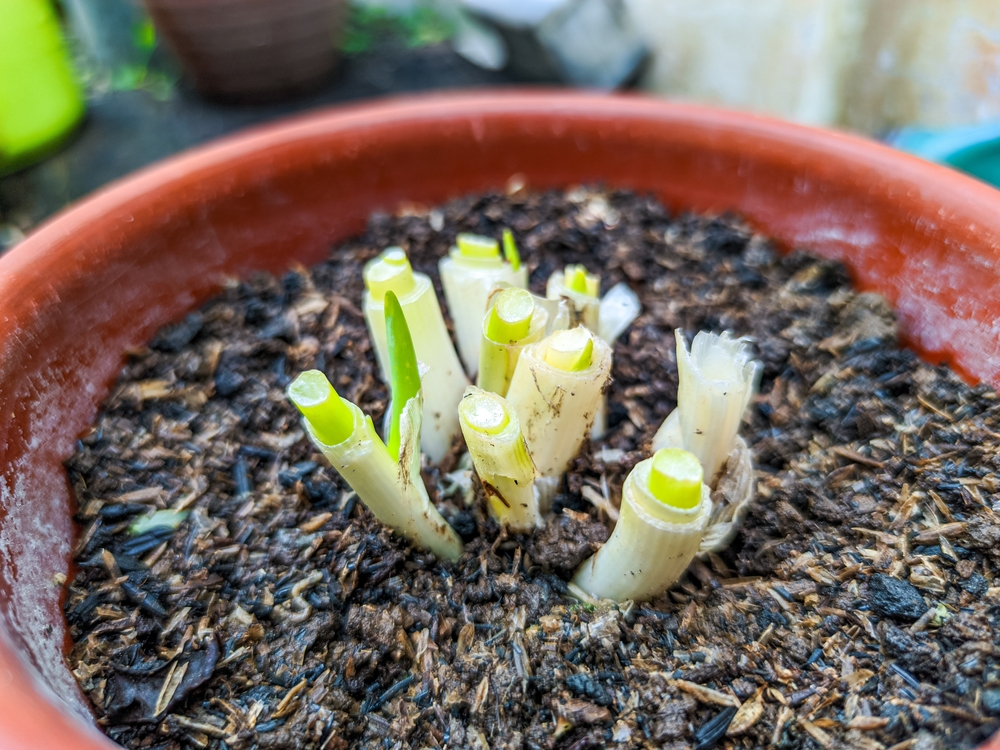
Buy a bunch of green onions once, stick the white ends in a glass of water, and supposedly you’ll never have to buy green onions again. It’s one of those viral gardening hacks that sounds almost too perfect for anyone trying to trim a few dollars from the grocery bill. Unlike plenty of internet tricks, regrowing green onions really does work, and fresh green shoots can appear remarkably quickly from roots that otherwise would have gone into the trash. The questionable part is the word “forever,” because keeping a productive plant alive requires more than leaving an onion stump in the same glass of water indefinitely. We looked at what actually happens after repeated harvests and whether this kitchen-scrap experiment is useful enough to deserve permanent space on the windowsill.
Start With the Part You Normally Throw Away
The experiment begins when you’re preparing green onions for dinner, so there’s no need to buy anything specifically for the project. Instead of slicing through the very bottom, leave the white bulb portion and attached roots intact, then place those ends upright in a shallow container with water around the roots. Place saved green-onion bulbs with their roots in a shallow dish of water and set them in a sunny window. The green tops have already been harvested, but the living base can produce new growth rather than immediately heading for the compost bin. That zero-dollar starting cost is one reason regrowing green onions is considerably more convincing as a frugal experiment than gardening hacks requiring special containers or equipment.
The First Regrowth Happens Surprisingly Fast
If you’re used to waiting days for seeds to germinate and weeks for seedlings to become recognizable vegetables, green onions feel almost like cheating. New green growth can emerge rapidly from the center, and the change is easy to notice because you begin with little more than trimmed white bases. Educator Caitlin Mellendorf documented the experiment and described green onions as providing a particularly fast return on the effort involved. She started the cut onions in water and then transferred them to soil, where they continued producing for weeks. If the test were simply “Does regrowing green onions actually work?” the answer would be an easy yes.
You Can Cut Them and Watch Them Grow Again
The best part isn’t producing one replacement set of green tops; it’s being able to repeat the process. Once the new greens reach a useful size, cut what you need while leaving the base and roots intact so the plant has an opportunity to send up more growth. Illinois Extension’s green-onion experiment specifically recommends cutting the grown tops even when you don’t immediately need them because harvesting encourages additional growth. A few onions on the windowsill may provide enough chopped greens to garnish eggs, baked potatoes, tacos, soups, stir-fries, or other meals without opening another store-bought bunch. Repeated harvests are what turn regrowing green onions from a children’s science experiment into a kitchen habit that can produce food you actually use.
But a Glass of Plain Water Isn’t a Lifetime Supply
This is where the word “forever” starts getting shaky. Water can support initial regrowth because the surviving plant base has roots and stored resources, but vigorous long-term plant growth also depends on light and nutrients rather than water alone. For comparison, the University of Minnesota notes that container plants require nutrients and that repeated watering can eventually leach nutrients from potting media, making regular fertilization necessary for productive growth. Green onions left indefinitely in a small glass may eventually produce weaker, thinner, or less impressive growth rather than endlessly replacing supermarket-sized tops. Think of water as a convenient way to start regrowing green onions, not a magic substitute for everything a productive plant normally gets from its growing environment.
Moving Them Into Soil Is the Better Long-Term Experiment
If you want to see how long your grocery-store onions can keep producing, give the roots somewhere better to grow. Illinois Extension’s documented green-onion experiment used a quick soak followed by planting in soil and reported weeks of continuing regrowth, which is a more realistic approach than expecting a tiny glass of water to sustain vigorous plants indefinitely. A small pot with drainage holes and ordinary potting mix works well for someone without a garden, while gardeners can transplant rooted onions outdoors when growing conditions are appropriate. Scallions grow best in full sun and need consistent moisture because onions have relatively shallow root systems. If you already have soil and a spare container, moving your regrowing green onions costs virtually nothing and gives them a better opportunity to keep producing.
Don’t Expect One Grocery Bunch to Feed You Forever
Even in soil, the original grocery-store scraps shouldn’t be treated as an immortal food source. Individual plants can weaken, suffer disease, experience root problems, bolt, or simply decline, and the way the onions were grown before reaching the supermarket wasn’t designed around becoming your permanent houseplant. Harvest expectations matter too, because a few regrown onions may supply garnishes but won’t necessarily keep up with a household that cooks with several bunches every week. It’s best to rely on direct seeding or transplanting scallions when gardeners want a dependable crop. Plants can be harvested once they reach usable size. Regrowing green onions is therefore best viewed as extending the useful life of something you already purchased rather than eliminating green onions from the grocery list forever.
The Savings Are Small, but So Is the Effort
Nobody is going to fund retirement with the money saved from a windowsill full of scallions. The financial appeal comes from the unusually favorable equation: the roots cost nothing because you’ve already purchased the food, the container can be an old jar or cup, and the amount of water involved is negligible. If you normally throw away the bases and buy another bunch whenever you need a garnish, even several extra harvests represent additional value from the same purchase. The experiment also reduces food waste and provides an easy introduction to growing edible plants for someone who doesn’t own a yard, raised bed, or collection of gardening equipment. That’s enough to make regrowing green onions worthwhile even if the lifetime savings amount to tens of dollars rather than hundreds.
Our Verdict: Regrow Them, but Skip the “Forever” Promise
Regrowing green onions passes the test because the roots can produce fresh, edible tops repeatedly with almost no upfront expense. What doesn’t pass is the claim that one bunch can sit in a glass of water and provide an unlimited supply forever without eventually declining. Start the roots in water, give them good light, harvest the fresh tops, and consider transferring healthy plants into soil if you want to keep the experiment going longer. Better yet, combine kitchen-scrap regrowth with traditionally planted scallions if you use a lot of green onions, since growing green onions from onion sets is one of the simplest methods available to home gardeners.
Have you tried regrowing green onions from grocery-store scraps, and how many times did you manage to harvest them before the plants gave up? Share your results in the comments.
What to Read Next
Can You Grow Grocery Store Garlic Instead of Buying Seed Garlic?
7 Plants You Can Get for Free by Dividing What You Already Grow
Can Growing Garlic Really Save Money Over Buying It at the Grocery Store?
Leave a Reply