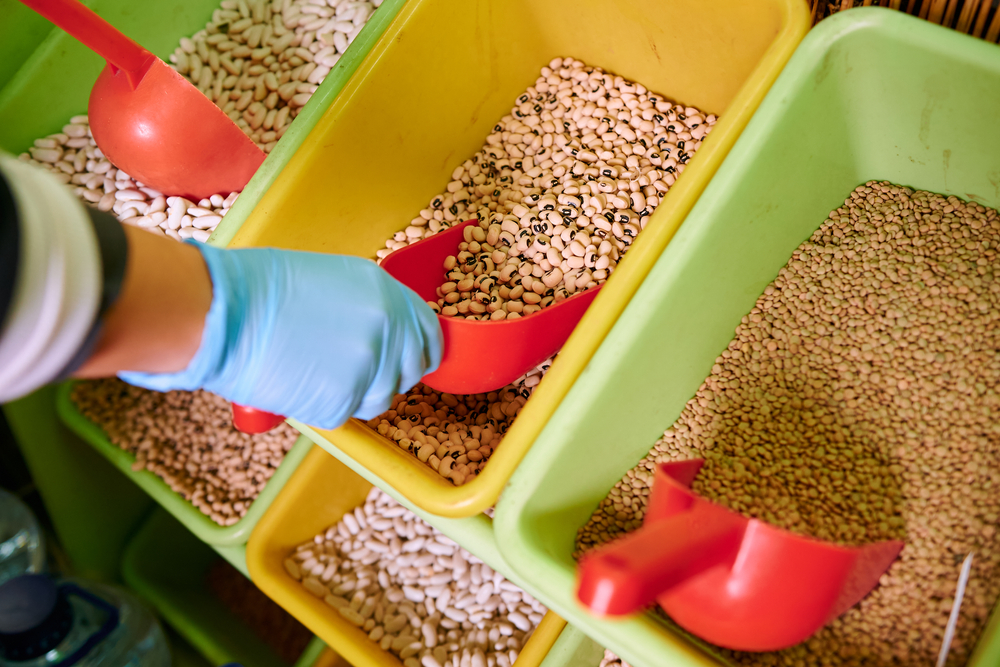
A two-dollar bag of pinto or black beans looks like dinner, not a packet of garden seed. But dried beans are mature seeds, which raises an irresistible frugal-gardening question: could you take a handful from the grocery bag, put them in the ground, and eventually harvest far more beans than you started with? The answer is yes—sometimes—and a 2026 University of Georgia experiment even managed to grow seedlings from ordinary store-bought pinto beans. The catch is that growing grocery store beans is much less predictable than planting seed produced and packaged specifically for gardening. If you’re willing to treat a few cents’ worth of beans as an experiment, however, this may be one of the cheapest gardening projects you can try.
The Bean in Your Pantry Really Is a Seed
A dried bean isn’t simply a manufactured food product; it’s a mature seed that developed inside a pod on a bean plant. Penn State explains that dried beans are mature seeds allowed to dry in their pods, including familiar supermarket varieties such as navy, black, kidney, cranberry, lima, and pinto beans. Given the right conditions, a viable bean contains what it needs to germinate and become another plant. That’s the basic reason growing grocery store beans can work even though the package was sold for soup rather than gardening. The unanswered question isn’t whether a dried bean is a seed but whether that particular seed is still alive and vigorous enough to grow.
Grocery Beans Don’t Come With a Germination Guarantee
A garden seed packet tells you the variety, planting information, and usually the year the seed was packaged, while a bag of dried food beans tells you almost nothing about gardening performance. Age and storage conditions can affect seed viability, and Iowa State University notes that cool, dry storage is important for maintaining good germination. With supermarket beans, you generally don’t know how old the crop is or what conditions it experienced between harvest and your pantry. Some beans may sprout beautifully while others from another package may produce nothing at all. That’s why spending $2 on dinner beans shouldn’t be viewed as equivalent to buying $2 worth of tested garden seed.
A 2026 Experiment Shows How Unpredictable It Can Be
University of Georgia put the supermarket-bean idea to a small real-world test this spring. An agent tested store-bought pinto beans, navy beans, and lentils alongside homegrown Asian long beans, including groups planted directly into damp potting mix. After 18 days, five of 12 grocery-store pinto beans planted in the mix had produced seedlings, while none of the 12 store-bought navy beans emerged; six of 12 lentils grew. The author stressed that the trial was far too small to establish a scientific germination rate, but it neatly demonstrates the gamble involved in growing grocery store beans. A cheap bag can contain viable seeds, yet the name “bean” on the package doesn’t guarantee you’ll get a garden from it.
Test Ten Beans Before Planting an Entire Row
You don’t need to gamble an entire garden bed to find out whether your pantry beans are viable. A basic germination test involves placing a small sample of seeds in a moist paper towel, keeping them appropriately warm, and watching to see how many sprout. Iowa State recommends testing seed roughly a month before planting and notes that germination around 90% is very good for most species, while rates of 50% or lower are generally poor enough to justify replacing the seed. If eight of your 10 grocery beans germinate, the experiment suddenly looks much more promising than if only one wakes up. For growing grocery store beans, that simple test costs almost nothing and can save you from staring at an empty row for several weeks.
Don’t Put Them Into Cold Spring Soil
Even perfectly viable beans can rot or struggle when gardeners get impatient about planting. Oregon State University says beans germinate best when soil has reached at least 60 degrees Fahrenheit and warns that seeds can crack at cooler temperatures, leaving them vulnerable to soilborne microbes. University of Maryland likewise recommends planting after frost danger has passed and giving beans full sun, preferably eight to 10 hours daily. Keep the soil moist but not soaking wet while seedlings emerge, because cold, waterlogged soil isn’t an advantage simply because beans need moisture to germinate. If you’re testing bargain beans, give them decent growing conditions before deciding the grocery-store experiment failed.
You May Not Know What Kind of Plant You’re Getting
The label “pinto beans” tells you what the harvested seed looks like, but it may not provide all the information gardeners normally receive when selecting a named cultivar. Garden beans can grow as compact bush plants, climbing pole beans, or intermediate forms, and pole varieties need support. University of Minnesota explains that common beans include bush, pole, and half-runner growth habits and that pole beans should have their supports installed when they’re planted. That uncertainty makes growing grocery store beans more entertaining as an experiment but less convenient when you’re designing a tightly planned vegetable bed. Give the plants some breathing room and be prepared to add a trellis if those innocent-looking seedlings suddenly decide to climb.
One Successful Plant Can Produce Plenty More Beans
Here’s the part that makes the experiment so appealing: one germinated bean doesn’t turn into just one replacement bean. Bean plants develop multiple pods, with each mature pod containing additional seeds that can become food or potentially seed for another generation. Utah State University estimates dry-bean yields around 20 to 25 pounds per 100 feet of row under suitable garden conditions, although your results will depend heavily on variety, spacing, weather, pests, and plant health. To harvest dry beans, leave pods on the plants until they have dried and the beans inside are mature rather than picking them at the tender green-bean stage. So while nobody should promise that a $2 supermarket bag will literally become a garden full of beans, the multiplication potential from a handful of viable seeds is very real.
The Cheapest Experiment May Be Sitting in Your Pantry
For dependable production, properly labeled garden seed remains the better choice because you know what you’re planting and can expect much more predictable germination and growth. But if you already have an inexpensive bag of dried beans, sacrificing 10 or 20 for a germination experiment costs only pennies and makes growing grocery store beans an unusually low-risk gardening adventure. Test them first, wait for warm soil, plant the successful variety in full sun, and keep expectations realistic rather than counting on the crop for your winter food supply. If the beans fail, you’re out a handful of pantry staples; if they grow, you get to watch an ordinary grocery item complete its entire life cycle and potentially produce far more seeds than you planted.
Would you sacrifice a handful from a $2 bag of dried beans to see whether you could turn them into an entire garden crop?
What to Read Next
What Should You Do When Beans Stop Flowering in High Heat?
Grow a Three Sisters Garden: Corn, Beans & Squash That Feed Each Other
Cheap Support Ideas for Vining Plants Like Tomatoes and Beans
Leave a Reply