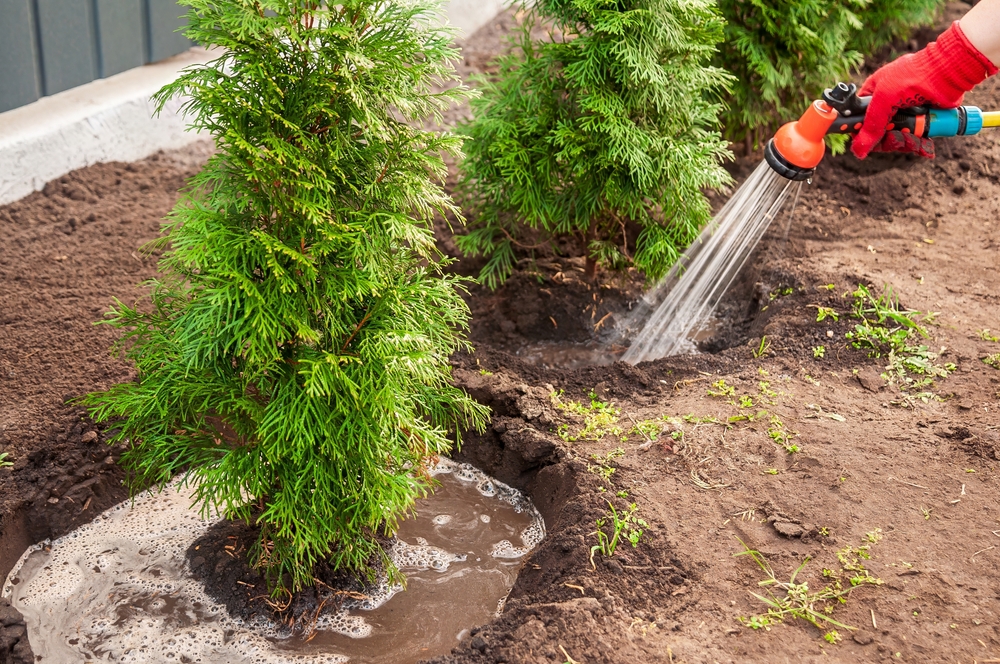
Your evergreen trees may look perfectly healthy in October, but what happens beneath the soil could determine whether they survive the winter without damage. While many gardeners focus on raking leaves, trimming shrubs, and preparing flower beds for freezing temperatures, one important fall gardening task often gets overlooked: watering evergreen trees and shrubs.
Unlike deciduous trees that shed their leaves, evergreens keep their needles or foliage throughout winter. That means they can continue losing moisture even when temperatures drop and the surrounding landscape appears dormant.
If the soil freezes while roots are surrounded by dry conditions, evergreens may struggle to replace the moisture they lose during cold, windy weather.
According to the University of Minnesota Extension, winter injury often occurs when evergreen foliage loses more moisture than the roots can absorb.
Understanding evergreen watering before winter could help homeowners prevent brown needles, damaged branches, and expensive landscaping replacements when spring arrives.
Evergreens Still Lose Moisture During Winter
One of the biggest misconceptions about evergreens is that they stop needing water once temperatures begin dropping. Although their growth slows significantly, evergreen needles and leaves can continue losing moisture through a process called transpiration. During winter, bright sunshine, dry air, and strong winds can increase moisture loss even when the tree isn’t actively growing. The Colorado State University Extension explains that winter drought stress can become particularly damaging when plants cannot absorb enough water from cold or frozen soil. Proper evergreen watering before winter helps ensure the root zone contains adequate moisture before prolonged freezing conditions arrive.
Dry Soil Can Lead to Winter Burn
Have you ever noticed evergreen shrubs turning brown on one side after a particularly harsh winter? That damage may be winter burn, a condition that occurs when evergreen foliage loses more water than the plant can replace. Winter sun, wind, and frozen soil are important factors contributing to this type of injury. Broadleaf evergreens such as boxwood and rhododendron can be vulnerable, along with needled evergreens including arborvitae and certain spruces. Although browning can also result from disease, salt exposure, or other environmental problems, adequate soil moisture going into winter is one practical way to reduce drought-related damage.
Deep Watering Is Better Than a Quick Sprinkle
A few minutes with the garden hose may wet the soil surface without delivering enough moisture to the deeper roots that trees and shrubs depend on. Deep watering involves applying water slowly enough that it soaks into the root zone rather than running across the lawn or pooling around the trunk. For established evergreens, the goal is to moisten the soil throughout the active root area, which often extends well beyond the visible trunk and toward or past the outer branches. A soaker hose or slow-running garden hose can help deliver water evenly, especially when positioned around the root zone instead of directly against the trunk. During evergreen watering before winter, check soil moisture several inches below the surface to determine whether water is penetrating adequately rather than assuming the ground is wet because it looks dark.
Newly Planted Evergreens Need Extra Attention
Recently planted evergreen trees and shrubs are particularly vulnerable to winter moisture problems because their root systems haven’t fully established themselves in the surrounding soil. A newly planted arborvitae hedge, for example, may appear healthy during autumn but struggle when freezing temperatures arrive after several dry weeks. Consistent watering during establishment is important because newly planted trees and shrubs have limited access to moisture beyond their original root balls. Depending on soil conditions, rainfall, and plant size, these evergreens may require more frequent moisture checks than mature landscape trees. However, gardeners should avoid keeping the root ball constantly saturated because poorly drained soil can damage roots and create additional problems before winter.
Timing Matters More Than the Calendar
There isn’t one universal date when homeowners should stop watering evergreen trees because fall temperatures and soil conditions vary considerably across the country. In colder climates, the most important window for evergreen watering before winter is generally during autumn before the ground freezes, particularly after extended periods without meaningful rainfall. Gardeners in milder regions may need to continue monitoring soil moisture throughout winter whenever conditions remain dry and the ground is unfrozen. Watering during suitable winter conditions when soil is not frozen is recommended, especially for vulnerable plants experiencing dry weather. Avoid watering frozen ground or applying water when temperatures are likely to create dangerous ice on nearby walkways and driveways.
How Much Water Do Evergreen Trees Actually Need?
The amount of water an evergreen requires depends on its size, age, soil type, recent rainfall, and the depth of its root system. Sandy soils generally drain more quickly than clay-heavy soils, meaning two homeowners with similar trees may need different watering schedules. Instead of automatically applying a fixed number of gallons, use a soil probe, screwdriver, or small trowel to check whether the root zone is dry several inches below the surface. If the soil is dry, water slowly and recheck afterward, aiming for moisture that reaches the root zone without leaving the ground waterlogged. This approach makes evergreen watering before winter more effective and can prevent homeowners from wasting water on trees that already have adequate moisture.
Mulch Can Help Protect the Moisture You’ve Added
Watering isn’t the only step homeowners can take to help evergreen trees and shrubs handle winter conditions. Applying approximately two to three inches of organic mulch over the root zone can help moderate soil temperatures and reduce moisture loss, provided the material isn’t piled against the trunk. The University of Maryland Extension recommends keeping mulch away from the base of trees and shrubs to avoid problems associated with excess moisture around stems and bark. Shredded leaves, wood chips, and other suitable organic materials can provide protection while gradually improving soil conditions as they decompose. Combining proper mulching with evergreen watering before winter gives vulnerable plants a better chance of entering the cold season with healthier roots and more consistent soil moisture.
A Little Fall Watering Could Save You a Big Spring Expense
Evergreen trees and shrubs represent a meaningful investment in your landscape, particularly when they’re used for privacy screens, windbreaks, or foundation plantings. Replacing a row of mature arborvitae or several established shrubs can become expensive once plant purchases, removal costs, and installation expenses are considered. Taking time to evaluate soil moisture during autumn is a relatively inexpensive way to reduce preventable winter drought stress. Remember that deep watering is most beneficial when the ground is dry, and excessive watering can be just as problematic in poorly drained areas.
Have you ever lost an evergreen tree or shrub after winter, or do you make deep watering part of your fall gardening routine? Share your experiences in the comments.
What to Read Next
Fall Watering Rules for Newly Planted Trees and Shrubs
You’re Still Watering Like It’s July — Your Fall Garden Doesn’t Need It
8 Ways to Protect Your Garden From Heat Without Running Up the Water Bill
Leave a Reply