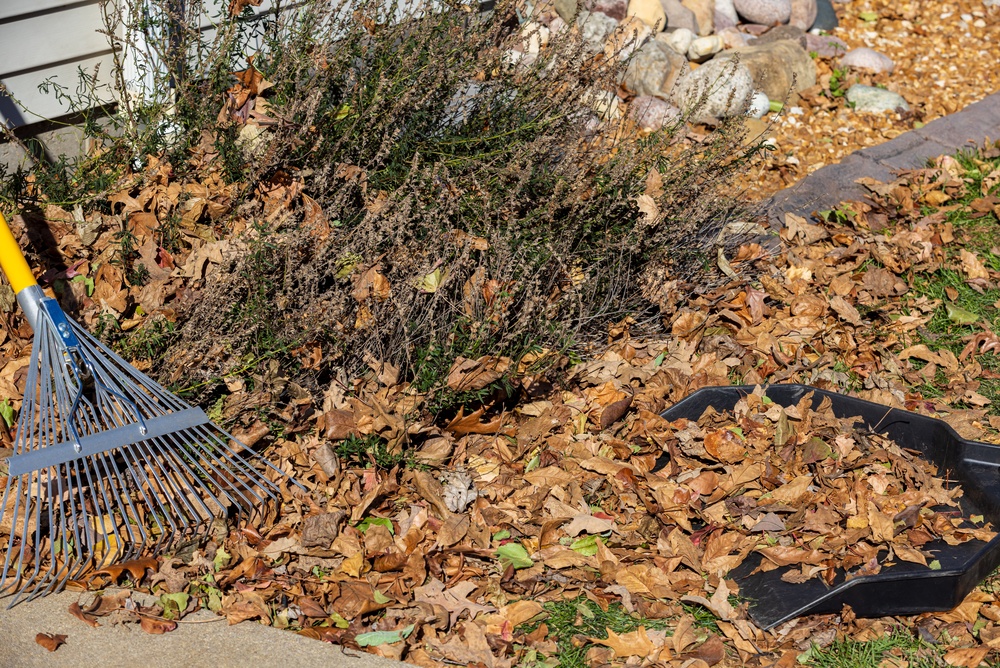
“Leave the leaves” has become popular garden advice, and there are good reasons not to send every fallen leaf to the landfill. Leaves provide organic matter, nutrients, mulch, and habitat, so the old idea that every yard should be spotless by November deserves reconsideration. But your lawn is one place where the advice needs some nuance, because a heavy blanket of intact leaves can block sunlight and airflow and leave turf struggling underneath. Iowa State University warns that dense leaf cover can prevent turfgrass from making and storing food before winter, potentially leaving dead patches that become vulnerable to weeds. The smartest approach to raking leaves off the lawn isn’t necessarily removing every leaf—it’s preventing enough from accumulating to smother the grass.
A Thick Leaf Layer Can Block the Light Grass Needs
Grass doesn’t suddenly stop needing light because summer has ended and temperatures have fallen. Iowa State explains that leaves covering turf in fall can interfere with the grass’s ability to manufacture and store food before winter. That means a lawn buried beneath several inches of maple or oak leaves may enter winter in poorer condition than a lawn receiving adequate light. This is especially worth watching beneath large shade trees, where leaves can accumulate surprisingly quickly after one windy afternoon. Raking leaves off the lawn becomes important once the layer is dense enough that you can barely see the grass underneath.
Wet Leaves Can Form a Heavy Mat
A scattering of dry leaves is very different from a wet blanket of leaves pressed against the grass for weeks. Rain and snow can flatten layers together, reducing airflow around grass blades and creating damp conditions beneath the leaf mat. University of Maryland warns that excessive leaf litter can deprive turf of light and air circulation, with prolonged dampness potentially contributing to fungal problems. Even dormant turf shouldn’t spend the entire winter sealed beneath a thick, soggy covering simply because it isn’t growing as rapidly. Clearing excessive leaves before prolonged wet or snowy weather can therefore prevent a relatively easy fall chore from becoming a spring lawn-repair project.
You Don’t Have to Rake Every Single Leaf
The good news is that raking leaves off the lawn doesn’t mean spending every Saturday chasing the final leaf across the yard. N.C. Cooperative says a light layer covering around 20% of the lawn can generally be left alone, while approximately 50% coverage can often be managed by mowing the leaves into smaller pieces. When leaves completely blanket the grass, however, remove a substantial portion and then potentially mulch what remains with the mower. That middle-ground approach is more practical than treating either “rake everything” or “leave everything” as an absolute rule. Look at how much grass is actually visible and let the thickness of the leaf layer determine how much work is necessary.
Your Lawn Mower Can Replace the Rake Sometimes
When leaf accumulation is moderate, a mower may be the easiest tool in the shed. University of Minnesota recommends mulching dry leaves with a mower, making additional passes when necessary to chop them finely enough to settle into the turf. As the pieces decompose, they return nutrients including phosphorus, potassium, and some nitrogen while contributing organic matter to the soil. UMN recommends switching to collecting excess leaves once you can see only about half of the lawn surface. That makes mowing an excellent alternative to raking leaves off the lawn when the leaf volume is manageable, but it isn’t permission to pulverize an ankle-deep pile and leave all of it sitting on the grass.
Leaving Too Many Leaves Can Create Spring Problems
Ignoring a heavy leaf layer in November can mean discovering thin, yellow, or damaged turf when warmer weather returns. Penn State warns that heavy leaf layers can smother lawn grass, interfere with spring growth, and contribute to conditions favorable to snow mold. Dead or weakened areas also leave open space where weeds can establish rather than allowing healthy turf to fill the lawn evenly. This doesn’t mean every bare spot next spring can be blamed on leaves, since disease, shade, drainage, drought, insects, and other problems can also damage turf. Still, preventing a thick leaf mat is much cheaper and easier than buying grass seed and repairing avoidable bare patches several months later.
Diseased Leaves Deserve Extra Attention
There is another reason you may want to remove certain leaves rather than mulch them back into the landscape. Fallen leaves from trees with significant foliar fungal diseases can contain spores capable of contributing to infection when new foliage emerges the following year. Remove and properly dispose of significantly diseased leaves rather than treating them exactly like healthy material. Don’t panic over every brown spot you see, though, because many leaf blemishes are largely cosmetic and identifying the actual problem matters before deciding what to discard. When a tree has had a confirmed serious foliar disease, cleaning up its leaves can become part of disease management rather than merely cosmetic lawn care.
Move Leaves Somewhere They’ll Do More Good
Leaves removed from turf don’t have to become trash, and this is where raking leaves off the lawn can actually benefit the rest of your garden. Iowa State recommends moving excess leaves into garden areas for winter mulch or adding them to compost rather than simply throwing them away. Shredded leaves can protect soil, contribute organic matter as they break down, and reduce the amount of commercial mulch or compost you may need to purchase. Intact leaves in appropriate garden areas can also provide overwintering habitat for beneficial insects and other organisms, giving you another reason not to obsess over a perfectly bare landscape. You’re not really getting rid of the leaves—you’re moving them from a place where too many can cause trouble to places where they can provide value.
The Goal Isn’t a Leaf-Free Yard — It’s Healthy Grass
The modern debate over whether to rake or leave fall leaves doesn’t need an all-or-nothing answer. A few scattered leaves can stay, moderate amounts can often be chopped with a mower, and heavy layers should be reduced before they smother the turf underneath. Raking leaves off the lawn still matters when grass disappears beneath the leaf layer, but those collected leaves can become compost, mulch, winter plant protection, or habitat elsewhere in the yard. That approach protects the lawn without wasting a free source of organic material or requiring you to spend every weekend creating a perfectly spotless landscape.
Do you rake your lawn completely clean each fall, mulch the leaves with your mower, or move them into your garden beds instead?
What to Read Next
Should You Leave Fallen Leaves on the Lawn? Yes and No
Don’t Bag Those Fall Leaves — They Could Replace 3 Things You Pay for in the Garden
Before You Bag Your Fall Leaves, Try These 5 Free Uses for Them
Leave a Reply