By October, the lawn mower may be running less often, but putting lawn care completely on hold can create problems that show up next spring. Grass type, climate and local frost dates determine exactly what your yard needs, yet several October lawn care jobs can protect turf through colder weather without requiring an expensive lineup of products. For cool-season grasses such as tall fescue, fall is an important period of active growth and recovery from summer stress. Warm-season grasses such as Bermuda, zoysia, centipede and St. Augustine are moving toward dormancy instead, which means their fall needs can be dramatically different. Before buying fertilizer or putting the mower away, identify what kind of grass you’re actually growing and work through these practical October tasks.
1. Keep Mowing While the Grass Is Still Growing
Don’t stop mowing simply because you’ve turned the calendar to October. Grass can continue growing well into fall, particularly cool-season turf, and the University of Maryland recommends mowing regularly while grass remains actively growing. Avoid scalping the lawn in an attempt to give it one dramatic “final cut,” because removing too much leaf tissue at once stresses the plants. Instead, continue mowing as needed and follow the familiar one-third rule, removing no more than roughly one-third of the grass blade during a single mowing. One of the simplest October lawn care strategies is watching the grass rather than choosing an arbitrary date to park the mower.
2. Don’t Let a Thick Layer of Leaves Smother the Lawn
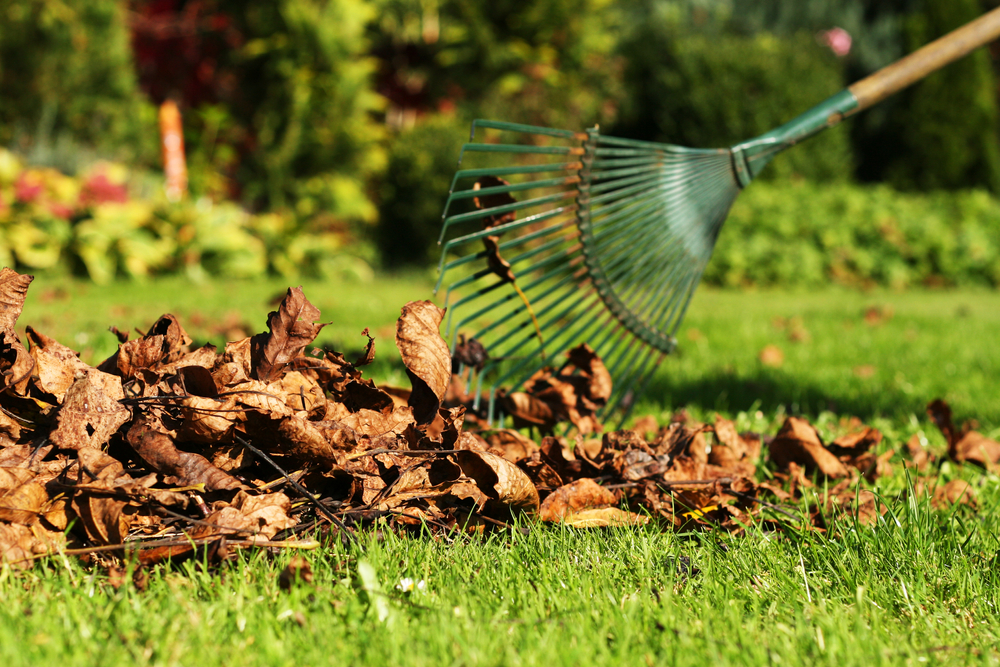
A scattering of leaves isn’t an emergency, but a heavy wet layer can block sunlight and create poor conditions underneath. University of Maryland Extension recommends removing leaves when they thickly cover turf, but that doesn’t necessarily mean bagging them for disposal. You can shred manageable amounts with a mower so the pieces settle between grass blades and decompose, or move excess leaves into garden beds and compost piles. This approach turns an annoying fall chore into free organic material instead of creating another lawn-care expense. Just don’t allow whole leaves to remain in dense mats for weeks simply because you’ve heard that leaving leaves is environmentally beneficial.
3. Aerate Compacted Cool-Season Lawns
If your lawn feels hard underfoot or receives frequent foot traffic, October may still offer an opportunity for core aeration in many cool-season regions. University of Wisconsin identifies October as suitable for core aeration when soil moisture is adequate, particularly where compaction, heavy clay or poor drainage contribute to turf problems. A core aerator pulls plugs of soil from the ground, creating openings that improve movement of air and water while helping address conditions associated with thatch. Leave those plugs on the lawn rather than raking them away, because they will gradually break apart. However, warm-season lawns generally should be aerated during active summer growth rather than after they’ve begun shutting down for winter.
4. Know Whether You’re Too Late to Overseed
Overseeding can transform a thin cool-season lawn, but October isn’t automatically the ideal month everywhere. New seedlings need enough growing time to establish before hard freezes, so gardeners in colder regions may already have missed their best window. University of Wisconsin Extension, for example, recommends completing cool-season overseeding considerably earlier in fall, while University of Maryland advises seeding or sodding by about mid-October in its region. Farther south, the timing can shift later because frost arrives later and fall growing conditions last longer. Good October lawn care means checking your local Extension recommendations instead of assuming a national lawn calendar applies equally in Maine and North Carolina.
5. Fertilize the Right Grass — Not Every Grass
This is where generic fall lawn advice can become expensive or even counterproductive. NC State warns against fall and winter nitrogen applications on warm-season grasses because late nitrogen can increase susceptibility to winter injury. By contrast, cool-season grasses grow actively during fall, making autumn an important fertilization period in many regions. A soil test can help determine what your lawn actually needs instead of buying a bag labeled “winterizer” and assuming every nutrient inside is necessary. The cheapest fertilizer is often the product you discover you didn’t need to buy in the first place.
6. Don’t Automatically Keep the Sprinklers on Their Summer Schedule
October irrigation should respond to weather and grass type rather than continuing automatically because the timer hasn’t been changed. Established cool-season grass may still need supplemental water during dry fall conditions, particularly after overseeding, but cooler temperatures usually reduce water demand compared with midsummer. Warm-season lawns moving into dormancy are a different story, and NC State advises against routine fall irrigation of those lawns unless conditions become excessively dry. Excessive moisture can encourage disease and potentially contribute to cold-weather problems. Check the soil and recent rainfall before watering instead of treating every October afternoon like a July heat wave.
7. Pay Attention to Winter Weeds Now
Some weeds seem to disappear with summer only to be replaced by a completely different group in fall. Winter annual weeds germinate during cooler weather, survive through winter and then become highly visible when they flower in spring. NC State Cooperative notes that fall can be an important time for managing winter annual weeds, although the right strategy depends on the weed and turf species involved. Before reaching for an herbicide, identify the weed correctly and follow the product label, including restrictions involving newly seeded lawns. Maintaining dense, healthy turf remains one of the best long-term defenses because fewer open spaces are available for weed seedlings.
8. Test Your Soil Before Trying to Fix It
If the lawn struggled all summer, October is a good time to investigate what’s happening underneath it. Soil testing can reveal pH and nutrient conditions that aren’t visible from the surface, helping prevent unnecessary fertilizer or lime applications. NC State’s Extension Gardener Handbook warns that skipping soil testing can lead to underfertilization, overfertilization, plant damage, unnecessary expense and nutrient contamination of stormwater. Don’t assume yellow grass automatically needs nitrogen or that every lawn benefits from an annual lime application. Data from a relatively inexpensive soil test can make your October lawn care budget far more targeted.
A Little Fall Work Can Prevent Expensive Spring Repairs
The goal of October lawn care isn’t to force your yard into looking like June again. It’s to help healthy grass enter winter in the best condition possible while addressing compaction, leaves, weeds and thin areas at the appropriate time. Keep mowing while growth continues, manage heavy leaf accumulation, water according to actual conditions and aerate cool-season turf when compaction warrants it. Most importantly, distinguish between cool-season and warm-season grasses before fertilizing, overseeding or aerating because advice that’s perfect for one can be poorly timed for another.
What October lawn task makes the biggest difference in your yard before winter arrives?
What to Read Next
What Happens If You Leave Carrots in the Ground All Winter?
Stop Fertilizing These Plants Before Winter — You May Be Encouraging the Wrong Growth
Leaving Soil Bare All Winter? You May Be Creating More Work for Spring
Leave a Reply