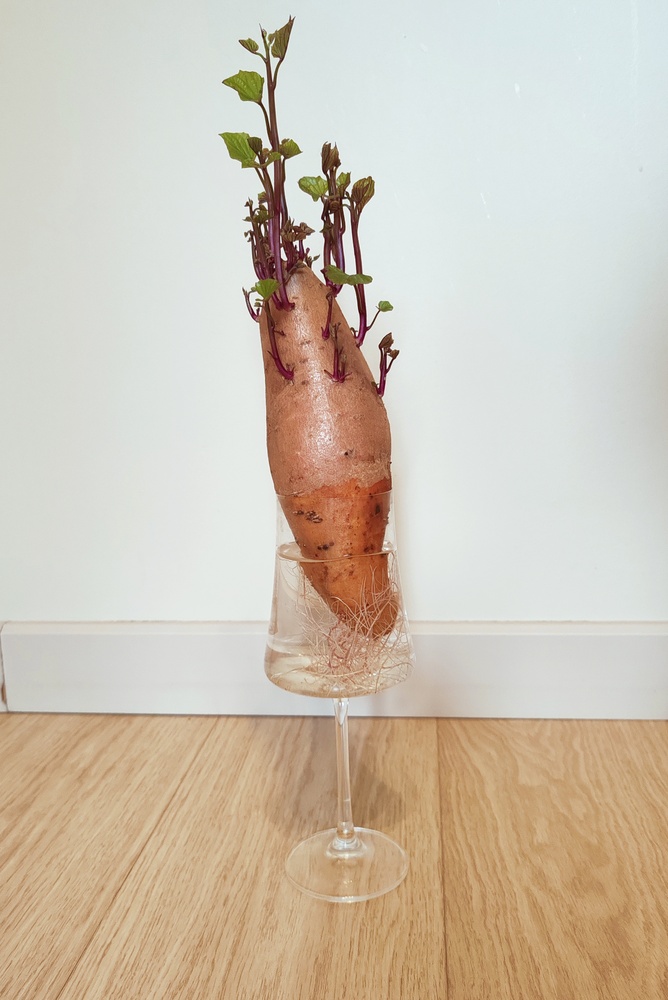
That wrinkled sweet potato sitting in the back of the pantry may look like compost-bin material, especially once little shoots start poking through the skin. But those sprouts are also evidence that the sweet potato is still capable of producing a living plant, so we decided to see what would happen if we planted one instead of tossing it. The experiment turned into sprawling green vines, a surprisingly attractive garden plant, and eventually the possibility of an entirely new crop growing beneath the soil. More importantly, it demonstrated how growing sweet potatoes from scraps can turn something headed for the trash into a practically free gardening project. If you have an old sweet potato beginning to sprout, here’s what you need to know before burying it in the garden.
The First Surprise Was How Quickly the Greenery Took Off
Sweet potatoes aren’t grown the same way as regular potatoes, even though their names make them sound closely related. Sweet potatoes are normally propagated using sprouts called “slips,” and Penn State explains that gardeners can produce those slips from sweet potatoes left from a previous harvest or even ones purchased at the grocery store. Once our old sweet potato was exposed to warmth and moisture, the existing sprouts developed into leafy vines rather than simply continuing to shrivel. That transformation is what makes growing sweet potatoes from scraps such a satisfying experiment because the change from questionable pantry leftover to vigorous plant can be dramatic. Don’t be surprised if the plant ultimately occupies considerably more room than expected, since some sweet potato vines can stretch many feet across a garden bed.
You Don’t Actually Need to Plant the Whole Sweet Potato
Here’s where our casual experiment differs from the method gardeners should use if their main goal is producing a reliable harvest. Rather than burying the entire old sweet potato, you can allow it to produce slips, separate those shoots, and plant the slips individually. University of Georgia recommends waiting until slips reach roughly 6 to 12 inches before removing them, while other guidance recommends similar transplant sizes. The shoots can be rooted before planting, although established slips don’t necessarily need visible roots before going into properly prepared soil. One old sweet potato can therefore potentially become several plants instead of occupying an entire planting spot by itself.
Warm Soil Made a Bigger Difference Than We Expected
Sweet potatoes love heat, which means this isn’t a project to rush into the garden during the first warm afternoon of spring. Try transplanting slips after the soil has warmed following the last frost, while Penn State advises waiting until soil reaches about 65 degrees Fahrenheit and notes that sweet potatoes are highly sensitive to cool conditions. For growing sweet potatoes from scraps, that means you can start the sprouting process indoors while waiting for genuinely warm outdoor weather. Loose, well-drained soil also matters because compacted or waterlogged ground can encourage rot and make it harder for storage roots to develop properly. A raised bed, mound, or large container filled with loose soil can be particularly useful when the native garden soil is heavy clay.
The Vines Aren’t Where the New Sweet Potatoes Grow
Seeing a lush mass of leaves can make the experiment feel successful, but foliage doesn’t necessarily guarantee a pile of sweet potatoes underneath it. Sweet potatoes form enlarged storage roots underground, and overly rich, nitrogen-heavy soil can encourage impressive vines without equally impressive roots. Penn State recommends planting slips about a foot apart on raised ridges and warns that excessive nitrogen can result in lots of leaves but relatively few sweet potatoes. That distinction is important when growing sweet potatoes from scraps because the goal isn’t simply to keep an old grocery-store potato alive. Give the plant sun, loose soil, adequate drainage, and enough growing space so it can devote energy to developing the part you’ll eventually want to eat.
Grocery Store Sweet Potatoes Come With One Catch
Using an old supermarket sweet potato is a fun low-cost experiment, but it isn’t necessarily the best choice when you’re counting on a dependable food crop. Some commercially sold sweet potatoes may have been treated to discourage sprouting, which can make starting slips frustratingly slow or unsuccessful. More importantly, experts generally recommend certified disease-free planting material because sweet potatoes can carry diseases from one generation of plants to another. Make sure you have certified disease-free roots. If your goal is simply seeing whether an old sweet potato will grow, experimentation costs almost nothing, but gardeners planning a serious harvest should consider purchasing healthy slips from a reputable source
Then Came the Long Wait for Something Underground
The leafy portion provides almost instant gratification compared with waiting for the edible harvest. Depending on the variety and conditions, sweet potatoes generally need roughly three to four months of warm growing weather, with Penn State giving a range of about 90 to 120 days from planting slips to maturity. Resist the temptation to repeatedly dig around the plant to check its progress because developing storage roots are easily damaged. When harvest time arrives, loosen the soil carefully away from the crown and work inward rather than plunging a shovel directly beneath the plant. Harvest before a killing frost because cold soil and frost damage can reduce the quality and storage potential of the roots.
Harvesting Isn’t Quite the End of the Experiment
Freshly dug sweet potatoes aren’t necessarily at their best the evening you pull them from the garden. Curing them under warm, humid conditions helps heal small harvest wounds, set the skins, improve storage life, and encourage starches to convert into sugars. Penn State’s sweet potato storage guidance explains that this post-harvest period plays an important role in flavor and keeping quality. Handle the roots gently during harvest because cuts and bruises can create opportunities for deterioration during storage. Suddenly, growing sweet potatoes from scraps has gone from a kitchen-waste experiment to a lesson covering propagation, warm-season gardening, harvesting, and food storage.
That Forgotten Sweet Potato May Deserve a Second Chance
Not every forgotten sweet potato is worth planting, particularly one that is moldy, badly rotted, or obviously diseased. But a firm sweet potato that’s simply old and sprouting presents an entertaining opportunity to see how much life can come from something you were about to discard. Starting slips is the better approach if you want to maximize your chances of a useful harvest, while planting a sprouting potato can still make a worthwhile garden experiment. At minimum, you’ll get a closer look at how one of our most familiar foods actually grows, and under the right conditions you could finish the season with fresh sweet potatoes that began as a pantry leftover.
Would you try growing an old sweet potato instead of throwing it away, or have you already experimented with growing grocery scraps in your garden?
What to Read Next
Can You Store Seed Potatoes From This Year’s Harvest?
Leave a Reply