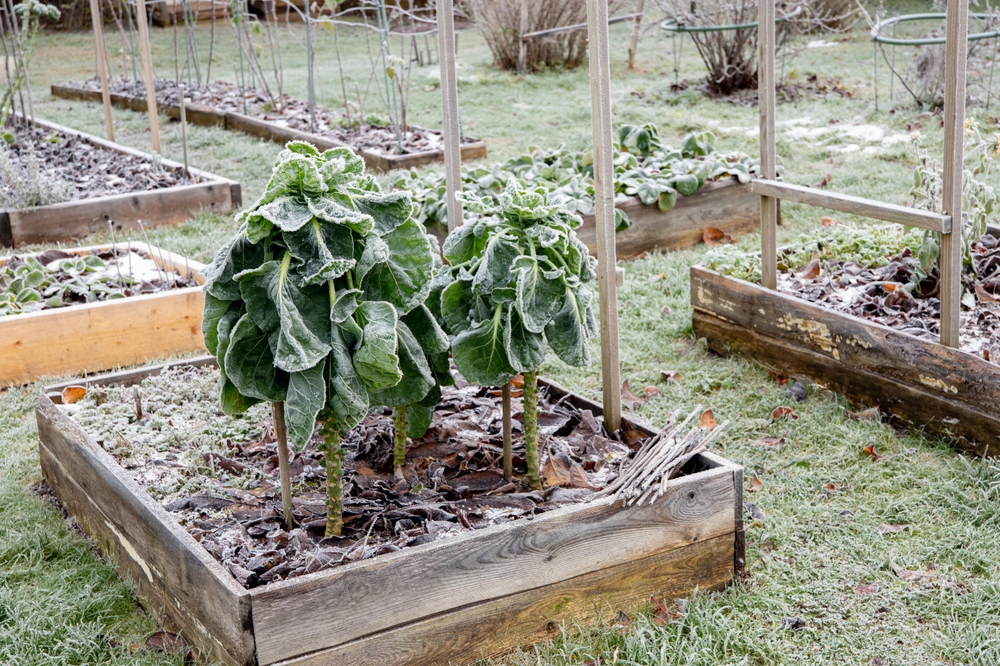
The last tomato has been picked, the dead vines are gone, and your raised garden bed is finally empty. It may seem logical to leave the soil alone until spring, but bare soil doesn’t necessarily benefit from spending several months exposed to rain, wind, weeds, and repeated temperature changes. Covering an empty bed can help protect the soil you’ve already spent money and time improving while potentially making spring garden preparation easier. The confusing part is deciding whether that means mulch, compost, a cover crop, cardboard, or the plastic tarp you’ve already got in the garage. Before winterizing raised garden beds, here’s what to put over the soil—and what you may want to leave off.
Bare Soil Isn’t the Best Winter Plan
An empty raised bed may look tidy, but bare soil loses some of the protection that living plants or mulch provided during the growing season. NC State recommends winter protection because it can reduce erosion, nutrient loss, and weeds while supporting the soil until planting resumes. Rain striking exposed soil can also break apart soil aggregates and contribute to surface compaction, while a protective layer reduces that direct impact. This matters even in a small raised bed because you’ve probably invested in compost, soil amendments, and organic matter that you want to keep working for future crops. Winterizing raised garden beds is therefore less about keeping the dirt warm and more about protecting a valuable growing medium until you need it again.
Mulch Is Probably the Simplest Option
If you want an inexpensive solution that doesn’t require planting anything, cover the soil with organic material. NC State suggests materials including straw, pine needles, chopped leaves, and wood chips used as a surface dressing, while Clemson Cooperative recommends covering unplanted raised beds with materials such as pine straw, leaves, compost, or a cover crop. Shredded fall leaves are particularly appealing to frugal gardeners because your yard or neighborhood may supply them for free at exactly the time your vegetable beds need protection. Avoid using diseased garden debris as mulch, and be careful with materials containing mature weed seeds that could create additional work next spring. Using what you already have can make winterizing raised garden beds practically free.
Compost Can Protect the Bed While Improving It
Fall is also a convenient time to replenish some of the organic matter lost as a raised bed settles and produces crops. It’s a good idea to top-dress beds with materials such as finished weed-free compost, shredded leaves, or appropriately aged manure. Organic materials gradually break down, and compost can help replace some of what disappears as the bed’s contents settle and decompose from season to season. You don’t need to completely replace your raised-bed soil simply because its level dropped a couple of inches, which can become an expensive habit in a large garden. Adding useful organic material instead can protect the surface while preparing the bed for another productive season.
A Cover Crop Can Keep Your Soil Working
Instead of covering the soil with dead plant material, you can cover it with living plants specifically grown to benefit the garden. University of Georgia explains that cover crops can build organic matter, suppress weeds, hold nutrients, and protect soil from erosion, even in small raised beds. Depending on climate and timing, possibilities can include winter rye, oats, wheat, crimson clover, hairy vetch, or Austrian winter peas, although the best choice depends on what you want the crop to accomplish. Remember that some cover crops need to be cut down or incorporated several weeks before spring planting, so don’t choose one without planning how you’ll terminate it. For gardeners willing to do that extra step, a packet of seed can turn winterizing raised garden beds into an opportunity to actively improve the soil.
If It’s Already Late, You Haven’t Missed Your Chance
Cover crops need time to germinate and become established, so there is a point when sowing one stops being the easiest winter option. University of Maine Cooperative advises gardeners who have missed their local cover-crop planting window to protect the soil with materials such as straw, chopped leaves, grass clippings, cardboard, or other organic matter instead. That distinction is important because gardeners shouldn’t assume an October or November planting date that works in one climate will work everywhere. If frost is already arriving and you have an empty bed, don’t spend money on cover-crop seed that has little chance of establishing simply because you heard cover crops are beneficial. A layer of free leaves can still accomplish the primary goal of winterizing raised garden beds: don’t leave good soil unnecessarily exposed.
Don’t Automatically Reach for Plastic
A sheet of black plastic may seem like the easiest way to seal an empty garden bed until spring, but sealing the soil isn’t necessarily the goal. In guidance responding specifically to winter raised-bed preparation, the University of Maryland recommends organic mulches rather than routinely covering soil with plastic and notes that prolonged plastic coverage can negatively affect beneficial soil organisms. Plastic can have legitimate gardening uses, including solarization for certain weed and disease problems, but that’s a specific technique rather than something every empty vegetable bed needs all winter. Organic coverings such as shredded leaves, straw, compost, or pine needles protect the surface while gradually contributing organic matter instead of merely creating a barrier. Before buying plastic for winterizing raised garden beds, ask what problem you’re actually trying to solve and whether free organic material could accomplish the job better.
Clean Up the Bed Before You Cover It
Whatever winter covering you choose, don’t bury an entire season of potentially diseased vegetable debris underneath it. It is recommended that you remove diseased or insect-infested plant material rather than composting it where the same problems could return next season. Healthy plant residues may sometimes be composted or incorporated, but tomatoes, squash, and other plants showing significant disease or pest problems deserve more cautious handling. Pull obvious weeds before applying mulch too, especially any that have already produced seeds, because winter protection shouldn’t double as a comfortable blanket for next year’s weed crop. Ten extra minutes of cleanup now can mean fewer unpleasant surprises when you uncover the bed in spring.
Don’t Spend $50 Protecting $10 Worth of Soil
One of the best things about this garden chore is that it doesn’t require another expensive trip to the garden center. Before buying bagged mulch, look for shredded leaves, finished homemade compost, clean straw you already have, or other appropriate materials that can do the job for little or nothing. If your raised bed is 4 feet by 8 feet, that’s only 32 square feet to protect, so even a modest amount of material can cover the entire surface. Save the money for seeds, transplants, compost, irrigation repairs, or another spring expense that actually requires purchasing something. Frugal winterizing raised garden beds means protecting the investment you’ve already made without turning a simple fall chore into another shopping project.
Cover the Soil Now and Make Spring Easier
For most empty vegetable beds, the practical answer is simple: clean up problem plant material, add organic matter if needed, and don’t leave good soil unnecessarily bare all winter. Mulch is the easiest choice for many gardeners, while a properly timed cover crop can provide additional benefits for those willing to manage it in spring. Try to keep garden soil covered rather than barren. Also, remember that mulch and cover crops can protect and improve soil through winter. When warm weather returns, you’ll already have a bed whose soil has been protected instead of starting spring by repairing avoidable erosion, compaction, or weed problems.
What do you put over your raised beds for winter—leaves, compost, straw, a cover crop, or nothing at all? Share what has worked best in your garden in the comments.
What to Read Next
7 Fall Crops You Can Grow in Containers Instead of Buying Raised Beds
Leave a Reply