Mulch is one of those garden purchases that doesn’t seem expensive until you calculate how many bags it takes to cover an entire landscape. A 3-inch layer across a 100-square-foot bed requires roughly 25 cubic feet of material, so even modest gardens can consume plenty of bagged mulch. Yet free garden mulch may already be falling from your trees, coming out of your mower, or sitting in a pile after you prune shrubs. The University of Minnesota explains that organic mulches can reduce evaporation, suppress weeds, protect soil from erosion, and add organic matter as they decompose. Before buying another stack of bags, take inventory of these five materials you may already have.
1. Fallen Leaves May Be the Most Obvious Free Mulch
If you rake leaves into bags every fall and buy mulch the following spring, you’re essentially hauling away one soil-covering material before paying for another. Leaves are recognized as an organic mulch by horticulturists, and shredding them with a mower can make them easier to use because smaller pieces settle into the garden instead of blowing around. Additionally, decomposing leaves return nutrients to the soil and improve soil structure, moisture retention, and water infiltration. Use shredded leaves around perennials, shrubs, and appropriate garden beds, or stockpile some for compost instead of automatically sending every leaf to municipal collection. For homeowners with several mature deciduous trees, this free garden mulch can replace a surprising amount of purchased material.
2. Grass Clippings Work—But Only If You Know What’s on Them
Freshly mowed grass may seem destined for the trash or compost pile, but untreated clippings can also become mulch in vegetable gardens and other appropriate beds. Oregon State University recommends letting grass clippings dry and applying them only about three-quarters of an inch to 1 inch thick because a heavy layer of fresh grass can mat together, become slimy, smell unpleasant, and restrict air movement. More importantly, don’t use clippings as garden mulch if the lawn was recently treated with a broadleaf herbicide that could damage desirable plants. Grass breaks down relatively quickly, so expect to replenish it more frequently than long-lasting wood chips or bark. If you’re already mowing the lawn anyway, though, those clippings can become free garden mulch without requiring another trip to the store.
3. Wood Chips From Your Own Pruning Can Cover Paths and Beds
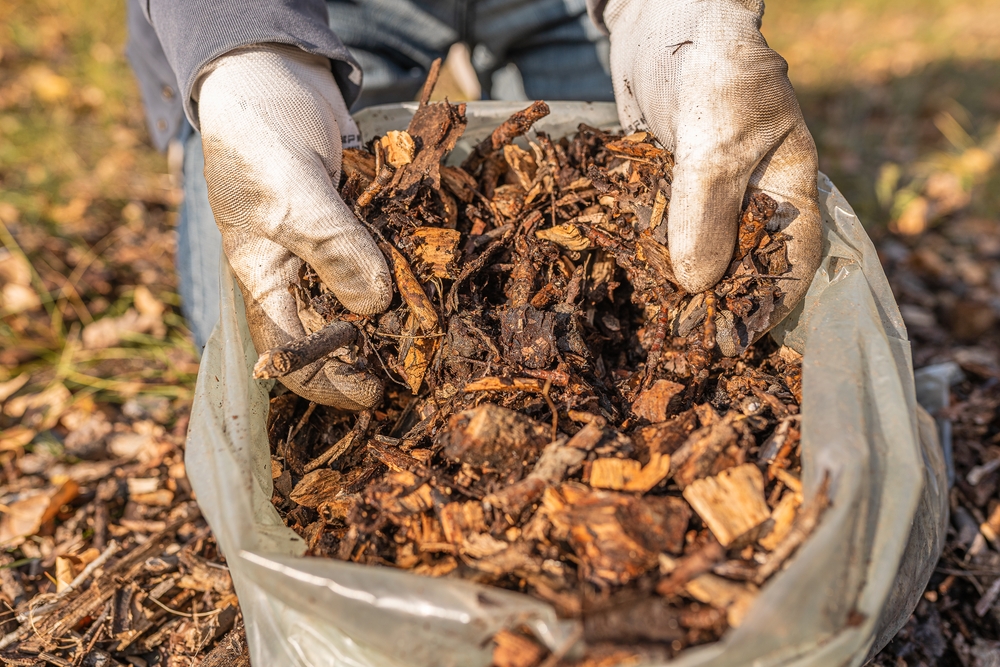
Tree removal and major pruning jobs can generate an enormous pile of branches, and a chipper can turn that debris into useful landscape material. Wood chips perform well for weed control and are recommended at roughly 3 to 4 inches of wood-chip mulch in shrub and tree beds. If you don’t own a chipper, ask a tree company working on your property whether the chipped material can be left behind rather than hauled away, provided the material is suitable and isn’t from diseased or otherwise problematic plants. Keep chips on top of the soil rather than tilling them into a vegetable bed, since incorporating woody material can temporarily tie up nitrogen as microbes break it down. OSU specifically recommends using wood chips on the soil surface around plants or along pathways rather than mixing fine chips into garden soil.
4. Pine Needles Don’t Have to Become Yard Waste
A yard filled with pine trees can produce enough needles to frustrate anyone trying to keep a landscape spotless, but those needles don’t necessarily need to leave the property. Pine needles are among the natural materials that can be used when sheet mulching a new garden bed, along with dead leaves and grass clippings. Their structure allows pine needles to create a relatively airy layer, making them useful around certain shrubs, perennial beds, pathways, and other landscaped areas. You may have heard that pine needles inevitably make garden soil dangerously acidic, but the effect of surface mulch on established soil pH is far less dramatic than that gardening myth suggests. Instead of treating every wheelbarrow of needles as waste, test a modest layer in suitable areas and keep it away from direct contact with plant stems and trunks.
5. Cardboard Can Help You Stretch Other Free Mulch Further
Cardboard isn’t a traditional decorative mulch on its own, but it can become a valuable bottom layer when you’re creating a new bed or trying to suppress existing vegetation. There is a sheet-mulching method that uses overlapping corrugated cardboard covered by several inches of natural mulch such as leaves, pine needles, grass clippings, bark, or wood chips. Remove tape and staples, overlap pieces so grass and weeds don’t immediately find gaps, wet the cardboard, and cover it rather than leaving sheets exposed to blow around the neighborhood. This approach is particularly useful when converting lawn into a garden because the cardboard helps smother vegetation while the organic materials above it begin breaking down. A stack of shipping boxes combined with leaves or chips from your property can therefore create an entire mulched area with little or no purchased material.
Free Mulch Still Needs to Be Used Correctly
Getting free garden mulch doesn’t mean more is always better, and improper application can create entirely new plant problems. It is recommended that you keep a roughly 6-inch mulch-free ring around tree trunks. That said, excessive mulch combined with overwatering can contribute to waterlogged soil and poor plant growth. Avoid diseased plant debris, weeds loaded with mature seeds, grass treated with problematic herbicides, or mystery materials whose source you can’t verify simply because they’re available at no cost. Match the material to the job: wood chips work especially well around trees and shrubs, while leaves, untreated grass clippings, pine needles, and cardboard can have different roles in beds and vegetable gardens. Once you start seeing autumn leaves, lawn clippings, pruning debris, pine needles, and cardboard as resources instead of trash, buying bag after bag of mulch may no longer make much financial sense.
Have you stopped buying mulch by using something your yard already produces, or is there one free material you swear by? Share your experience in the comments.
What to Read Next
Found a Snake Under the Mulch? Don’t Reach for It Until You Know What You’re Looking At
That Expensive Bagged Mulch May Be Sitting in Your Yard for Free
Leave a Reply