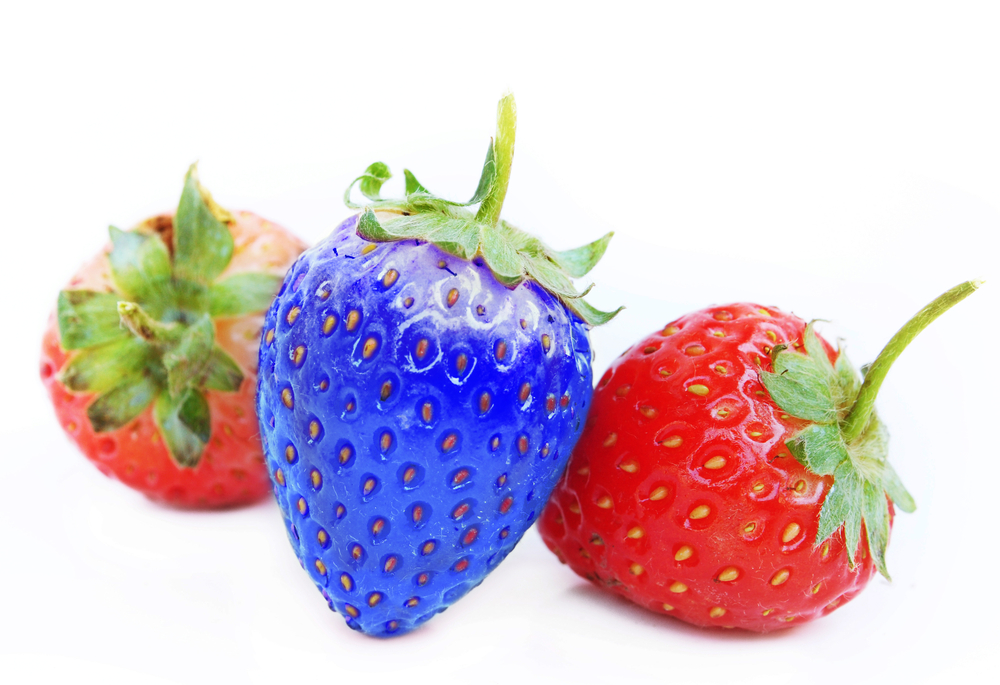
Scroll through online seed listings long enough and you’re almost guaranteed to encounter something that makes an ordinary garden look boring: electric-blue strawberries, rainbow roses, purple watermelons, or another spectacular plant you’ve never seen at a nursery. Photos of so-called blue strawberry seeds are especially convincing because the fruit often looks just realistic enough to make gardeners wonder whether breeders have created something extraordinary. There is just one problem: legitimate strawberry research documents colors ranging from white and pale pink through traditional red and deep burgundy, but not the vivid blueberry-blue fruit shown in many online listings. Scientists have spent years identifying the genes and pigments responsible for strawberry color, giving gardeners a surprisingly good way to fact-check these offers. Before spending a few dollars on a packet of “rare” seeds, here’s what strawberry genetics tells us about what will actually grow.
Real Strawberries Come in More Colors Than You Might Think
Not every strawberry is the familiar bright red variety found in supermarket produce departments. Research published in The Plant Cell explains that ripe strawberries can naturally range from deep burgundy to white, with different levels of anthocyanin pigments helping determine their appearance. White strawberries aren’t an internet invention either, and researchers have identified genetic mutations associated with naturally white-fruited strawberries. Some cultivated varieties can have red skin with white flesh, while others develop color throughout the fruit. That genuine diversity may make advertisements for blue strawberry seeds seem more believable than they really are.
Strawberry Genetics Don’t Support Those Electric-Blue Photos
Researchers now understand quite a bit about how strawberries get their color. A scientific review published in the Journal of Experimental Botany explains that strawberries’ familiar red appearance comes largely from anthocyanins, with pelargonidin derivatives contributing bright red coloration and cyanidin derivatives producing darker red hues. The MYB10 gene is particularly important because it regulates anthocyanin biosynthesis, and mutations can result in white or differently pigmented fruit. Studies have documented substantial genetic diversity involving red, dark-red, pinkish and white fruit, but credible strawberry breeding literature doesn’t document the intensely blue cultivated strawberries depicted in typical blue strawberry seeds advertisements. If a seller claims otherwise, ask for the actual cultivar name and independent horticultural documentation rather than relying on the photograph.
The Pictures Are Often the Biggest Red Flag
Take a close look at an advertisement for blue strawberries and the fruit may appear suspiciously similar to a normal red strawberry with its color digitally changed. Modern image-editing and generative-AI tools make creating exotic-looking produce easier than ever, so an extraordinary photograph isn’t evidence that a plant exists. Instead, compare the seller’s claim with established strawberry breeding programs, university horticultural resources, seed catalogs from established companies, and published research. The UC Davis Strawberry Breeding Program, for example, actively studies strawberry appearance, genetics, flavor and fruit color, including the anthocyanin compounds responsible for coloration. A supposedly revolutionary blue variety being sold cheaply by an anonymous marketplace seller—but absent from credible breeding and horticultural sources—deserves serious skepticism.
Blue Light Doesn’t Mean Blue Strawberries, Either
Internet claims sometimes become confusing because legitimate research really has examined “blue” treatments involving strawberries. Scientists have studied how different wavelengths of light affect anthocyanin production and strawberry coloration, including experiments using blue light. One study indexed by the National Library of Medicine found that red and blue LED treatments affected anthocyanin accumulation, including the primary strawberry pigment pelargonidin 3-glucoside. That does not mean blue light transformed strawberries into bright blue fruit or created a commercial blue strawberry cultivar. Scientific terminology can easily be stripped of context and repackaged into claims that make blue strawberry seeds sound more plausible than the evidence supports.
Even Real Strawberry Seeds Can Produce Surprises
There is another reason to be cautious when buying strawberry seeds based entirely on a photograph of the promised fruit. Cultivated strawberries have complicated genetics—the familiar garden strawberry, Fragaria × ananassa, is an octoploid with eight sets of chromosomes—which makes breeding and inheritance considerably more complex than many gardeners realize. Researchers writing in Plant Physiology describe specific genetic mutations responsible for unusual strawberry colors, including white-fruited cultivars. A seedling therefore isn’t automatically guaranteed to reproduce every characteristic of the plant that produced its seed, particularly when dealing with hybrids or traits that don’t breed true. An online seller offering blue strawberry seeds should be able to provide a recognized cultivar, botanical identification and believable breeding history rather than merely promising that every seed will grow fruit matching an astonishing photo.
Know What Unusual Strawberries Really Are Available
Gardeners interested in something different don’t have to settle for standard grocery-store red strawberries. Genuine white-fruited strawberries exist, and strawberry genetics research has documented multiple independent mutations capable of reducing or eliminating the anthocyanins that normally make the fruit red. A review available through the National Library of Medicine describes substantial color diversity in Fragaria, including white fruit in several wild species and cultivated strawberries with varying skin and flesh coloration. That makes white or unusually pale strawberries a far more scientifically credible experiment for a gardener wanting something unusual. Buying an established cultivar from a reputable nursery also gives you a much better chance of receiving the plant you actually paid for.
Check the Seller Before Spending Even a Few Dollars
The low price of questionable seeds is part of what makes the gamble tempting: losing $3 or $5 doesn’t feel like a major financial mistake. But gardeners can also lose weeks or months growing mystery seedlings, especially when the promised plant requires an entire growing season before the deception becomes obvious. Search the cultivar name independently, look for established horticultural references, examine seller reviews carefully, and reverse-image-search suspiciously spectacular product photos when possible. If blue strawberry seeds supposedly produce a major botanical breakthrough but the seller provides no cultivar history, breeder, scientific documentation, or photographs from independent growers, keep your money. The best bargains in gardening are plants that actually grow—not inexpensive seeds attached to an impossible-looking picture.
Grow Something Unusual — Just Make Sure It’s Real
Part of the fun of gardening is experimenting with varieties that neighbors may never have seen before, and strawberries offer plenty of genuine diversity to explore. Researchers have documented white, pale, red, dark-red and burgundy strawberry fruit, while modern breeding continues to investigate the genes controlling color, flavor, firmness and other desirable characteristics. What the established science does not support is the existence of the neon or deep-blue strawberries commonly pictured in questionable blue strawberry seeds listings. Spending a few minutes checking university breeding programs and published research before ordering can save both money and an entire growing season of disappointment.
Have you ever bought seeds online that produced something completely different from the picture—or would you be tempted to spend a few dollars just to see what these “blue strawberries” actually grow into? Share your experience in the comments.
What to Read Next
5 Red Flags an Online Seed Seller May Not Be Legitimate
Received Seeds You Never Ordered? USDA Says Don’t Put Them in the Ground
A $3 Packet of Seeds Can Turn Into a $100 Mistake If You Buy the Wrong Kind Online
Leave a Reply