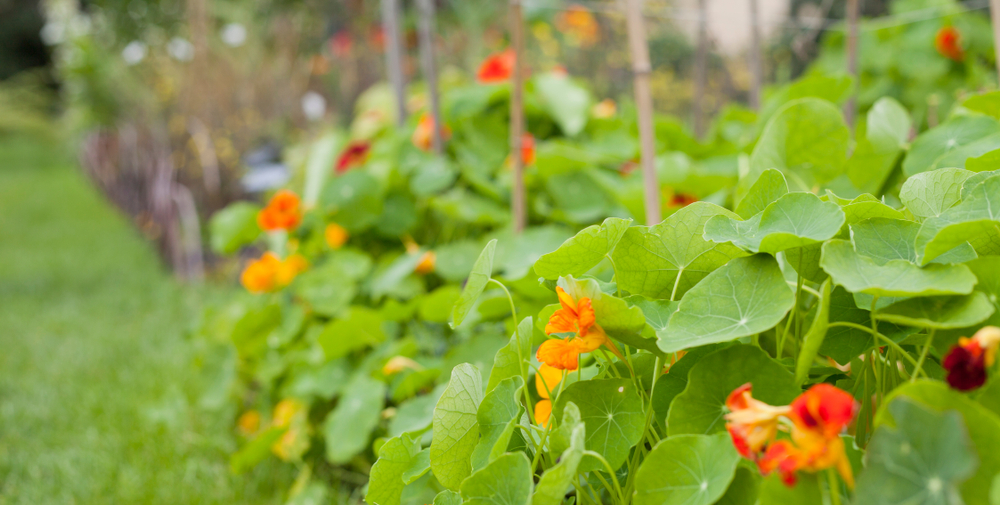
Flowers do more than decorate a garden when summer starts slipping toward autumn. Several colorful blooms can bring fresh flavors to the kitchen, extend the harvest season, and add a little garden excitement when many plants start slowing down.
Edible flowers create a fun connection between the overflowing days of summer and the cozy flavors of fall cooking. From salads and desserts to herbal teas and dinner garnishes, these blossoms can turn an ordinary meal into something that feels like a special occasion.
1. Nasturtiums Bring a Peppery Punch
Nasturtiums make a strong case for earning a permanent spot in the edible garden. Their bright orange, yellow, and red flowers add a spicy kick that reminds many gardeners of mild watercress. The blooms work beautifully in salads, while the round leaves can add extra flavor to sandwiches and wraps. Gardeners often appreciate nasturtiums because they handle the transition from hot summer days into cooler weather with impressive determination. Their cheerful flowers can keep appearing well into fall when conditions stay favorable.
These flowers also help gardeners squeeze more value from limited space. A few plants can provide both beauty and ingredients for the kitchen. The flowers make a colorful topping for soups, especially creamy squash or pumpkin recipes. Their peppery flavor pairs nicely with richer autumn dishes. Just remember to avoid flowers treated with pesticides or chemicals not approved for edible use.
2. Calendula Adds Golden Color to Fall Meals
Calendula, sometimes called pot marigold, brings sunshine to the garden long after summer vacations end. The golden petals create a warm color that fits perfectly with autumn recipes. Gardeners can sprinkle the petals over salads, rice dishes, or roasted vegetables for a cheerful finishing touch. Calendula also works well in homemade teas when dried properly. The plant often produces new flowers during cooler stretches of the growing season.
The petals have a slightly peppery taste with hints of bitterness, so a little goes a long way. Many gardeners remove the flower centers because the texture can feel tougher than the delicate petals. Calendula adds more than decoration because it encourages gardeners to keep harvesting as the seasons change. The plant rewards regular picking with additional blooms. It offers a simple way to keep the garden feeling productive when summer favorites fade.
3. Pansies Add Sweet Garden Charm
Pansies bring a delicate look and a mild flavor that works well in many dishes. Their colorful faces make cupcakes, cakes, and fruit plates look like they came from a garden party. Many pansies offer a slightly sweet, floral taste that does not overpower other ingredients. Cool temperatures often help these flowers perform well as summer moves toward fall. Gardeners frequently use them for seasonal containers and borders.
These flowers need careful handling because not every decorative flower from a garden center suits the kitchen. Choose varieties grown without harmful chemicals and wash blooms gently before eating. Pansies can also freeze well as decorative ice cube additions for autumn drinks. Their bright colors create a small celebration on a plate. They prove that edible gardening does not always require a large vegetable patch.
4. Chive Blossoms Add Onion Flavor
Chive blossoms offer a clever way to keep a familiar herb working harder. The round purple flower heads contain dozens of tiny edible blooms with a gentle onion flavor. They add personality to salads, baked potatoes, soups, and savory spreads. Chives often produce flowers around the transition between summer and fall, giving gardeners one more harvest opportunity. The blossoms also attract helpful pollinators before colder weather arrives.
Gardeners can separate the tiny flowers from the main head for a delicate garnish. They also can chop the entire blossom into recipes when they want stronger flavor. Chive flowers work especially well with creamy dishes because their mild onion notes balance richer ingredients. They require little effort once established in the garden. This humble herb quietly becomes one of the season’s most useful edible flowers.
5. Borage Flowers Create Star-Shaped Surprises
Borage flowers look almost too charming to eat, thanks to their tiny blue star shapes. These blossoms offer a mild cucumber-like flavor that feels refreshing during the warmer days of late summer. Gardeners often add them to salads, drinks, and frozen treats. Borage can continue producing flowers as fall approaches, especially when gardeners remove old blooms. The plant adds a whimsical touch to any edible landscape.
The flowers also bring visual interest when many summer colors begin disappearing. Gardeners should use young flowers because older blooms can develop a rougher texture. Borage leaves require more caution because they contain compounds that make regular consumption less suitable. The flowers work best as a decorative ingredient rather than a main food source. A few blossoms can transform a simple glass of water into a garden-inspired drink.
6. Violas Offer Colorful Kitchen Creativity
Violas provide many of the same culinary pleasures as pansies but often come in smaller, more delicate forms. Their jewel-like colors make them popular for decorating desserts and seasonal dishes. The flowers carry a mild flavor that blends easily with sweet recipes. Cooler fall temperatures often help violas maintain their appearance. They make excellent candidates for containers near patios or kitchen doors.
These little blooms also encourage gardeners to experiment. Candied violas can decorate cookies, while fresh flowers can brighten yogurt or oatmeal. Gardeners should always confirm that the plants came from an edible source before adding them to meals. Decorative nursery flowers sometimes receive treatments unsuitable for eating. Safe preparation matters just as much as beautiful presentation.
7. Roses Add Fragrance and Flavor
Roses bring more than classic beauty because their petals can contribute floral notes to recipes. Gardeners can use fresh petals in salads, teas, syrups, and desserts. Different rose varieties offer different scents and flavors, so experimentation can be rewarding. Late-season blooms often provide a final burst of color before winter arrives. Roses create a bridge between ornamental gardening and edible gardening.
The petals work best when gardeners remove the bitter white base before using them. Strongly scented roses usually provide the most noticeable flavor. Avoid roses from florist shops because they often receive treatments not intended for food. Backyard roses grown without harmful chemicals make better kitchen companions. A single fragrant bloom can add a memorable touch to an autumn recipe.
8. Sunflowers Provide More Than Seeds
Sunflowers usually steal attention with their towering height and famous seed heads, but their petals also offer culinary possibilities. Young sunflower petals can add a mild, slightly bittersweet flavor to salads and garnishes. They bring a cheerful summer feeling into early fall gardens. Gardeners can use petals while waiting for seeds to mature. The flowers remind everyone that gardens can offer surprises.
Sunflowers also create an important seasonal transition in the landscape. Their warm colors match autumn decorations and harvest themes perfectly. Gardeners should choose flowers grown without chemical treatments when using petals in food. Removing the bitter green base improves the eating experience. Sunflowers prove that even familiar garden favorites can offer something new.
A Final Garden Gift Before Frost Arrives
Edible flowers help gardens stay interesting when summer begins handing the spotlight to fall. These blossoms add flavor, color, and a sense of discovery to everyday meals. Gardeners can start small by adding one or two safe edible varieties to existing beds. Careful plant selection and chemical-free growing practices keep the kitchen harvest safe. A handful of petals can create a surprisingly memorable seasonal touch.
The garden does not need to stop producing when the calendar changes seasons. Flowers like nasturtiums, calendula, and violas show that beauty and usefulness can share the same space. Edible gardening offers one more reason to step outside and enjoy the changing weather. These blooms create a colorful farewell to summer while welcoming the flavors of fall.
Which edible flower would you like to grow or try in your kitchen this season? Share your favorite garden-to-table ideas in the comments.
You May Also Like…
7 Edible Perennials That Can Fill Awkward Garden Spaces
Can Shade-Loving Edibles Lower Your Garden’s Water Needs?
Transform Your Side Yard into a Food Forest: Edible Perennials That Require Little Maintenance
Why Are More People Growing Food on Tabletops and Railings?
SNAP Benefits Can Buy Seeds—How Families Can Turn Food Assistance Into Fresh Produce

Brandon Marcus is a staff writer for FrugalGardening.com at District Media, Inc., where he delivers practical gardening advice with a relatable, no-nonsense style. An avid amateur gardener, he holds a BA degree and with over ten years of professional writing experience, he is also an award-winning published author whose first book, Questions For Deep Thinkers, was released by Adams Media. His work has appeared in major publications including Fandom.com, CHUD.com, TheColdWire.com, and Fansided.com.
Leave a Reply