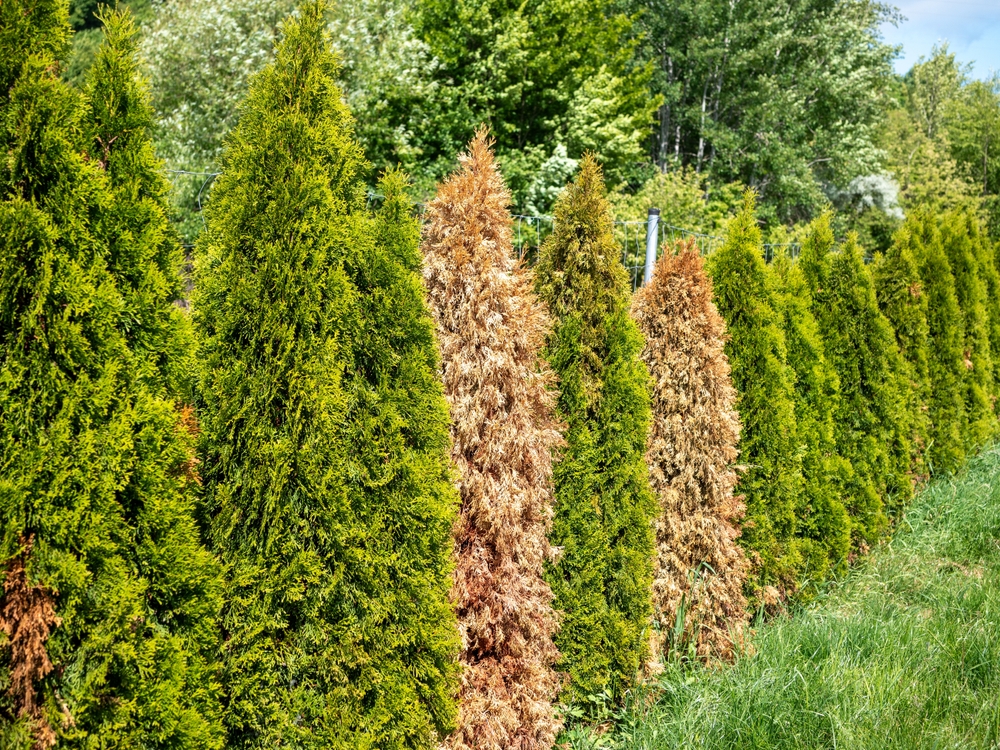
Hydrangea, arborvitae, bamboo, and more can transform any yard into a lush privacy shield. These plants do more than decorate a garden; they quietly create natural walls that soften views and reduce unwanted attention. Instead of relying on fences or artificial screens, greenery brings beauty, movement, and life to outdoor spaces. The right plant choices can turn a wide-open yard into a peaceful retreat. Smart placement makes all the difference when it comes to blocking sightlines without making the space feel closed in.
Privacy in a yard does not need to look harsh or industrial. Plants offer a softer solution that shifts with the seasons and adds texture to the landscape. Some grow tall and narrow, while others spread wide and dense, creating flexible options for different spaces. The key lies in choosing varieties that match climate, sunlight, and maintenance preferences. With the right mix, any outdoor space can feel more secluded and comfortable.
1. Arborvitae Creates a Tall Green Wall Without Fuss
Arborvitae grows in a tight, upright shape that makes it perfect for privacy hedges. These evergreens hold their color year-round, which keeps the yard covered even in winter. Many homeowners line them up along fences to block second-story windows and busy sightlines. They grow quickly compared to many other evergreens, so privacy develops faster than expected. Their dense foliage creates a clean, uniform barrier that does not require constant trimming.
Planting arborvitae in a staggered row increases coverage and reduces gaps. They prefer full sun but tolerate partial shade in many climates. Regular watering during the first year helps establish strong roots. Once mature, they need minimal care and maintain their structure naturally.
2. Bamboo Grows Fast and Builds Instant Coverage
Bamboo stands out for its rapid growth and dramatic height. Certain clumping varieties work best for privacy since they stay contained and do not spread aggressively. Homeowners often use bamboo to block patios, decks, and pool areas. Its tall stalks and leafy tops create a soft rustling sound that adds calm to outdoor spaces. This plant builds a natural curtain faster than most other options.
Choosing clumping bamboo prevents unwanted spreading into neighboring yards. It thrives in warm, sunny locations with well-drained soil. Consistent watering helps it reach full height quickly. Once established, bamboo forms a thick, living screen that feels both modern and tropical.
3. Boxwood Delivers Dense, Low-Maintenance Coverage
Boxwood shrubs grow slowly but form extremely dense foliage. Gardeners often shape them into formal hedges that define property lines with precision. Their small leaves pack tightly, which helps block lower-level views effectively. Boxwoods also respond well to trimming, allowing control over height and width. They bring structure and elegance to both small and large yards.
These shrubs adapt to partial shade and a variety of soil types. They require steady watering during hot months but avoid soggy conditions. Regular pruning encourages thick growth and clean edges. Over time, boxwood hedges create a refined privacy barrier that lasts for decades.
4. Hydrangeas Add Color While Softening Sightlines
Hydrangeas do more than produce big, colorful blooms; they also create visual privacy with their large leaves and bushy growth. These plants grow wide and fill garden beds with volume that naturally blocks views. Their flowers change color depending on soil conditions, adding seasonal interest. Many gardeners plant them along porches or windows for a softer barrier. They work especially well in cottage-style gardens.
Hydrangeas prefer morning sun and afternoon shade in most climates. Consistent moisture keeps their blooms full and vibrant. Pruning after flowering encourages healthy growth for the next season. Their combination of beauty and coverage makes them a favorite for decorative privacy.
5. Privet Forms a Thick, Fast-Growing Hedge
Privet grows quickly and forms a dense hedge that blocks unwanted views efficiently. Its small leaves pack tightly along branches, creating a solid green wall. Many landscapers choose privet for property borders because it fills in gaps fast. It also tolerates heavy pruning, which makes shaping easy. This plant works well in both formal and informal garden designs.
Privet adapts to different soil conditions and handles urban environments well. It grows best with full sun but tolerates partial shade. Regular trimming keeps it neat and encourages thicker foliage. Over time, it becomes one of the most reliable privacy hedges available.
6. Holly Adds Evergreen Protection With a Bold Look
Holly plants provide year-round coverage thanks to their evergreen leaves. Their thick, glossy foliage creates a strong visual barrier that blocks views effectively. Wide varieties also produce bright berries that attract birds and add seasonal interest. Homeowners often use holly near windows or property edges. Its sharp leaves also discourage unwanted traffic near boundaries.
Holly prefers slightly acidic soil and consistent moisture. It grows well in both sun and partial shade. Minimal pruning keeps its natural shape intact. Once established, holly becomes a long-lasting and sturdy privacy option.
7. Ornamental Grasses Create Movement and Soft Screens
Ornamental grasses grow tall and wide, forming airy but effective privacy screens. Unlike dense shrubs, they sway with the wind and create natural movement in the yard. Wide varieties reach impressive heights during peak season. They work well for separating outdoor zones without heavy visual blockage. Their feathery plumes add texture and interest throughout the year.
These grasses prefer full sun and well-drained soil. They require little maintenance beyond seasonal cutting. Once established, they return stronger each year. Their relaxed structure fits modern, naturalistic landscapes perfectly.
8. Lilac Bushes Offer Fragrance and Seasonal Coverage
Lilac bushes grow into thick shrubs that provide strong seasonal privacy. Their large clusters of flowers fill the air with a sweet fragrance that enhances outdoor living. During peak growth, their dense branches block lower sightlines effectively. Many homeowners plant them near patios or fences for added charm. They bring both beauty and function to the garden.
Lilacs prefer full sun and benefit from good air circulation. They bloom best when pruned right after flowering. Their growth may slow in cooler climates, but they still provide reliable coverage. Over time, lilac bushes form a natural screen that feels inviting and fragrant.
A Living Privacy Screen That Actually Works
A thoughtful mix of plants creates privacy that feels natural instead of restrictive. Each plant brings its own strengths, from fast growth to year-round coverage or seasonal beauty. Layering different heights and textures builds depth and stronger screening. Gardens gain character while still protecting outdoor spaces from prying eyes. The right combination turns any yard into a private, comfortable escape.
Which of these plants would fit best in a backyard space, and what would make it work for your setup?
You May Also Like…
10 Backyard Bugs You Never Want to Ignore
10 Cheap Backyard Ideas That Look Surprisingly Expensive
7 Backyard Upgrades That Can Make Your Home Feel More Private
The Backyard Feature Buyers Are Quietly Looking For in 2026
9 Plants That Can Help Lower Backyard Mosquito Populations Naturally

Brandon Marcus is a staff writer for FrugalGardening.com at District Media, Inc., where he delivers practical gardening advice with a relatable, no-nonsense style. An avid amateur gardener, he holds a BA degree and with over ten years of professional writing experience, he is also an award-winning published author whose first book, Questions For Deep Thinkers, was released by Adams Media. His work has appeared in major publications including Fandom.com, CHUD.com, TheColdWire.com, and Fansided.com.
Leave a Reply