• Skip to primary navigation
  • Skip to main content
  • Skip to primary sidebar

Frugal Gardening

Simple ways to save money while you garden

  • About
  • Contact Us
  • Garden Frugally
  • Buy These
  • Our Editorial Commitment
  • Navigation Menu: Social Icons

    • Facebook
    • Pinterest
    • Twitter

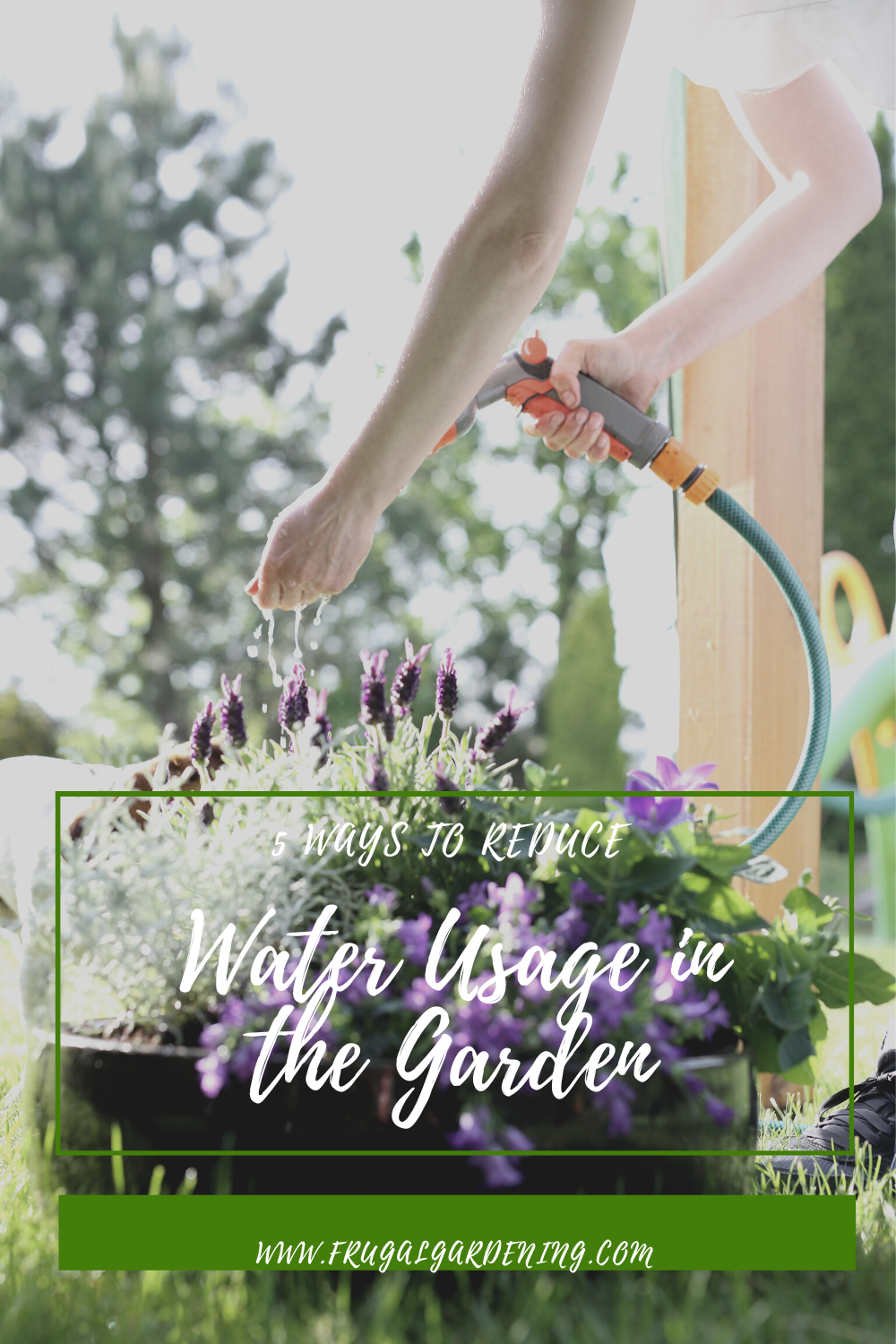
5 Ways to Reduce Water Usage in the Garden

November 16, 2022 by Ali Southerland Leave a Comment


Reducing your water usage in your garden is almost always a positive thing.

It will lower your water bill and produce healthier plants.

Why Reduce Your Water Usage in Your Garden?

Overwatering is a common mistake among gardeners. However, the truth is that plants have adapted to require less water than most people assume.

And when you reduce your water usage, you will find your soil and plants are healthier.

Signs of Overwatering

One of the most obvious signs that you are overwatering your garden is standing water or puddles. If you’ve noticed this in your garden, it’s time to take a closer look at your watering habits. 

Check these other signs that you’re giving your plants too much water.

Split Fruit

If you pick a lot of split fruit, you are probably overwatering. This is very common with things like tomatoes.

Soft and Rotting Stems

When a plant absorbs too much water, this can cause damage to the parts of the plant cells that help support it and keep its shape. This causes the plant stems to become soft and start to rot.

Root Rot

This degradation of the roots is caused by fungal or bacterial infections that thrive in wet soil.

Changes in Leaves

Sometimes the plants will drop leaves to signal a problem like overwatering. The fallen leaves can be green, brown, or yellow.

Another sign of watering is brown spots on the edges of leaves, which can be an infection of the leave.

Fungus

Fungus appears as white or gray patches of powdery or hair-like structures stretching across the dirt around the plants. Sometimes, it can be on the plant, like powdery mildew.

How to Reduce Your Water Usage in the Garden

There are thousands of ideas for reducing water usage in the garden, but here are a few low-cost, easy-to-implement suggestions.

Mulch

Adding some kind of mulch will keep the ground cooler and reduce water loss due to evaporation.

There are tons of mulch available commercially. If you buy commercial, just make sure to buy some that are safe for vegetable gardens.

But if you don’t want to buy commercial mulch, you can also use compost spread evenly across your topsoil. This will give you the bonus of improving soil quality as well.

Some other popular natural mulches include leaves, grass clippings, pine needles, or straw.

Newspaper

Some people use layers of newspaper to achieve the same effect as mulch.

Plastic Sheeting

You can buy plastic sheets that do double the duty of reducing evaporation and preventing weed growth.

Water at Cool Times

Watering early in the morning, late in the evening, or at night will give the soil and plants plenty of time to absorb water so you can water less.

Drip Irrigation Systems

Drip irrigation systems are composed of hoses with holes along the bottom that release water along the entire line but very slowly, a drip at a time. You can build your own or buy one with options like timers or automatic start.

Conclusion

Reducing water usage in your garden is a great way to save money and produce healthier plants and tastier food.

5 Cheap Ways to Self Water Plants

4 Frugal DIY Drip Irrigation Systems

Protect The Garden From Excessive Rainfall: Frugal Tips

Ali Southerland

Ali is a homeschooling mom of 5 who includes gardening and food prep as important subjects in her school. She has been raising plants her whole life and learned how to garden from her father. When she isn’t caring for her plants, she can be found reading or hiking.

Filed Under: water Tagged With: reduce water usage, save water, Water Usage

Previous Post: « Good Bugs for the Garden
Next Post: Winter Garden Tasks »

Reader Interactions

Leave a Reply Cancel reply

Your email address will not be published. Required fields are marked *

Primary Sidebar

Struggling to get your garden off the ground? Put those days behind you with our special starter kit – perfect for thrifty green thumbs everywhere. Get growing and add a splash of color today!

Popular Posts

  • usda free seeds websiteHow To Get Free Seeds From The Government by Amanda Blankenship Seeds might seem like a small expense, but any seasoned…
  • Enviro Ice On PlantsShould I Use Enviro Ice On My Plants? by Kathryn Vercillo Every week, I receive food from Hungryroot. It's a great…
  • is shredded paper good for the gardenFrom Trash to Treasure: Transform Shredded Paper Into Garden Gold by Amanda Blankenship Should you use shredded paper as garden mulch? It might…
  • Enviro IceWhat Happens to Plants If You Use Enviro Ice on Them? by Amanda Blankenship About a year ago, I wrote our first article about…
7 Plants That Offer Seeds Birds Can Eat Through Fall

7 Plants That Offer Seeds Birds Can Eat Through Fall

A garden can keep feeding birds long after the last bee disappears from the flowers, and the trick often involves doing absolutely nothing. Instead of cutting every faded bloom to the ground, gardeners can leave mature seedheads standing so finches, sparrows, chickadees, and other seed-eating birds can pick through them as fall progresses. Cornell Lab…

Read More

What Causes Green Rings Around the Tops of Carrots?

What Causes Green Rings Around the Tops of Carrots?

Carrots usually arrive in shades of orange, purple, yellow, or white, so a green ring around the top can look like the vegetable has wandered into the wrong garden department. That green color usually comes from a simple culprit: light exposure. When the upper part of a developing carrot sits too close to the soil…

Read More

Can You Move a Raised Bed Without Replacing All the Soil?

Can You Move a Raised Bed Without Replacing All the Soil?

Good news, gardeners: a raised bed can move without sending all that beautiful, expensive soil to the compost pile. The trick involves treating the soil like a living garden resource rather than a box of dirt that happens to sit above ground. Moving the frame usually creates less trouble than moving what fills it. Soil…

Read More

5 Ways to Build a Temporary Nursery Bed for Bargain Perennials

5 Ways to Build a Temporary Nursery Bed for Bargain Perennials

Bargain perennials can look like the clearance-bin equivalent of a sad puppy, but a droopy plant in a tiny pot does not necessarily mean a lost cause. A temporary nursery bed gives inexpensive perennials a place to recover, build roots, and gain size before they move into their permanent garden homes. Instead of forcing a…

Read More

  • About
  • Contact Us
  • Garden Frugally
  • Buy These
  • Our Editorial Commitment
  • Navigation Menu: Social Icons

    • Facebook
    • Pinterest
    • Twitter
  • Facebook
  • Pinterest
  • Twitter

Copyright © 2026 · Foodie Pro & The Genesis Framework