• Skip to primary navigation
  • Skip to main content
  • Skip to primary sidebar

Frugal Gardening

Simple ways to save money while you garden

  • About
  • Contact Us
  • Garden Frugally
  • Buy These
  • Our Editorial Commitment
  • Navigation Menu: Social Icons

    • Facebook
    • Pinterest
    • Twitter

What Is the Real Cost of Growing Your Own Food?

June 21, 2021 by Steph Coelho Leave a Comment


What Is the Real Cost of Growing Your Own Food

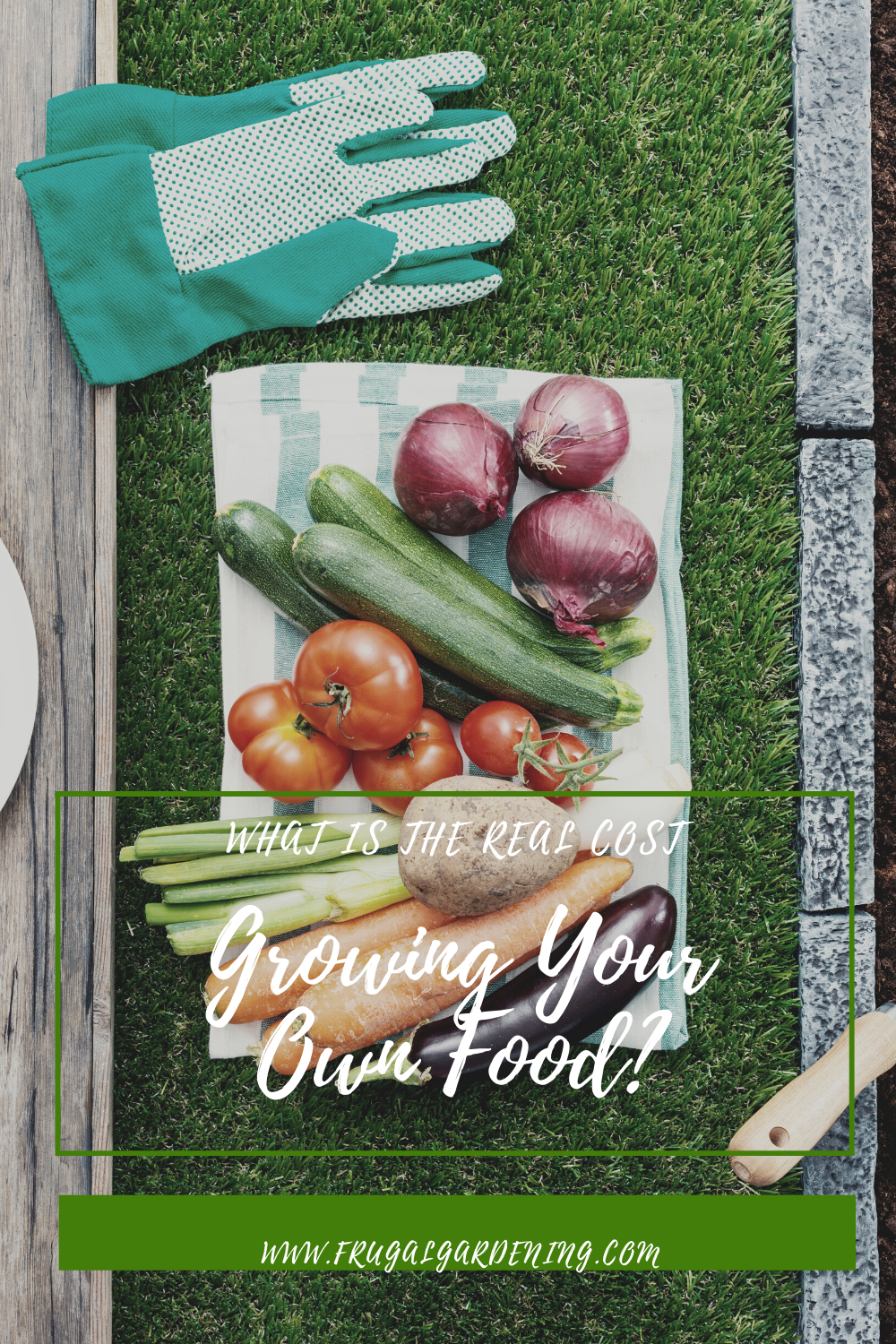
What’s the real cost of growing your own food? This is a loaded question with a lot of answers. You’ll have to spend some initial cash to set up a garden, but ultimately, it can be as expensive as you want it to be. Here’s a breakdown of the costs to expect when setting up a garden to grow your own food.

The real cost of growing your own food

Let’s start with the basics. These are the things you absolutely need to grow food—the bare minimum required involves:

  • Soil. You can get this for free if you’re digging up in-ground beds. The cost goes up if you plan on DIY-ing raised beds or buying pre-fab containers. The benefit of in-ground beds is that they’re free to install. But they do require some manual labor. Also, not everyone has high-quality soil on their property. Starting a garden in very poor soil can actually end up costing you more in the long run because you’ll need to add nutrients and work hard to improve fertility. In some cases, DIY or storebought beds are a better, more economical option.
  • Seeds. Obviously, you can’t start an edible garden without seeds! Buying starter plants from a nursery is a possibility, but you’ll get way more bang for your buck with a packet of seeds. On average, a packet of seeds typically costs less than $5, depending on the variety. And most packets include enough seeds to grow many plants.
  • Water. The cost of water depends on where you live. Where I’m located, water is free to use with minimal restrictions when it comes to gardening. But I’m also cognizant that wasting it has a huge impact on the environment. Cost analysis doesn’t just involve factoring in real $$$ but the potential for harm. In some places where drought is an issue, the cost of growing your own food involves calculating the cost of water.
  • Light. If you’re growing outdoors, sunlight is free! Yay!
  • Nutrients. Even if you start with perfectly fertile soil, you’ll need to feed your plants and replenish the soil at some point. Starting a compost pile involves minimal costs, but it can take a while for organic matter to break down. If you don’t want to start a pile, check with your town. Many municipalities give away free compost to interested citizens. Some farms also share compost for a small fee.

Oher costs of growing your own food

If you only factor in the basics, you’ll conclude that growing your own food is ultra-cheap. But gardening also involves a lot of challenges and unexpected events. Pests, for instance, can quickly turn a gorgeous edible garden into a leafy patch full of holes. Last year, I spent money on pest covers. I didn’t anticipate needing to do this, but it was an additional cost I had to factor into my budget.

Are there any other real costs of growing your own food? You betcha!

When someone asks me about the real cost of gardening, I make sure to mention the time aspect. Consider the time and effort you put into your garden as a type of cost. A garden doesn’t just produce food that ends up automatically onto your plate. You need to harvest and prep ingredients once they’ve matured. You need to be willing to put in the time and effort. And in today’s modern world, time and effort often go hand in hand with $$$.

Photograph of Steph Coelho.
Steph Coelho

Steph Coelho is a freelance writer gardening in zone 5b. She is a certified Square Foot Gardener and has taught various garden-related workshops. When she’s not digging in the dirt or writing, she’s cooking up fresh produce, running, or listening to her favorite podcasts.

Filed Under: Uncategorized

Previous Post: « Cheap Must-Have Tools For Frugal Gardeners
Next Post: To Prune or Not to Prune? Keeping Tomatoes in Check »

Reader Interactions

Leave a Reply Cancel reply

Your email address will not be published. Required fields are marked *

Primary Sidebar

Struggling to get your garden off the ground? Put those days behind you with our special starter kit – perfect for thrifty green thumbs everywhere. Get growing and add a splash of color today!

Popular Posts

  • usda free seeds websiteHow To Get Free Seeds From The Government by Amanda Blankenship Seeds might seem like a small expense, but any seasoned…
  • Enviro Ice On PlantsShould I Use Enviro Ice On My Plants? by Kathryn Vercillo Every week, I receive food from Hungryroot. It's a great…
  • is shredded paper good for the gardenFrom Trash to Treasure: Transform Shredded Paper Into Garden Gold by Amanda Blankenship Should you use shredded paper as garden mulch? It might…
  • Enviro IceWhat Happens to Plants If You Use Enviro Ice on Them? by Amanda Blankenship About a year ago, I wrote our first article about…
5 Vegetables That Can Handle a Shadier Summer Corner

5 Vegetables That Can Handle a Shadier Summer Corner

Summer sunlight can turn a vegetable garden into a full-blown solar oven, but not every corner of the yard gets the deluxe sunshine package. Maybe a fence blocks the afternoon rays, a mature tree throws shade across one bed, or a narrow side yard gets only a few hours of direct light. That does not…

Read More

Why Are Wasps Hovering Around Your Garden Beds?

Why Are Wasps Hovering Around Your Garden Beds?

Wasps hovering around garden beds usually have a reason, and the answer often involves food, water, shelter, or a combination of all three. A garden can look like a buffet, a watering hole, and a cozy apartment complex to a wasp, all at the same time. That does not automatically mean a nest lurks under…

Read More

Should You Remove Storm-Damaged Branches Immediately?

Should You Remove Storm-Damaged Branches Immediately?

A storm leaves behind more than puddles and a few scattered leaves. Broken branches can hang overhead, shift suddenly, damage property, invite decay, and turn a peaceful backyard into a surprisingly dangerous obstacle course. So, should storm-damaged branches come down immediately? Sometimes, yes. Other times, grabbing a saw in a hurry creates a bigger problem…

Read More

What Should You Plant Where Spring Bulbs Have Died?

What Should You Plant Where Spring Bulbs Have Died?

Spring bulbs put on a spectacular show, then pull the gardening equivalent of leaving the party without saying goodbye. Tulips, daffodils, crocuses, hyacinths, and other early bloomers can turn a sleepy garden into a colorful celebration, but their flowers eventually fade and their foliage starts looking tired. That creates a familiar gardening puzzle: what should…

Read More

  • About
  • Contact Us
  • Garden Frugally
  • Buy These
  • Our Editorial Commitment
  • Navigation Menu: Social Icons

    • Facebook
    • Pinterest
    • Twitter
  • Facebook
  • Pinterest
  • Twitter

Copyright © 2026 · Foodie Pro & The Genesis Framework