• Skip to primary navigation
  • Skip to main content
  • Skip to primary sidebar

Frugal Gardening

Simple ways to save money while you garden

  • About
  • Contact Us
  • Garden Frugally
  • Buy These
  • Our Editorial Commitment
  • Navigation Menu: Social Icons

    • Facebook
    • Pinterest
    • Twitter

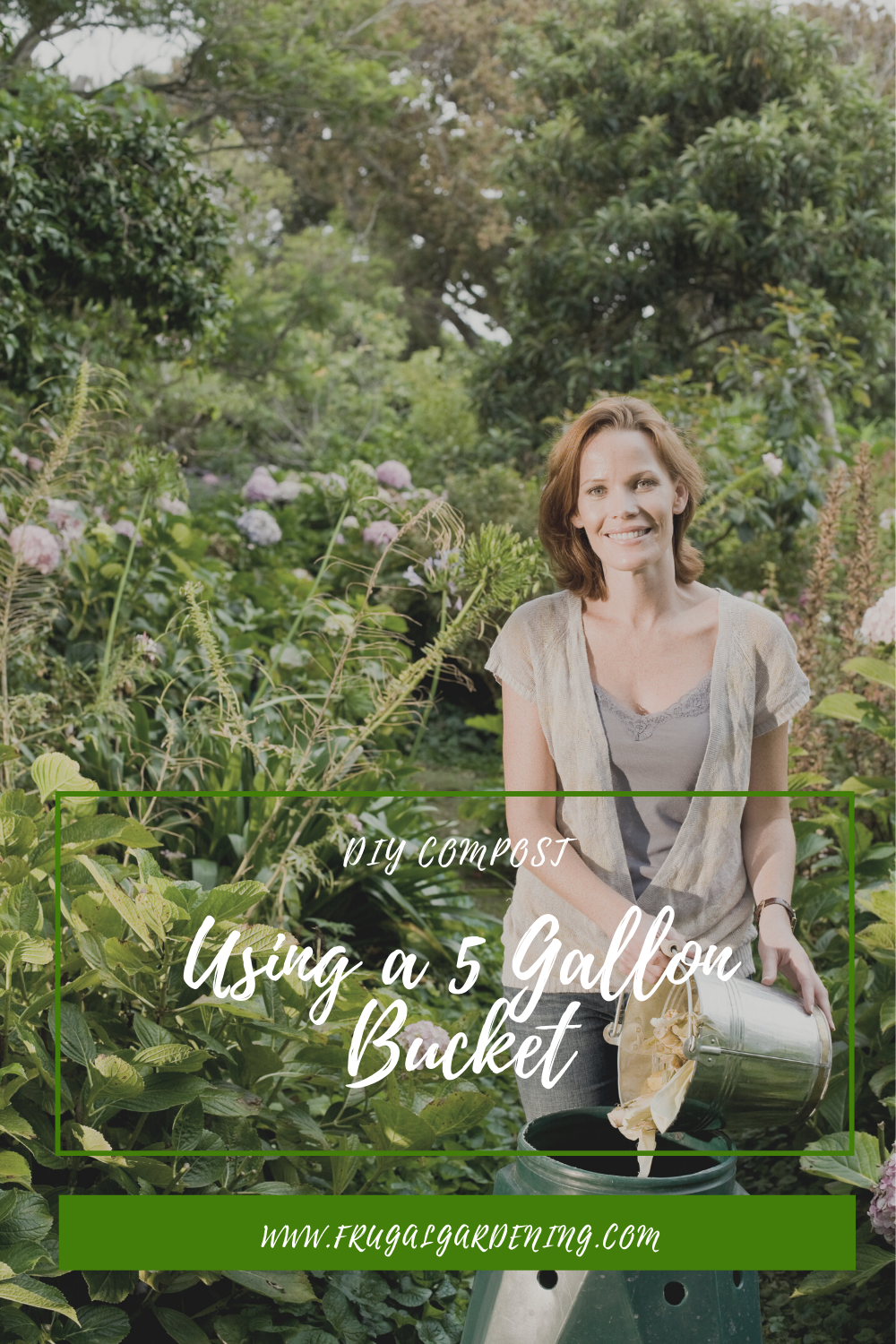
DIY Compost Using a 5 Gallon Bucket

September 14, 2020 by Steph Coelho Leave a Comment


DIY Compost Using a 5 Gallon Bucket

Compost is an essential medium for any gardener. It enriches the soil, provides nutrients to plants, and helps improve soil composition. It’s also easy to make compost using simple items you probably have lying around your home. Here’s how to make a 5-gallon bucket compost bin to get yourself some free compost.

Tools

I covered a similar topic earlier this year when I blogged about creating a low-cost worm compost bin. If you’re not a fan of worms and want to avoid dealing directly with creepy crawlies, here’s an alternative method for creating your own compost.

Often, people use storebought bins to compost produce scraps and yard refuse. You can also build a bin from scratch. If you’re not very handy and don’t have room for a full-size compost bin, you’re in luck! A bucket compost system works in a pinch and is great for people who garden on their balconies or porch.

What do you need?

  • A 5-gallon bucket. That’s pretty much it. If you don’t have one, you can probably grab one at your local hardware store for cheap. But ask around, someone you know might have one they don’t need.
  • A drill. This is to drill holes in the bucket. If you don’t have power tools, use a hammer and nail.

Assembling Your DIY Compost Bin

Take your 5-gallon compost bucket and drill holes in the bottom and the lid. You need to let the compost aerate to prevent mold growth.

Use something at the bottom of your bin to prevent the drainage holes from getting lodged with waste. You can use sticks, rocks, whatever works.

The next step? Filling up the bucket!

You can fill your 5-gallon DIY compost bucket with fruit and veggie scraps, grass clippings, and other compost-friendly materials. Not sure what you can put in? Here’s a handy guide.

It’s best to keep your bin outside to prevent odors from stinking up your home. Roll the bin around occasionally to ensure the materials mix together. If you choose to line the bottom of your bin with rocks, it may be tougher to mix the contents, though.

Always make sure the lid is tightly affixed to the bucket to keep pests from breaking in and feasting on your rotting materials.

How Long Will it Take?

It can take a while for matter in your compost bucket to decompose fully. The rate of decomposition depends on the weather, where you live, and what you stuff inside. Avoid filling the bin up too much. If there’s not enough air, it’ll take longer for stuff to break down.

Help your 5-gallon bucket compost bin contents along by putting your bin in a spot with lots of sunlight.

Need a visual guide to get your 5-gallon compost bucket ready? Check out this YouTube tutorial:

Photograph of Steph Coelho.
Steph Coelho

Steph Coelho is a freelance writer gardening in zone 5b. She is a certified Square Foot Gardener and has taught various garden-related workshops. When she’s not digging in the dirt or writing, she’s cooking up fresh produce, running, or listening to her favorite podcasts.

Filed Under: composting, frugality Tagged With: compost, composting, DIY

Previous Post: « Seeding Square Review: An Essential Tool for the Square Foot Gardener
Next Post: Free Funeral Home Plants »

Reader Interactions

Leave a Reply Cancel reply

Your email address will not be published. Required fields are marked *

Primary Sidebar

Struggling to get your garden off the ground? Put those days behind you with our special starter kit – perfect for thrifty green thumbs everywhere. Get growing and add a splash of color today!

Popular Posts

  • usda free seeds websiteHow To Get Free Seeds From The Government by Amanda Blankenship Seeds might seem like a small expense, but any seasoned…
  • Enviro Ice On PlantsShould I Use Enviro Ice On My Plants? by Kathryn Vercillo Every week, I receive food from Hungryroot. It's a great…
  • is shredded paper good for the gardenFrom Trash to Treasure: Transform Shredded Paper Into Garden Gold by Amanda Blankenship Should you use shredded paper as garden mulch? It might…
  • Enviro IceWhat Happens to Plants If You Use Enviro Ice on Them? by Amanda Blankenship About a year ago, I wrote our first article about…
Why More Americans Are Growing Potatoes Again

Why More Americans Are Growing Potatoes Again

Potatoes are quietly staging a comeback in backyards, patios, and even balcony containers across the United States, and the reasons reach far beyond nostalgia for old-fashioned gardening. Rising grocery prices, a growing interest in food independence, and the surprising ease of growing this crop all play a major role in the trend. Many households now…

Read More

7 Things You Should Never Put in Your Compost Bin

7 Things You Should Never Put in Your Compost Bin

Composting turns everyday kitchen and yard scraps into nutrient-rich soil, but the wrong additions can quickly flip that success story upside down. A single poor choice can invite pests, slow decomposition, or even introduce harmful pathogens into the mix. Many gardeners focus on what to add, yet the real secret often lies in what gets…

Read More

The Backyard Gardening Trend Taking Over Small Suburbs

The Backyard Gardening Trend Taking Over Small Suburbs

Backyards across small suburbs now look very different from the neat lawns of the past. Homeowners now replace plain grass with vegetables, herbs, flowers, and compact fruit trees that turn unused space into something productive and lively. This shift reflects rising food prices, growing interest in sustainability, and a desire to take control of what…

Read More

The Gardening Mistake That Can Ruin an Entire Harvest Overnight

The Gardening Mistake That Can Ruin an Entire Harvest Overnight

A garden can look perfectly calm in the evening and turn into a disaster by morning. One overlooked mistake often triggers sudden crop loss that leaves gardeners frustrated and confused. Many plants collapse overnight because conditions shift faster than most people expect. Small decisions made late in the day can set off a chain reaction…

Read More

  • About
  • Contact Us
  • Garden Frugally
  • Buy These
  • Our Editorial Commitment
  • Navigation Menu: Social Icons

    • Facebook
    • Pinterest
    • Twitter
  • Facebook
  • Pinterest
  • Twitter

Copyright © 2026 · Foodie Pro & The Genesis Framework