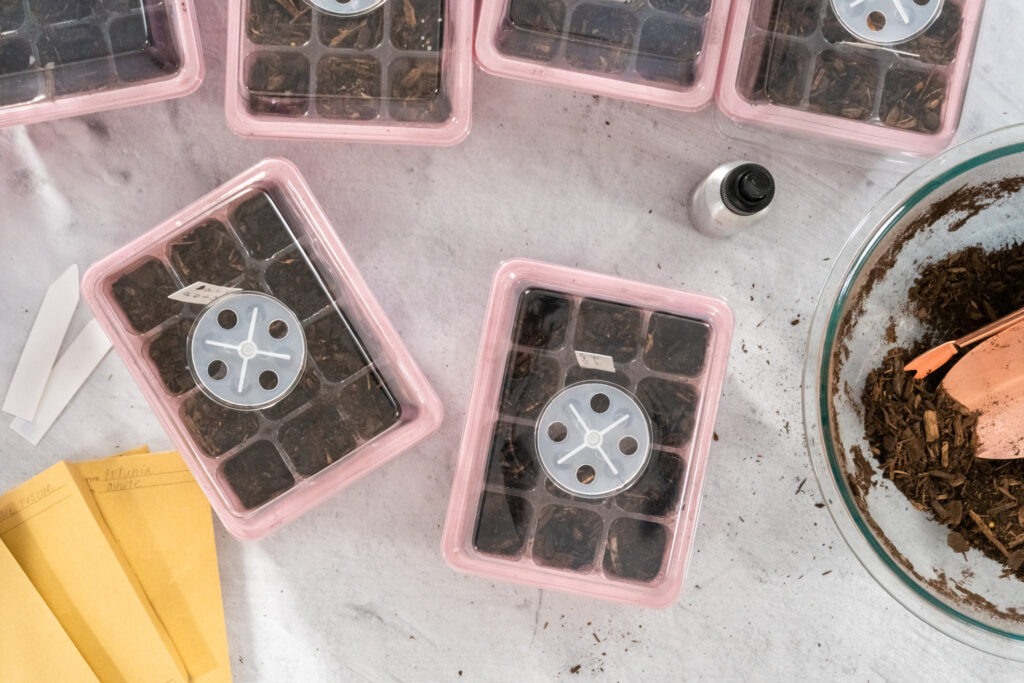
If you grow your plants from seeds then you probably know what a humidity dome is. (If not, don’t worry, we’ll go over it briefly below.) Just like with all of your other gardening supplies, you can buy humidity domes from a variety of different sources. However, you can also DIY them. Here are some cheap and economical humidity dome alternatives.
What Is a Humidity Dome?
A humidity dome sounds like a really fancy device, doesn’t it? Bootstrap Farmer says that they’re an important part of your seed starting tool kit. But what are they? Basically, they’re just plastic lids for your seed trays. Very important, very helpful, but not necessarily fancy at all.
Why Use a Humidity Dome For Seed Starting?
Humidity domes help retain moisture in the soil. Instead of evaporating into the air, the plastic lid catches the moisture and keeps it there with the seeds. Additionally, the lid helps maintain an even temperature for the seeds in the tray. Benefits of using a humidity dome include:
- Less time spent watering
- Less time spent checking and maintaining temperature
- Improved germination rates
- Faster germination
- Protection for delicate, expensive, favorite seeds
Are they necessary? Some say yes, and some say no. But as long as you can find cheap and economical humidity dome alternatives then there’s really no harm in at least seeing if they improve your seed-growing process.
Cheap and Economical Humidity Dome Alternatives
So, you can obviously shop around and purchase a variety of humidity domes for your gardening. You can also purchase seed trays that come with their own domes. But you can also come up with your own cheap and economical humidity dome alternatives. For example, alternatives offered in a National Gardening Association forum and over on the Green Upside website include:
Living Lettuce Containers
Obviously, these are already designed to grow plants – you buy them with lettuce growing inside. When you’re done with the lettuce, use the container. It’s roomy, about the same width as height, and it’s a great option for starting your seeds in at home.
Plastic Wrap
Green Upside explains that you can use plastic wrap around an egg carton seed starting tray or almost any other container to create the humidity dome.
Plastic Bag
Alternatively, you can use a plastic bag the same way. Specifically, Green Upside notes that you can use a wet paper towel inside of a plastic bag to start your seeds … no other containers are needed!
Ready-To-Eat Chicken Containers
You know those chickens that you buy whole, ready-to-eat, from Costco or the supermarket? They usually come on a plastic tray with a plastic dome over it. If you’re a gardener, you might look at that container and think, “That would be perfect for my garden.” If you have plants that need room for leaves to grow, these can be great humidity dome alternatives.
Plastic Bottle
Cut the bottom out of a large plastic bottle, such as a gallon milk bottle. Use that as your humidity dome over your seed tray.
Plastic Containers for Berries
These are an interesting choice. They’re shallow, so you have to choose what you’re growing in there carefully. Moreover, they’re vented with air holes. Sometimes this is a good thing and sometimes it defeats the purpose of your humidity dome. Sometimes too much humidity leads to mold so the venting is good. It depends on varied factors. So, consider this a potential option, but it may not be the best one.
Old Food Containers
Do you have a bunch of food containers that you keep to store your leftovers? Do you have too many of them? Green Upside suggests using any food container with a lid to create your seed tray with its own humidity dome.
In other words, look around for plastic that you can recycle/upcycle to create a humidity home!
Read More:
- 5 Cheap Substitutes for Seedling Trays
- 10 Techniques To Increase Germination Rate of Seeds
- Seed Starting on a Budget: DIY Containers

Kathryn Vercillo is a long time writer, crafter and author of several books. A resident of San Francisco, she is committed to helping others explore, articulate and share their own individuals stories. When she’s not evaluating investing opportunities Kathryn is an avid knitter, researcher, and blogger.
Leave a Reply