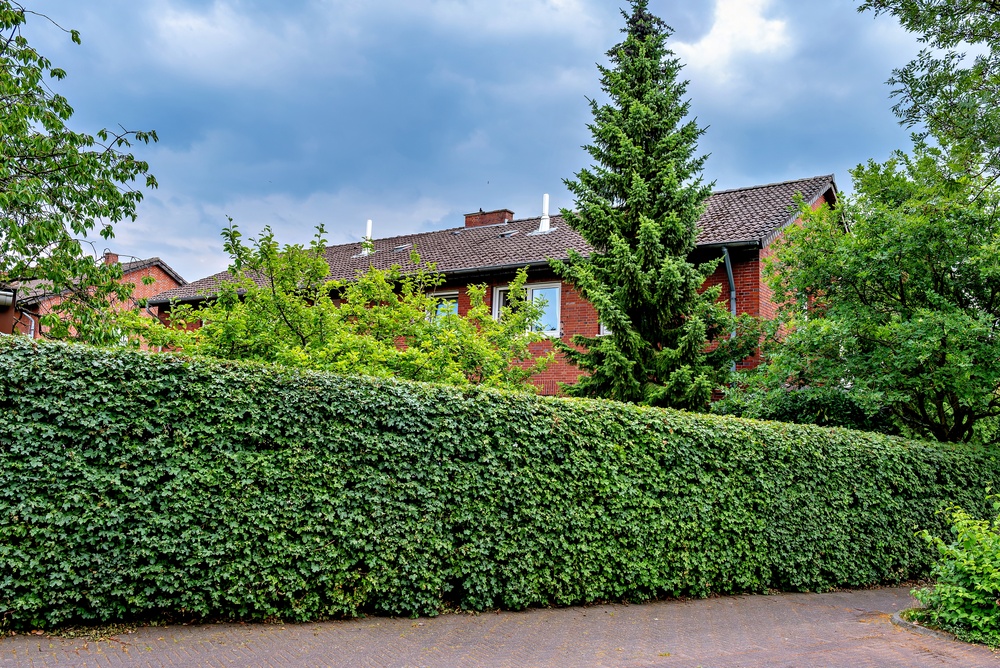
A row of beautiful evergreen shrubs seems like the perfect solution when you’re tired of neighbors looking into your backyard. Instead of spending thousands on a privacy fence, you can plant a few shrubs, wait for them to grow, and enjoy your own secluded outdoor space.
But what happens when those shrubs grow twice as wide as expected, destroy a property-line fence, or violate your homeowners association’s landscaping rules?
Suddenly, that inexpensive landscaping project could become a costly mistake. Planting a privacy hedge involves more than choosing attractive greenery at the garden center. The wrong species, spacing, or location can lead to expensive maintenance, dead plants, property disputes, and even removal costs. Before you start digging, here are five things worth checking to protect both your yard and your wallet.
1. Check Your Property Line Before Planting Anything
One of the most expensive mistakes homeowners make when planting a privacy hedge is assuming they know exactly where their property ends. An existing fence, mowing pattern, or row of old shrubs doesn’t necessarily mark the legal boundary between neighboring properties. If your hedge crosses that line as it grows, you could face disagreements over trimming, maintenance, or removing plants that encroach on someone else’s land. Start by reviewing your property survey and checking for boundary markers, but remember that a surveyor may be necessary when the line is uncertain or disputed. Spending money to verify the correct location before planting is generally less expensive than relocating a mature hedge or resolving a property dispute later.
2. Find Out How Big Those Shrubs Will Actually Get
That adorable three-foot evergreen at the nursery might eventually become a towering tree that overwhelms your backyard. Some popular privacy plants, including certain arborvitae, Leyland cypress, and cherry laurel varieties, can grow considerably larger than homeowners anticipate. The Arbor Day Foundation emphasizes selecting trees and other woody plants with their mature dimensions and available growing space in mind. Before purchasing anything, check the specific cultivar’s expected height, width, growth rate, and pruning requirements rather than relying on a generic plant label. Choosing a hedge that naturally stays close to your desired size can save years of trimming expenses and reduce the risk of overcrowding.
3. Read HOA Rules and Local Landscaping Restrictions
Homeowners associations sometimes regulate hedge height, approved plant species, landscaping changes, and vegetation near sidewalks or property boundaries. Even communities that allow privacy hedges may require written approval before homeowners install new screening plants in visible areas. Local governments can also impose restrictions around intersections, driveways, utility easements, and public rights-of-way to maintain visibility and access. These rules vary significantly, so a hedge that’s perfectly acceptable in one neighborhood might create a violation in another. Before planting a privacy hedge, request your HOA’s current landscaping guidelines, review applicable municipal ordinances, and keep written documentation of any required approval.
4. Make Sure the Plants Can Survive Your Yard’s Conditions
Buying a dozen expensive shrubs won’t help if your soil, sunlight, or winter temperatures are wrong for the species. A hedge planted in poorly drained soil may develop root problems, while plants that need full sun can become thin and sparse in heavy shade. According to the University of Maryland Extension, selecting plants suited to their growing conditions is an important part of establishing a healthy, sustainable landscape. Check your USDA hardiness zone, observe how many hours of sunlight the planting area receives, and determine whether water collects there after heavy rain. Matching plants to the actual conditions in your yard can reduce replacement costs and help your hedge establish the dense growth needed for privacy.
5. Calculate the Real Cost of Maintenance and Replacement
The purchase price of your shrubs is only part of what planting a privacy hedge can cost over time. Fast-growing varieties may need frequent pruning, while slow-growing choices could take several years to provide the privacy you want. Homeowners should also budget for mulch, irrigation during establishment, fertilizer when soil testing indicates a need, and possible pest or disease treatment. For example, purchasing 15 shrubs at $35 each creates a $525 plant bill before adding soil amendments, delivery, equipment, or installation labor. If several plants die because of improper spacing or watering, replacing them can quickly erase the savings you expected compared with installing a traditional fence.
How to Choose a Privacy Hedge Without Wasting Money
The best privacy hedge isn’t necessarily the fastest-growing or least expensive option at your local garden center. A better approach is to select plants that fit your available space, climate, maintenance budget, and desired screening height. Before planting a privacy hedge, compare several species and consider whether you need year-round evergreen coverage or simply seasonal privacy during warmer months. For narrow yards, a naturally compact cultivar may work better than a vigorous shrub that requires constant pruning to remain manageable. Taking the time to plan your hedge carefully can help you avoid overcrowding, unnecessary replacement costs, and landscaping headaches that continue for years.
A Little Planning Now Can Prevent an Expensive Landscaping Mistake
Planting a privacy hedge can be a smart investment when it creates a more comfortable outdoor space without the expense of building a fence. However, homeowners who overlook property boundaries, mature plant sizes, local regulations, growing conditions, and maintenance costs can end up spending far more than expected. Before purchasing shrubs, measure the planting area, research suitable varieties, and confirm that your plans comply with neighborhood requirements. It’s also worth considering whether a mixed planting of shrubs would provide better long-term resilience than relying entirely on one species.
Have you planted a privacy hedge in your yard, and did it turn out to be an affordable solution or a landscaping expense you didn’t anticipate? Share your experience in the comments.
What to Read Next
8 Backyard Privacy Plants That Grow Faster Than Expected
Your HOA Says the Garden Has to Go. What Can They Actually Make You Remove?
Is a Fire-Safe Garden Possible Without Removing Every Shrub?
Leave a Reply