• Skip to primary navigation
  • Skip to main content
  • Skip to primary sidebar

Frugal Gardening

Simple ways to save money while you garden

  • About
  • Contact Us
  • Garden Frugally
  • Buy These
  • Our Editorial Commitment
  • Navigation Menu: Social Icons

    • Facebook
    • Pinterest
    • Twitter

Low Maintenance Plants to Jumpstart Your Gardening Journey

February 8, 2023 by Ali Southerland Leave a Comment

Low-maintenance plants and gardens are great ways to start your gardening journey.

Some plants can produce tons of food with minimal effort from you, especially if you set your garden up to be low-effort from the beginning.

First, I will explain how to set up a low-effort garden, and then I will give you some ideas for low-effort plants.

Low Effort Gardens

A low-effort garden starts with a good plan.

First, pick plants with similar soil needs like pH balance, water, and nutritional needs.

Second, arrange them so beneficial plants are close to each other. Companion planting is a great way to use plants to benefit each other and grow big, tasty veggies.

Third, use preventative measures to keep weeds and pests out.

You can buy weed fabric (or several layers of newspaper) that you put down around your plants to block light from reaching the soil and preventing weeds.

And don’t squish wolf spiders or other predatory insects that will eat the herbivorous insects you don’t want in your garden.

Fourth, automate your watering. Using a drip irrigation system allows for more even water distribution, saves water and money, and allows plants to absorb the water very efficiently.
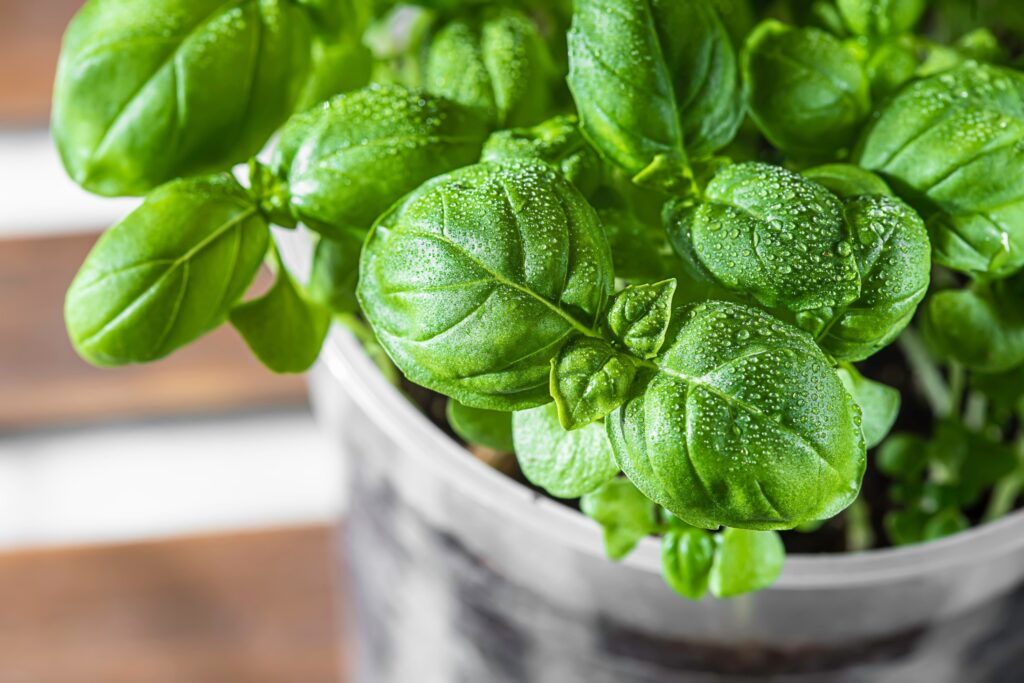
low maintenance plants -- basil growing in a plastic cup
Basil growing in a plastic cup!

Low Maintenance Plants

Growing these veggies will be easy and fun, plus they will make old recipes seem new because homegrown is much tastier.

Herbs

Most herbs are easy to grow, and some are adapted to thriving in the harshest climates, so they can easily overgrow their patch. Try growing them in containers to prevent this.

And growing them in containers means you can put them close to your kitchen so you can just snip some off the plant when needed.

Remember that when cooking with fresh herbs, you need much more than when cooking with dried. This is because the herbs will lose volume as they cook, resulting in the concentration of the flavors.

Beans

Beans are nitrogen fixers and beneficial to the soil, meaning you don’t have to fertilize for nitrogen as much if you plant beans.

You can also sprout beans and eat the sprout. This means that you can germinate the seeds, which can be done on a wet paper towel in a dark area, and put them on a sandwich or in a salad.

Leafy Greens

Lettuces, kale, and spinach are easy to grow in cool weather, so plant these in early spring and enjoy fresh, crisp salads all spring.

When you want to eat, pluck off some outer leaves while leaving the center and roots in the ground.

Peppers

Peppers of all varieties are easy to grow annually and produce fruit for several weeks.

Young transplants are common and cheap at nurseries every spring, or you can direct sow the seeds to avoid the work of transplanting.

Just ensure there are enough days left for the plant to complete the growing cycle. You can find this information on the back of the seed packet.

Conclusion

Low-maintenance plants and gardens are great for producing food without breaking your back. What would you add to this list?

Read More:

Good Bugs in the Garden

Winter Garden Tasks

Tips to Prevent Winter Plant Damage

Ali Southerland

Ali is a homeschooling mom of 5 who includes gardening and food prep as important subjects in her school. She has been raising plants her whole life and learned how to garden from her father. When she isn’t caring for her plants, she can be found reading or hiking.

Filed Under: garden tips, gardening methods Tagged With: low maintenance garden, low maintenance plants

Previous Post: « Starting Seeds Inside: The Basic Guide
Next Post: 5 Benefits of Starting a Garden »

Reader Interactions

Leave a Reply Cancel reply

Your email address will not be published. Required fields are marked *

Primary Sidebar

Struggling to get your garden off the ground? Put those days behind you with our special starter kit – perfect for thrifty green thumbs everywhere. Get growing and add a splash of color today!

Popular Posts

  • usda free seeds websiteHow To Get Free Seeds From The Government by Amanda Blankenship Seeds might seem like a small expense, but any seasoned…
  • Enviro Ice On PlantsShould I Use Enviro Ice On My Plants? by Kathryn Vercillo Every week, I receive food from Hungryroot. It's a great…
  • is shredded paper good for the gardenFrom Trash to Treasure: Transform Shredded Paper Into Garden Gold by Amanda Blankenship Should you use shredded paper as garden mulch? It might…
  • Enviro IceWhat Happens to Plants If You Use Enviro Ice on Them? by Amanda Blankenship About a year ago, I wrote our first article about…
5 Low-Cost Ways to Add Vertical Interest After Vines Fade

5 Low-Cost Ways to Add Vertical Interest After Vines Fade

Vines can make a garden look like it has hired a professional stylist, right up until they finish blooming, turn brown, or retreat for the season. When that happens, all that wonderful vertical space can suddenly look awkwardly empty, but a faded vine does not mean the garden has to collapse into a flat sea…

Read More

7 Plants That Offer Seeds Birds Can Eat Through Fall

7 Plants That Offer Seeds Birds Can Eat Through Fall

A garden can keep feeding birds long after the last bee disappears from the flowers, and the trick often involves doing absolutely nothing. Instead of cutting every faded bloom to the ground, gardeners can leave mature seedheads standing so finches, sparrows, chickadees, and other seed-eating birds can pick through them as fall progresses. Cornell Lab…

Read More

What Causes Green Rings Around the Tops of Carrots?

What Causes Green Rings Around the Tops of Carrots?

Carrots usually arrive in shades of orange, purple, yellow, or white, so a green ring around the top can look like the vegetable has wandered into the wrong garden department. That green color usually comes from a simple culprit: light exposure. When the upper part of a developing carrot sits too close to the soil…

Read More

Can You Move a Raised Bed Without Replacing All the Soil?

Can You Move a Raised Bed Without Replacing All the Soil?

Good news, gardeners: a raised bed can move without sending all that beautiful, expensive soil to the compost pile. The trick involves treating the soil like a living garden resource rather than a box of dirt that happens to sit above ground. Moving the frame usually creates less trouble than moving what fills it. Soil…

Read More

  • About
  • Contact Us
  • Garden Frugally
  • Buy These
  • Our Editorial Commitment
  • Navigation Menu: Social Icons

    • Facebook
    • Pinterest
    • Twitter
  • Facebook
  • Pinterest
  • Twitter

Copyright © 2026 · Foodie Pro & The Genesis Framework