• Skip to primary navigation
  • Skip to main content
  • Skip to primary sidebar

Frugal Gardening

Simple ways to save money while you garden

  • About
  • Contact Us
  • Garden Frugally
  • Buy These
  • Our Editorial Commitment
  • Navigation Menu: Social Icons

    • Facebook
    • Pinterest
    • Twitter

Can Styrofoam Be a Substitute for Perlite?

August 2, 2021 by Steph Coelho Leave a Comment

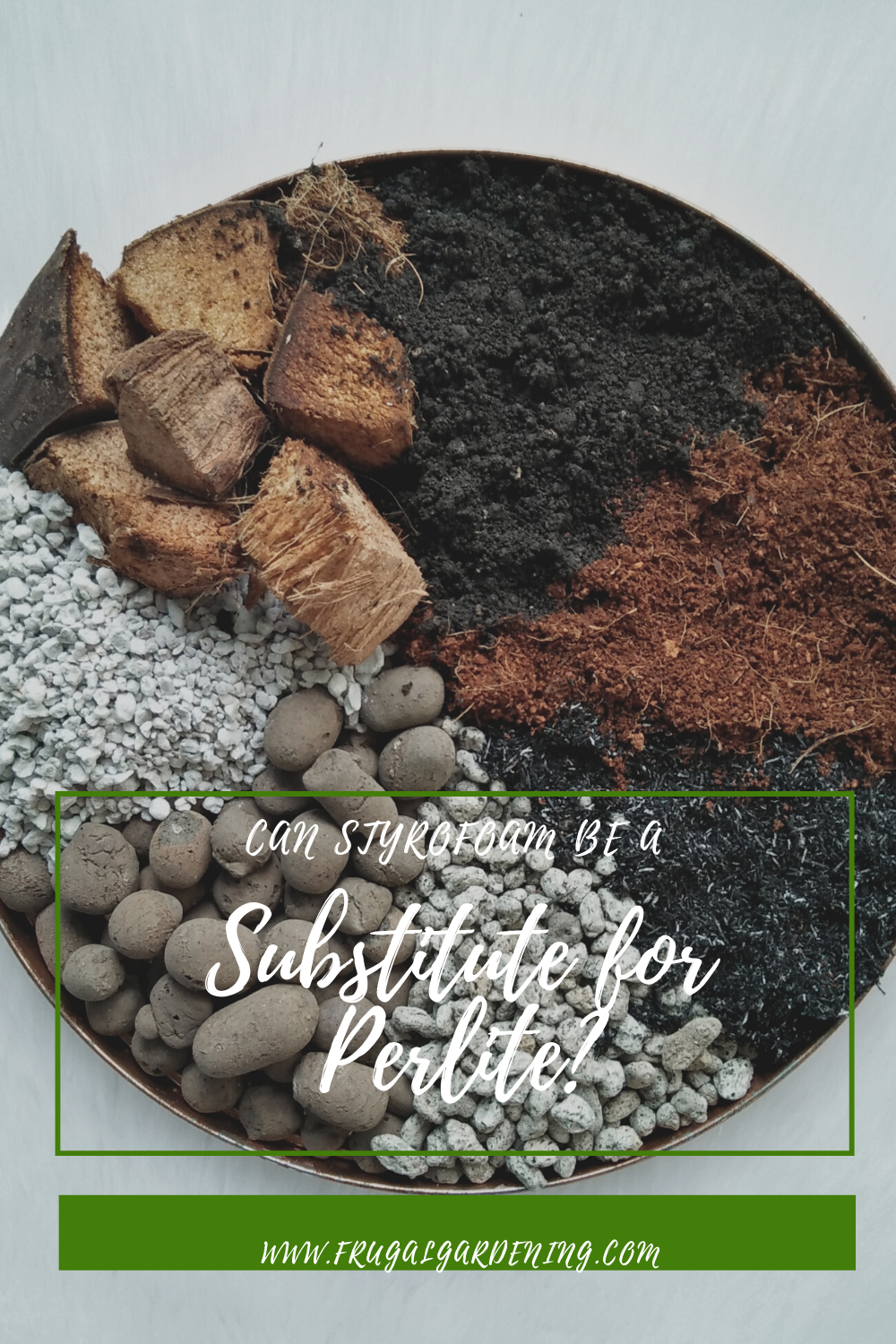
Can Styrofoam Be a Substitute for Perlite

Can you use styrofoam as a perlite substitute? You might also be wondering why to use perlite in the first place. Here’s the lowdown on this helpful garden amendment.

What is perlite?

Perlite is sourced from volcanic glass with high water content. During the manufacturing process, the application of heat turns the glass into small, white balls.

These tiny white balls help aerate the soil and improve its water retention abilities. Unlike vermiculite, another popular garden product, perlite doesn’t absorb as much water.

Both perlite and vermiculite are considered non-renewable mineral sources.

Many commercial soil mixes contain either material to improve soil condition.

Perlite is relatively inexpensive and easy to use. But working with perlite can get dusty, so make sure to wear a mask when mixing it with soil.

Styrofoam as perlite substitute?

Not everyone can source perlite easily. So can you use styrofoam instead?

The short answer? Yes.

However, not all types of styrofoam will work. Things like packing peanuts are a poor choice for a perlite substitute.

Some gardeners swear that grocery store meat trays (as long as they’re thick) will work just as well as perlite when zapped through the blender.

Unfortunately, styrofoam is pretty terrible for the environment. It’s not biodegradable and contains chemicals that can leech out into the soil, polluting groundwater.

Overall, styrofoam is a bad substitute for perlite. I would not recommend it for use in gardening.

In fact, I’d suggest completely avoiding products packaged in styrofoam.

Other substitutes for perlite

Aside from perlite, gardeners can use the following:

  • vermiculite
  • sand
  • horticultural grit
  • finely crushed gravel
  • rice husks

Peat is another substitute for perlite, but it’s not one I recommend. The reason is that while peat moss is technically a renewable resource, harvesting it damages valuable wetlands. Additionally, peat moss takes hundreds, if not thousands, of years to form.

Photograph of Steph Coelho.
Steph Coelho

Steph Coelho is a freelance writer gardening in zone 5b. She is a certified Square Foot Gardener and has taught various garden-related workshops. When she’s not digging in the dirt or writing, she’s cooking up fresh produce, running, or listening to her favorite podcasts.

Filed Under: gardening myths Tagged With: perlite, perlite substitute, soil condition, styrofoam, styrofoam instead of perlite, vermiculite, water retention

Previous Post: « 5 Reasons to Keep Tabs On The Weather Forecast
Next Post: 5 Ideas for Using Up All That Basil »

Reader Interactions

Leave a Reply Cancel reply

Your email address will not be published. Required fields are marked *

Primary Sidebar

Struggling to get your garden off the ground? Put those days behind you with our special starter kit – perfect for thrifty green thumbs everywhere. Get growing and add a splash of color today!

Popular Posts

  • usda free seeds websiteHow To Get Free Seeds From The Government by Amanda Blankenship Seeds might seem like a small expense, but any seasoned…
  • Enviro Ice On PlantsShould I Use Enviro Ice On My Plants? by Kathryn Vercillo Every week, I receive food from Hungryroot. It's a great…
  • is shredded paper good for the gardenFrom Trash to Treasure: Transform Shredded Paper Into Garden Gold by Amanda Blankenship Should you use shredded paper as garden mulch? It might…
  • Enviro IceWhat Happens to Plants If You Use Enviro Ice on Them? by Amanda Blankenship About a year ago, I wrote our first article about…
cold-weather raised beds

How to Prepare Raised Beds for Cold-Weather Growing

Your summer tomatoes may be finished, but that doesn’t necessarily mean your raised beds need to sit empty until spring. With the right crops and a few inexpensive adjustments, cold-weather raised beds can keep producing lettuce, spinach, kale, carrots and other hardy vegetables well beyond the traditional gardening season. Raised beds are particularly convenient for…

Read More

leaf mulch uses

Leaf Mulch Uses That Feed Garden Soil All Winter

Every fall, gardeners fill bags with something they may turn around and pay to replace a few months later. Fallen leaves can become mulch, compost and organic matter, making them one of the most useful free materials your yard produces. Instead of hauling them away, strategic leaf mulch uses can protect exposed soil, suppress winter…

Read More

October lawn care

October Lawn Care Tasks That Protect Your Grass Before Winter

By October, the lawn mower may be running less often, but putting lawn care completely on hold can create problems that show up next spring. Grass type, climate and local frost dates determine exactly what your yard needs, yet several October lawn care jobs can protect turf through colder weather without requiring an expensive lineup…

Read More

fall pruning mistakes

Fall Pruning Mistakes That Can Weaken Spring Growth

Fall cleanup has a satisfying rhythm: pull the annuals, rake the leaves, put away the hoses and trim everything that looks unruly before winter. But reaching for the pruning shears simply because a shrub looks messy can create problems that won’t become obvious until months later. Some fall pruning mistakes remove flower buds that have…

Read More

  • About
  • Contact Us
  • Garden Frugally
  • Buy These
  • Our Editorial Commitment
  • Navigation Menu: Social Icons

    • Facebook
    • Pinterest
    • Twitter
  • Facebook
  • Pinterest
  • Twitter

Copyright © 2026 · Foodie Pro & The Genesis Framework