• Skip to primary navigation
  • Skip to main content
  • Skip to primary sidebar

Frugal Gardening

Simple ways to save money while you garden

  • About
  • Contact Us
  • Garden Frugally
  • Buy These
  • Privacy Policy
  • Navigation Menu: Social Icons

    • Facebook
    • Pinterest
    • Twitter

Can Styrofoam Be a Substitute for Perlite?

August 2, 2021 by Steph Coelho Leave a Comment

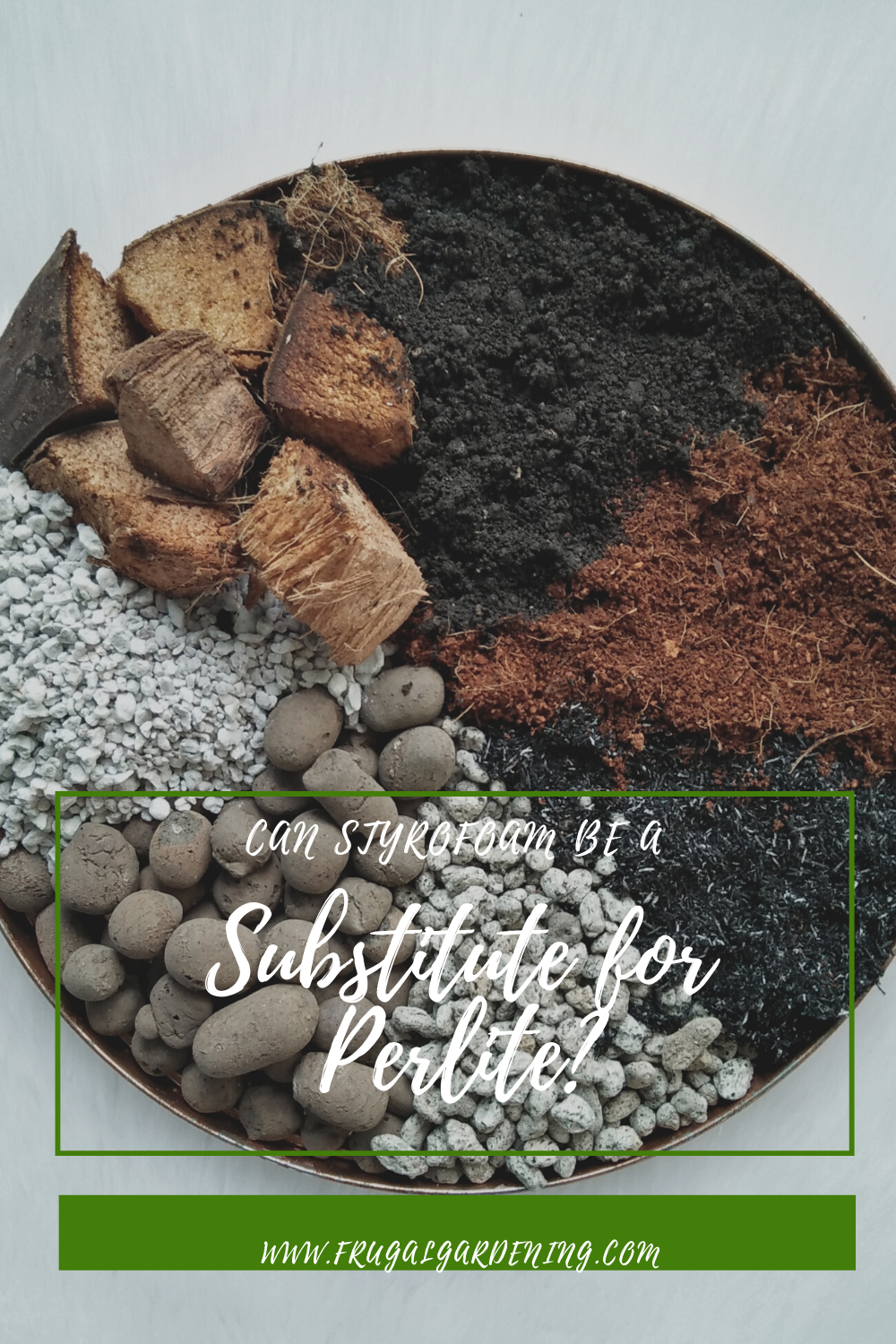
Can Styrofoam Be a Substitute for Perlite

Can you use styrofoam as a perlite substitute? You might also be wondering why to use perlite in the first place. Here’s the lowdown on this helpful garden amendment.

What is perlite?

Perlite is sourced from volcanic glass with high water content. During the manufacturing process, the application of heat turns the glass into small, white balls.

These tiny white balls help aerate the soil and improve its water retention abilities. Unlike vermiculite, another popular garden product, perlite doesn’t absorb as much water.

Both perlite and vermiculite are considered non-renewable mineral sources.

Many commercial soil mixes contain either material to improve soil condition.

Perlite is relatively inexpensive and easy to use. But working with perlite can get dusty, so make sure to wear a mask when mixing it with soil.

Styrofoam as perlite substitute?

Not everyone can source perlite easily. So can you use styrofoam instead?

The short answer? Yes.

However, not all types of styrofoam will work. Things like packing peanuts are a poor choice for a perlite substitute.

Some gardeners swear that grocery store meat trays (as long as they’re thick) will work just as well as perlite when zapped through the blender.

Unfortunately, styrofoam is pretty terrible for the environment. It’s not biodegradable and contains chemicals that can leech out into the soil, polluting groundwater.

Overall, styrofoam is a bad substitute for perlite. I would not recommend it for use in gardening.

In fact, I’d suggest completely avoiding products packaged in styrofoam.

Other substitutes for perlite

Aside from perlite, gardeners can use the following:

  • vermiculite
  • sand
  • horticultural grit
  • finely crushed gravel
  • rice husks

Peat is another substitute for perlite, but it’s not one I recommend. The reason is that while peat moss is technically a renewable resource, harvesting it damages valuable wetlands. Additionally, peat moss takes hundreds, if not thousands, of years to form.

Photograph of Steph Coelho.
Steph Coelho

Steph Coelho is a freelance writer gardening in zone 5b. She is a certified Square Foot Gardener and has taught various garden-related workshops. When she’s not digging in the dirt or writing, she’s cooking up fresh produce, running, or listening to her favorite podcasts.

Filed Under: gardening myths Tagged With: perlite, perlite substitute, soil condition, styrofoam, styrofoam instead of perlite, vermiculite, water retention

Previous Post: « 5 Reasons to Keep Tabs On The Weather Forecast
Next Post: 5 Ideas for Using Up All That Basil »

Reader Interactions

Leave a Reply Cancel reply

Your email address will not be published. Required fields are marked *

Primary Sidebar

Struggling to get your garden off the ground? Put those days behind you with our special starter kit – perfect for thrifty green thumbs everywhere. Get growing and add a splash of color today!

Popular Posts

  • usda free seeds websiteHow To Get Free Seeds From The Government by Amanda Blankenship Seeds might seem like a small expense, but any seasoned…
  • Enviro Ice On PlantsShould I Use Enviro Ice On My Plants? by Kathryn Vercillo Every week, I receive food from Hungryroot. It's a great…
  • is shredded paper good for the gardenFrom Trash to Treasure: Transform Shredded Paper Into Garden Gold by Amanda Blankenship Should you use shredded paper as garden mulch? It might…
  • Enviro IceWhat Happens to Plants If You Use Enviro Ice on Them? by Amanda Blankenship About a year ago, I wrote our first article about…
Why Slugs Target Certain Plants First and How to Stop Them

Why Slugs Target Certain Plants First and How to Stop Them

A garden can look flawless one evening and completely ravaged by morning. Leaves that looked lush and healthy suddenly wear jagged holes, and tender seedlings vanish like they never existed. That kind of overnight destruction doesn’t happen by accident, and it doesn’t happen randomly either. Slugs don’t wander aimlessly through a garden. They make calculated…

Read More

5 Budget Ways to Mark Garden Rows Clearly

5 Budget Ways to Mark Garden Rows Clearly

A messy garden row can ruin the whole vibe. Seeds go in with good intentions, but without clear lines, everything turns into a guessing game faster than weeds can pop up. Order matters in a garden, and not just for looks. Clear rows help track what grows where, prevent accidental trampling, and make watering and…

Read More

When to Thin Seedlings for Maximum Growth

When to Thin Seedlings for Maximum Growth

There’s a moment in every gardener’s life that feels equal parts terrifying and exhilarating: it’s the moment you stare down a tray of seedlings and realize they’re multiplying faster than expected. Tiny green shoots, delicate stems, and leaves smaller than a fingernail suddenly demand attention. It’s not just about nurturing life—it’s about making a choice…

Read More

Cheap Support Ideas for Vining Plants Like Tomatoes and Beans

Cheap Support Ideas for Vining Plants Like Tomatoes and Beans

The garden does not reward laziness when it comes to support. Let tomatoes sprawl and beans tangle, and chaos takes over faster than a summer storm rolling across the horizon. Stems snap, fruit rots on damp soil, and suddenly that promising patch looks like a defeated jungle. Strong support changes everything, turning a messy cluster…

Read More

  • About
  • Contact Us
  • Garden Frugally
  • Buy These
  • Privacy Policy
  • Navigation Menu: Social Icons

    • Facebook
    • Pinterest
    • Twitter
  • Facebook
  • Pinterest
  • Twitter

Copyright © 2026 · Foodie Pro & The Genesis Framework